
Establishing and maintaining basic standards that protect our environment and community is important to life at Kapama. Understanding the relationships between the reserve and its ecosystem help ensure that the natural functioning of the reserve is not disturbed.

Nature’s Flowing Sanctuary
The Klaserie River: The lifeblood of Kapama
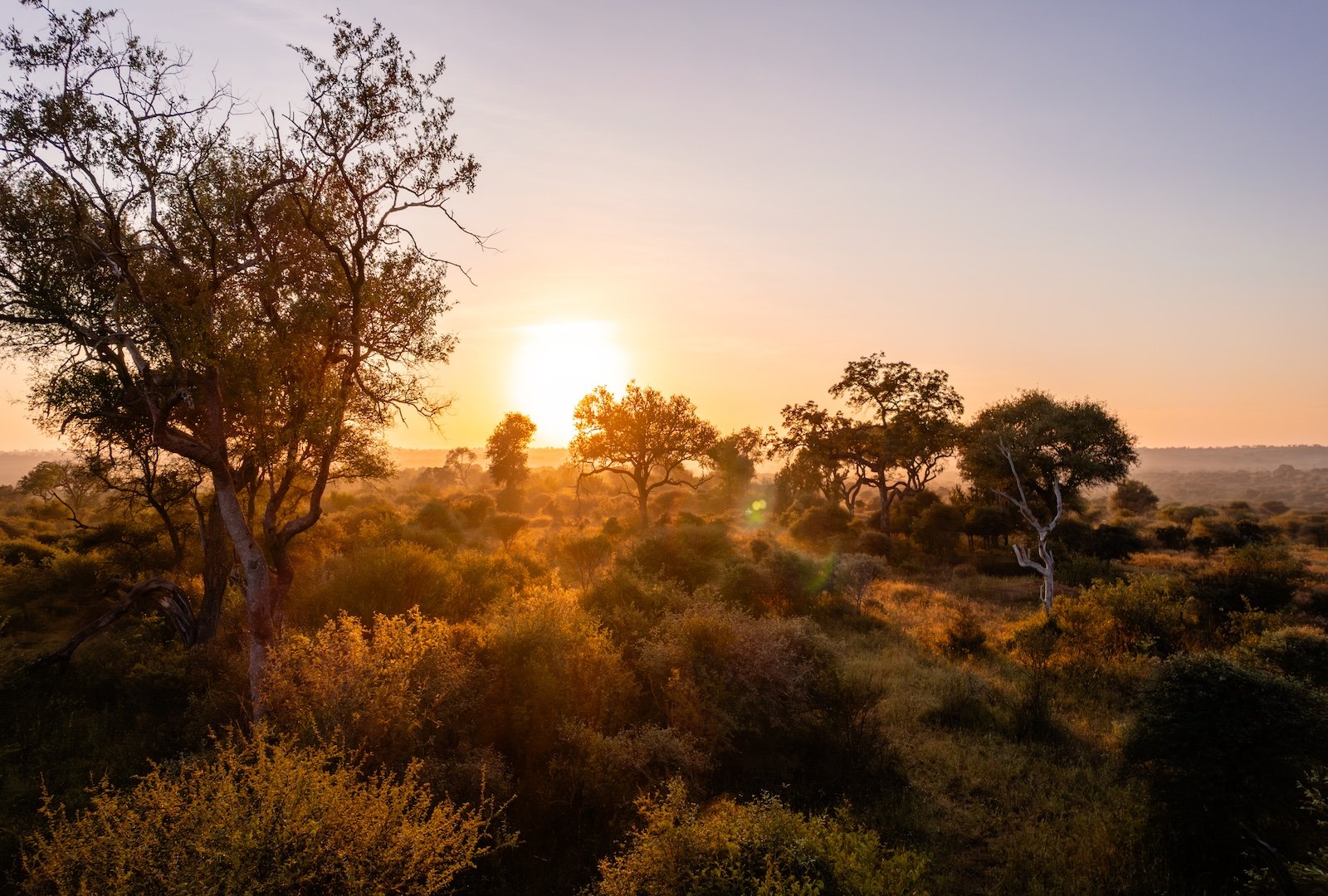
The perennial Klaserie River flows through the heart of Kapama Private Game Reserve, shaping a living landscape where water, wildlife, and wilderness converge. More than a waterway, it is the reserve’s lifeline — nourishing the land, sustaining biodiversity, and creating year-round opportunities for extraordinary safari encounters.
- Wildlife Haven: The permanent waters of the Klaserie River act as a magnet for wildlife, particularly during the dry winter months when water becomes scarce across the Lowveld. Herds of elephants, buffalo, and antelopes are frequently seen along its banks, along with predators drawn to the abundance of prey. Whether on a morning game drive or relaxing at one of Kapama’s luxury lodges, guests enjoy front-row seats to dramatic and intimate moments in the wild — made possible by this vital river system.
- Premier Birding Destination: With over 350 recorded bird species, Kapama is a paradise for birdwatchers and nature photographers alike. The riverine forests and wetlands attract a dazzling array of avian life — from vibrant kingfishers, and bright colours of the lilac-breasted roller, agile bee-eaters, and secretive woodland species, to the unmistakable cry of the African fish eagle overhead. For enthusiasts and beginners alike, Kapama offers one of the richest birding experiences in South Africa.
- A Sanctuary of Ancient Trees and Botanical Heritage: The Klaserie River supports a gallery of ancient trees, including leadwoods, jackalberries, and towering fig trees, each playing a vital ecological role. Their expansive root systems prevent erosion, while their canopies provide shelter, shade, and food for insects, birds, mammals, and reptiles. These trees are not only ecologically important — they are living witnesses to the rhythm of the wild, standing for generations across the riverbanks.
- Preserving Ecosystem Health Through Natural Flow: The river’s uninterrupted natural flow is critical to maintaining soil quality, supporting indigenous vegetation, and preserving the integrity of Kapama’s four diverse ecosystems — from open grasslands and savannah woodlands to riverine forests and rocky outcrops. This environmental resilience ensures that guests visiting Kapama not only experience extraordinary wildlife encounters but also play a part in sustaining the reserve’s long-term ecological balance.
The Klaserie River transforms Kapama into a year-round sanctuary where permanent water supports stronger wildlife populations, healthier habitats, and credible conservation outcomes.
Its presence enhances not only ecological balance but also the reserve’s scenic diversity — from open savannahs to tranquil, tree-lined riverbanks.
- Prime Game Viewing in an Untouched Riverine Wilderness: The Klaserie River acts as a natural magnet for iconic African wildlife. Elephants, buffalo, antelope, and predators regularly gather at the water’s edge — making this one of the best places in Greater Kruger for Big Five game viewing. Morning and afternoon game drives along the riverbanks reveal quiet moments and dramatic encounters alike, offering unmatched photographic opportunities in a pristine, riverine setting.
- World-Class Birding Safari Destination: Kapama is recognised as a birding hotspot in South Africa, home to over 350 bird species. Along the river’s lush corridors, guests may spot the dazzling Lilac-breasted Roller, the regal African Fish Eagle, elusive Ground Hornbills, and a variety of raptors and waterbirds. Whether you’re a casual observer or a dedicated birder, this rich avifauna makes Kapama an unforgettable stop on any African birding safari.
- Scenic Diversity That Elevates the Safari Journey: Game drives on Kapama offer guests a diverse experience with different terrains and views. The Klaserie River offers a refreshing contrast to the open plains and acacia woodlands elsewhere in the reserve. The winding river channels and shaded paths bring a slower, more immersive rhythm to the safari experience — perfect for guests seeking both serenity and spectacle. This is not just a safari — it’s a journey through a living landscape that changes with the light and the seasons.
- Guided by Story, Grounded in Conservation: Our expert guides and assistant guides do more than point out animals — they reveal the intricate ecological systems that support life in the reserve. From how ancient trees anchor the food chain to how the Klaserie River influences predator behaviour, each sighting becomes part of a greater conservation narrative. This is interpretive guiding at its finest, transforming a game drive into a deeper connection with Africa’s wilderness
- A Safari Experience That Goes Beyond the Expected: At Kapama, the guest experience during our twice-daily game drives is more than a checklist of wildlife sightings — it’s a layered, soulful encounter with nature. It’s about pausing to watch elephants cross the river at sunset, listening to the call of a fish eagle echo through the valley, and realising that you’re not just observing the wild — you’re part of it.
Kapama’s Signature Element
At Kapama, the Klaserie River is more than scenery — it is a living system that defines our wilderness. Guests experience not only the Big Five but also the timeless rhythm of a river that sustains life, weaving water, wildlife, and wonder into every safari moment.
It’s a Wilderness like nowhere else!

Anti-Poaching Unit
Kapama Private Game Reserve protects the biodiversity on the reserve through the established Anti-Poaching Unit (APU). The head of Kapama security and our APU, together with his dedicated team patrols the high-risk areas of the reserve daily and conduct foot patrols in search of wildlife traps and poachers. To combat poaching, the Kapama APU has been using tracking dogs as part of its anti-poaching initiative. There are currently two male bloodhounds that have been trained to track poachers. These tracking dogs traverse the Kapama Reserve and surrounding areas. Kapama also works closely with law enforcement and supports anti-poaching units on surrounding reserves in numerous ways. It also conducts occupational safety inspections regularly.

CARBON OFFSETTING
As a Private Game Reserve operating four lodges, Kapama recognises that our daily operations — from powering four luxury lodges to transporting guests — can contribute to greenhouse gas emissions. These emissions are a leading driver of climate change, trapping heat and altering global weather systems. As custodians of this wilderness, we are committed to minimising our impact through responsible energy practices.
To power Kapama River Lodge, we prepared more than 9,400 square meters of land for a dedicated solar plant. Today, 23 solar tables hold 1,242 panels, each angled for maximum efficiency. This investment has already reduced Kapama’s carbon footprint by over 32% compared to 2021 levels — the equivalent of planting 30,000–40,000 trees every year.
During River Lodge’s extensive Deluxe Suite renovations, sustainability guided every decision. New inverter air-conditioners and solar-based water heating systems were installed, reducing energy consumption by up to 80% compared with conventional heat pumps. These innovations ensure guest comfort while protecting the environment.
Our conservation promise extends to water-saving initiatives, improved recycling systems, and responsible waste management across the reserve. Every step brings us closer to a future where luxury hospitality and ecological responsibility coexist seamlessly.
Preserving Nature for Generations
At Kapama, sustainability is not a trend but a responsibility. By embracing renewable energy and eco-conscious design, we ensure that guests can experience Africa’s wilderness today — while safeguarding it for tomorrow.
BIO-DIVERSITY
Biodiversity is the variety of plant and animal life in our world or a particular habitat that is considered to be important and desirable. All Earth’s species work together to survive and maintain their ecosystems. Much of the Earth’s biodiversity, however, is in jeopardy due to human consumption and other activities that disturb and even destroy ecosystems. Conservation efforts are necessary to preserve biodiversity and protect endangered species and their habitats. That is why Private Reserves, like Kapama, play a huge role in conserving and protecting our natural resources across multiple ecosystems.
As a big 5 game reserve in the Greater Kruger and Part of Conservation and Preservation we understand the importance of our Biodiversity.
We plan to protect it through . . . .
- Being an Educator. To educate our guests on the importance of not only National Parks and Game reserves but every single part of our environment and our existence in it.
- Being a Collaborator: A Park ecologist that can ensure the balance of the Plants, animals, insects and microorganisms and prevent the destruction of it. Kapama Private Game Reserve works closely with Agricultural Research Council (ARC) member, Dr Mike Peel, annually in aiding the Kapama management team with his dedicated research. Dr Peel has developed a research program that benefits the management of wildlife in private reserves. Kapama has an agreement with the Animal Production Institute of the Agricultural Research Council. Kapama must monitor the natural resources on the reserve, to ensure a safe and sustainable environment and to preserve the wildlife habitat including the biodiversity on the reserve; after all, it is one of South Africa’s greatest assets. (ARC).
- Being Ethical: We at Kapama have strict rules and regulations when it comes to nature. It is extremely important to be ethical and not place our interests above those of nature.

SUSTAINABILITY
Sustainability and being responsible global citizens are at the heart of everything we do at Kapama Private Game Reserve. Our world’s natural resources are at risk, and finding and maintaining ecological balance is one of our core values.
Our goal is to not only ensure our business practices are sustainable. We want to ensure that our business helps nature thrive beyond mere sustainability and become leaders in responsible, low-carbon ecotourism. To keep fulfilling the current generation’s needs without compromising the needs of a future generation. To do this we are getting a lot more practical in our solutions.
At Kapama, we have taken the next step in our sustainability journey to reduce our impact on the environment, lower our carbon footprint and increase our conservation efforts, protecting valuable savannah ecosystems which in themselves are critically important carbon sinks.
We are very proud to announce that our newly completed solar plant was successfully commissioned and is the first of its size for Safari Lodges in South Africa. The plant was calculated to ensure sufficient power to run the biggest of our four lodges, Kapama River Lodge.
The solar plant produces close to 700 000 kW per day. This is enough to power River Lodge during the day and push additional power into the grid that is taken out again after sunset. This has resulted in Kapama being able to reduce their carbon footprint by over 32% from 2021 levels, in practical terms, this reduction in carbon emissions is roughly the equivalent of planting thirty to forty thousand trees each year!
Our guests contribute towards sustainability as a result of our efforts. And our efforts include a positive impact across a broad range of global sustainable development goals. We employ more than 590 people, and our sustainability projects have opened up new work opportunities. With an unemployment rate of 34% in South Africa, every job created is essential and can feed up to eight people per household.
You are part of our story when you stay at Kapama Private Game Reserve. You are contributing to a greener future and improving your environmental and social footprint. We can’t wait to welcome you in luxury and clean air, with the knowledge that your carbon footprint when staying with us is benchmarked against global best practices in the tourism industry.
For more on our Solar initiative at River Lodge – click here.
- To at all times put people and our planet first, in all interactions with guests, partners, businesses, as well as with our staff;
- To increase the positive impact of tourism on the Greater Kruger area;
- To create truly ethical, memorable and exceptional travel experiences for our guests so that leave Kapama with a changed travel expectation.
- We have a policy of always using local suppliers wherever we can, to bring as much income to the local area as possible;
- We make use of small, owner-managed companies that are based in and around the Hoedspruit and surrounding area;
- We also personally engage with these companies to establish where and how the communities they visit have been supported by their business.
Single-use plastic: As a team, we’re constantly finding ways and working hard to eliminate plastics in our day-today-operations, particularly single-use plastics. This includes removing the use of plastic straws, removing single-use amenities in all the rooms and only using refill containers. We buy fresh produce like loose fruit and vegetables directly from the local farmers which are plastic-free, thereby reducing the amount of pre-packaging. Our on-site water recycling plant allows each Lodge to significantly reduce the number of plastic water bottles consumed. Not only have we removed plastic water bottles from rooms but in the dining halls as well. By supplying glass bottles of water that are filled from our water recycling plant we have reduced the number of plastic water bottles by over 10,000 a month. All our lunch packs are served in bio-degradable and environmentally friendly containers.
Recycling and composting: We recycle as many materials as possible including paper, glass, cardboard, cans, and plastic.
Energy use: We make use of energy-saving light bulbs and our villas with private pools are heated via solar panels.
Solar Projects: The solar project at Kapama River Lodge, our biggest Lodge, was completed in 2022. This has the capacity to take River Lodge close to 80% off the grid.
Kapama Karula and Kapama Southern Camp solar plant was completed in mid-2023.