The Water Monitor
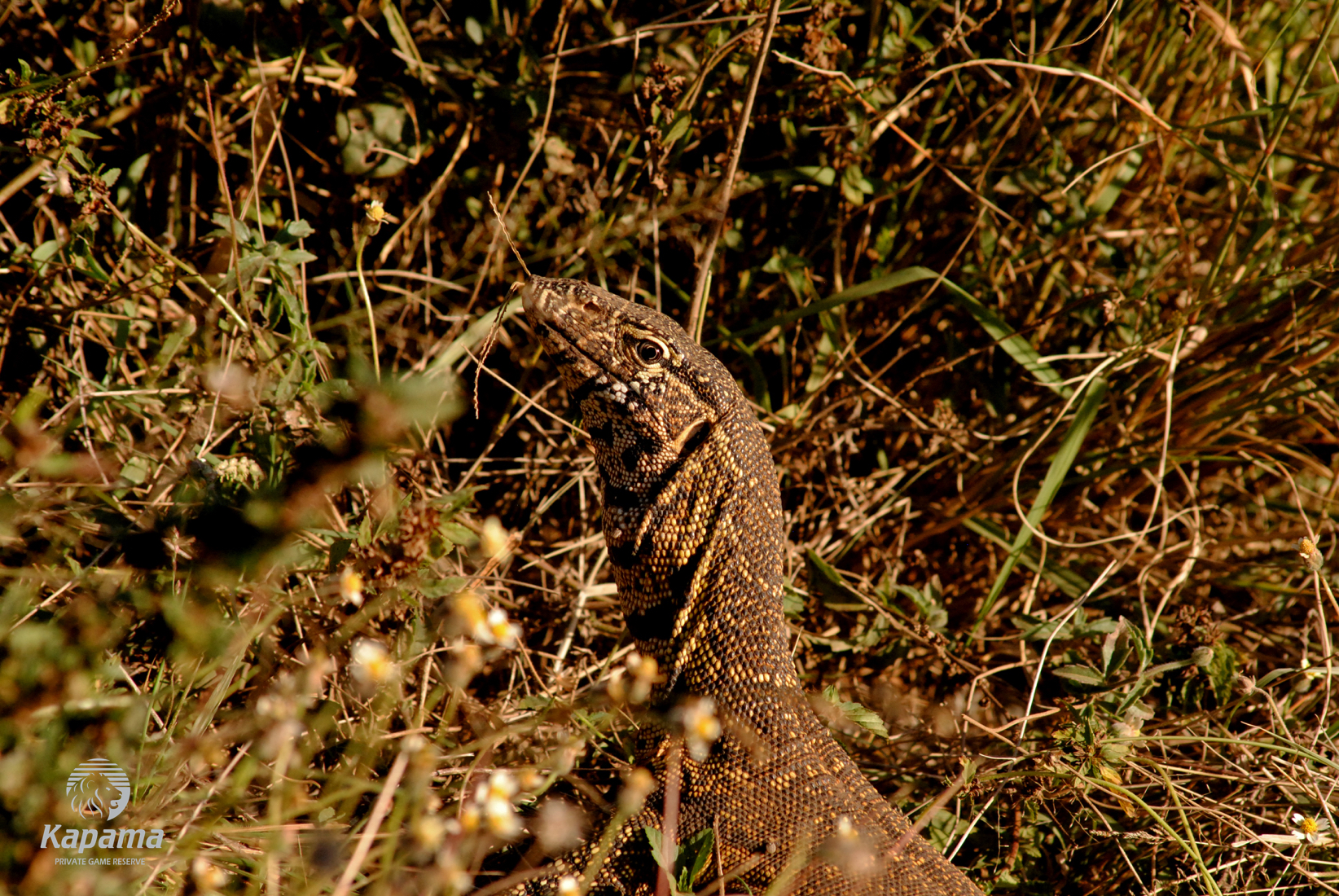
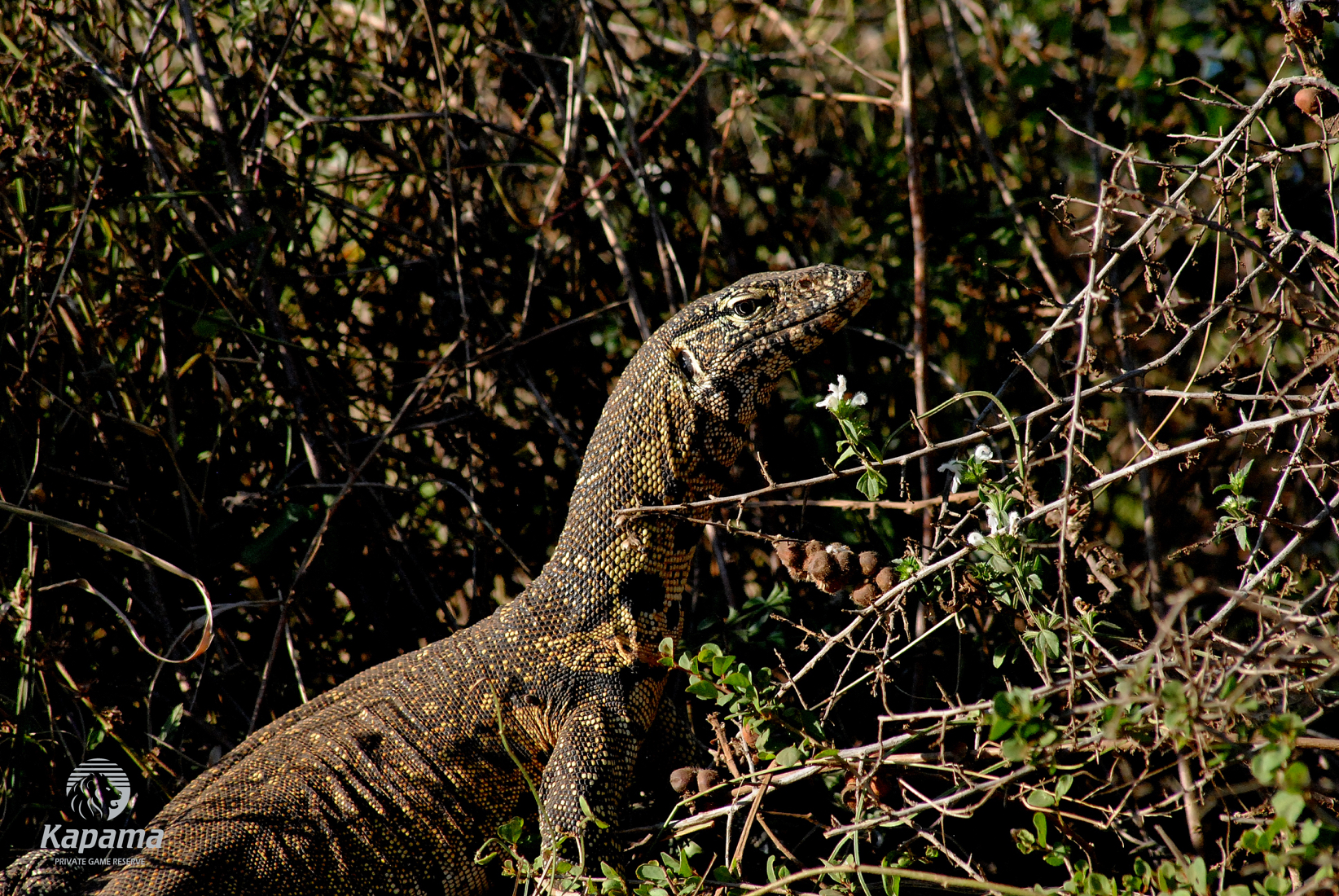
While out on driving around Kapama, one of the reptile species you can encounter, especially during the winter months due to camouflage and the cold, is the water monitor. Setting out on safari from Kapama Buffalo Camp, we came across a fairly large monitor, basking in the sun trying to warm up. These reptiles can’t regulate their own body temperature. Besides that interesting fact, let me share a few more details about the monitor lizard for those who don’t know them that well and want to know what to look out for.
Here are 10 facts that I will share with you:
- The water monitor is 1 of the most striking members of the Reptile family and is 2nd in size only to the Nile crocodile.
- Including the tail, large adults can reach lengths of up to nearly 2.5 meters.
- Its body is adorned with beautiful yellow patterning, aiding it to be well camouflaged when close to water & reed beds.
- Monitors are not water dependent & will actively forage for food on land, travelling large distances from water
- They are also capable of climbing trees but are usually found basking on riverbanks.
- The streamlined shape of the body allows them to use its long, strong tail to propel itself through the water with ease.
- The water monitor’s range is limited to the eastern half of southern Africa and the eastern extremes of Botswana.
- They are carnivores and their diet consists of everything from frogs, crabs, and lizards, to small mammals and birds.
- They have large claws on their feet comes in handy when digging up nests as well as in self-defence.
The 10th fact is for me, the most interesting fact of all.
10. Water monitors share an interesting symbiotic relationship with the fungus growing termite when it comes to breeding.
This is how their relationship works.
- When it is time for a female water monitor to lay her eggs, she will seek out an active termite mound – those large sand structures you often see on the side of the road when driving around Kapama Game Reserve – and dig into the mound.
- Once inside, she lays her eggs (40-60) and then abandons them.
- The termites, for whom temperature regulation is imperative, will immediately set about repairing the hole in their nest.
- This then seals the eggs within the termite mound, giving them with a warm, humid and safe place to develop.
- There is no parental care in water monitors and the newly hatched young merely dig their way out of the nest.
- The termites once again repair the hole and the cycle repeats itself.
- The incubation period of monitor eggs is as long at 10 months – which is surprisingly long, even by lizard standards.
Story and photos by Ranger Hancho – Buffalo Camp
Latest news
No Results Found
The page you requested could not be found. Try refining your search, or use the navigation above to locate the post.