A “Barking” Discovery
It was another beautiful day out in the African bushveld. My guests and I left Kapama Southern Camp for our afternoon game drive.
As we came to one of our regular waterholes, we decided to take some time and watch a family of Hippos starting to get active. While my guests were focused on the Hippos cooling off in the water from the intense African sun, snapping away with their cameras, my tracker and I were listening intently to our surroundings.

After a few moments of sitting by the waterside, we both heard a loud bark and looked at each other with excitement.
It was a distress call of an Impala.
Impalas make a snort or “bark – like” noise when they encounter a predator to alert other animals to their presence. We cautiously and slowly moved closer to where the noise was coming from. At first, we thought it might have been a Leopard the Impala had sensed, as the alarm call was coming from a drainage line, a common place for Leopards to lurk.
As we got closer to the noise, we noticed the barking was coming from the same place as where we first heard it. This was quite unusual. Normally the distressed Impala would bark a few times and then move away from the predator if the predator hadn’t left the area yet.

Being very optimistic we thought maybe the ‘Leopard’ had caught a baby Impala and the mother was staying close by the scene hoping to somehow get the Leopard to leave her baby alone.
The excitement was building as we edged ourselves even nearer. Expectations were through the roof. We finally got to the area where the original sound had come from. As we approached we saw a female Impala running away. But that was not all that we saw.
Our suspicions were not far off! What an interesting surprise!
It wasn’t a Leopard, nor a Lion. But, instead, an African Rock Python lying on top of a baby Impala!
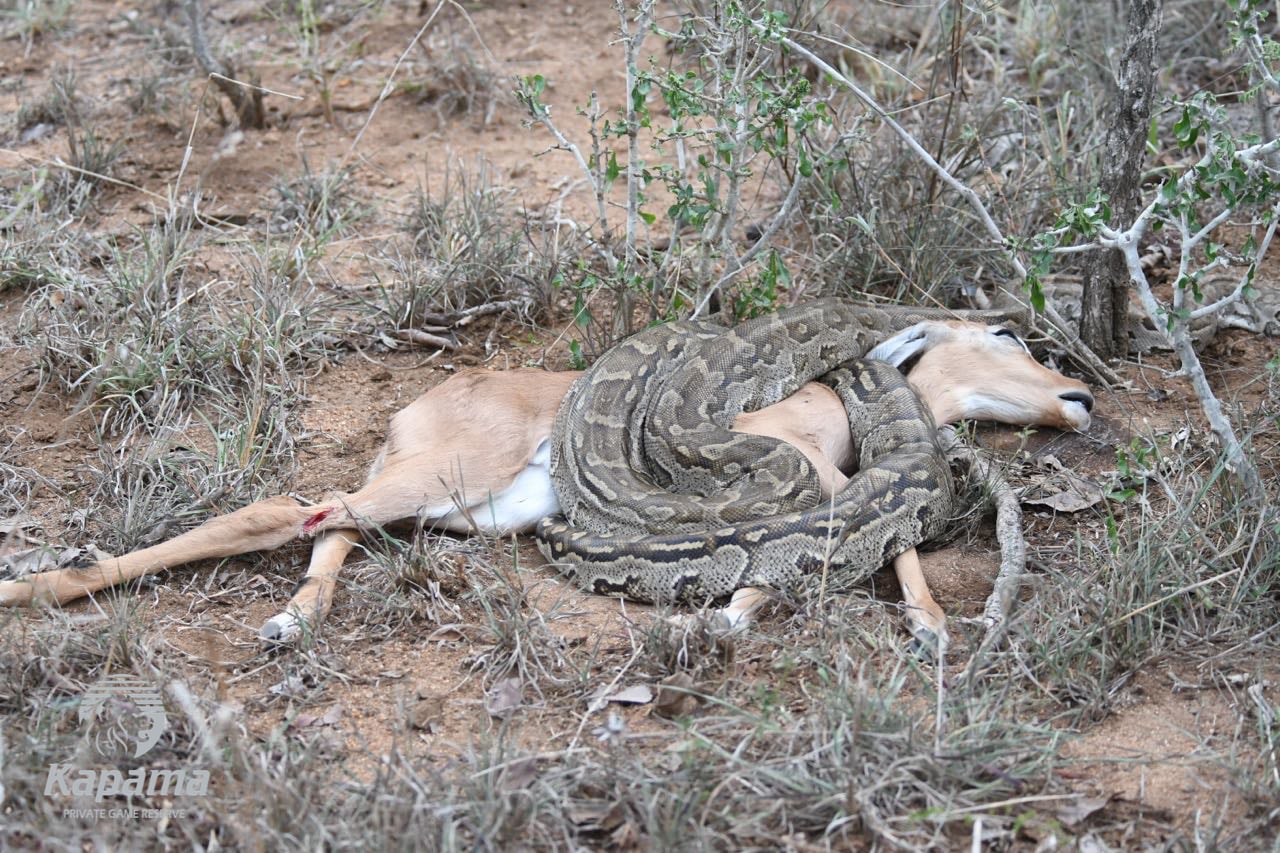
The mother Impala had obviously stayed behind once the Python had caught her baby in an attempt to try to save it. Unfortunately, she was unsuccessful.
The grip on the baby Impala was rather intense.
The African Rock Python is a non-venomous snake and kills its prey by constriction. After gripping its prey, or the Impala in this particular instance, the Python coils around it, tightening its coils every time the Impala/or other prey breathes out. The squeezing action doesn’t necessarily shatter the Impala’s bones, it just stops it from breathing.

My guests realized it was something rather special too, just by watching the 2 of us bounce up and down with excitement.
Often it’s not always the most popular or expectant sightings, such as the Big 5, that we get the biggest thrill from when out on a game drive. When we happen to come across something as interesting and unexpected as this, it truly makes us appreciate all aspects of nature. It helps us to value the opportunity to witness such amazing sights and share them with our guests to add to their memories of experiencing the African bushveld.
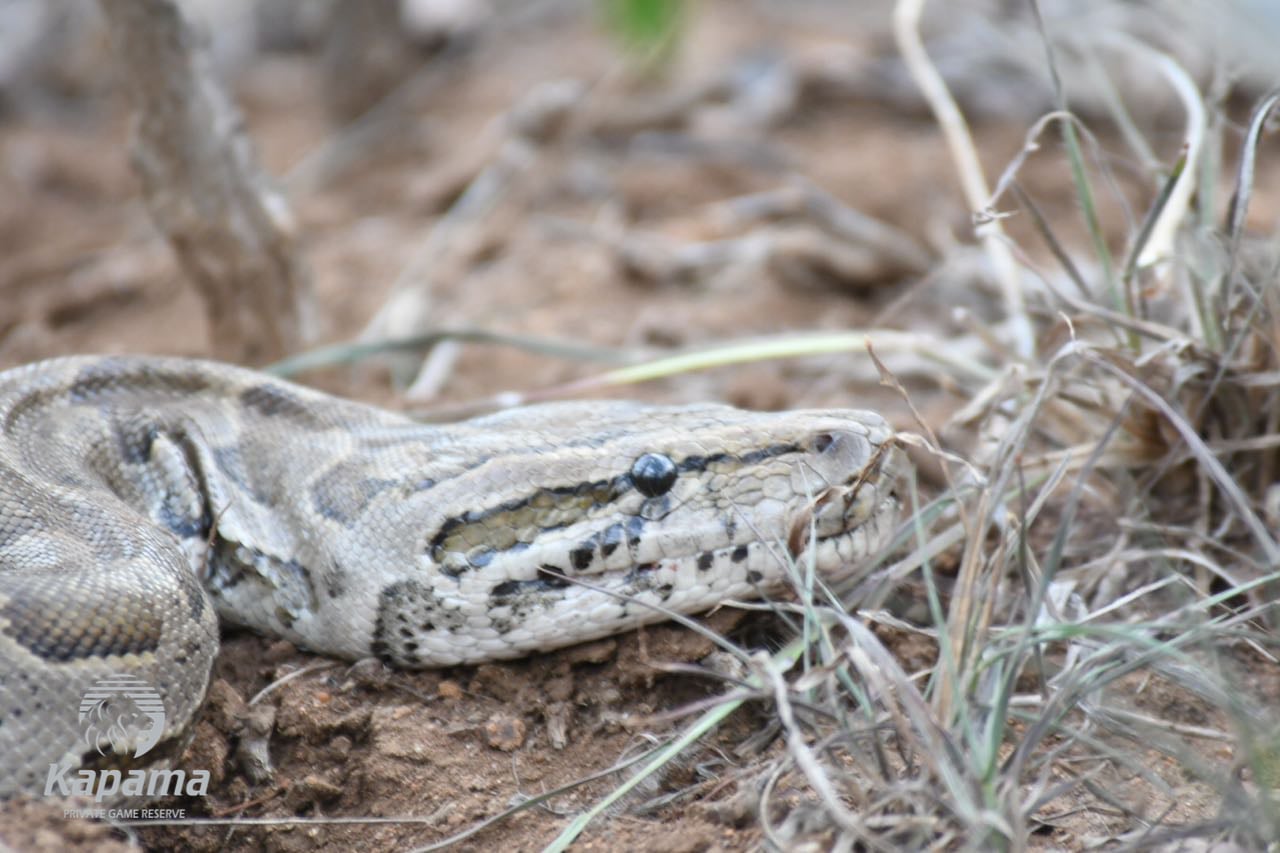
This was an incredible sight and something that has been high on my bush bucket list for a very long time! We stayed there for a few more minutes, taking photos and cementing the scene in our memory, before deciding to move off and continue with the rest of the game drive.
Story and Python photos by: Ranger Mike Brown – Southern Camp
Latest news
No Results Found
The page you requested could not be found. Try refining your search, or use the navigation above to locate the post.