Better than the Big 5
What started off as a very average game drive (if such a thing exists), ended up being one of my most memorable drives on Kapama Game Reserve to date.
I woke up to the usual early buzz of my alarm clock, followed by a strong cup of coffee. My guests had no idea what lay ahead of them this morning. Admittedly, even I did not expect to see what nature had in store for us on this beautiful winters morning.
I had been driving a couple from Australia around the Reserve for the last 2 days and we had been fortunate enough to see all of the Big 5 (lion, buffalo, elephant, rhino and leopard) and more. This was their final morning drive and so I wanted to make it extra special.
Not long after setting off, we received word that 2 Wild dogs had been spotted on the game reserve not too far away from us. I stepped on the accelerator and we quickly made our way to the last know area they had been seen.
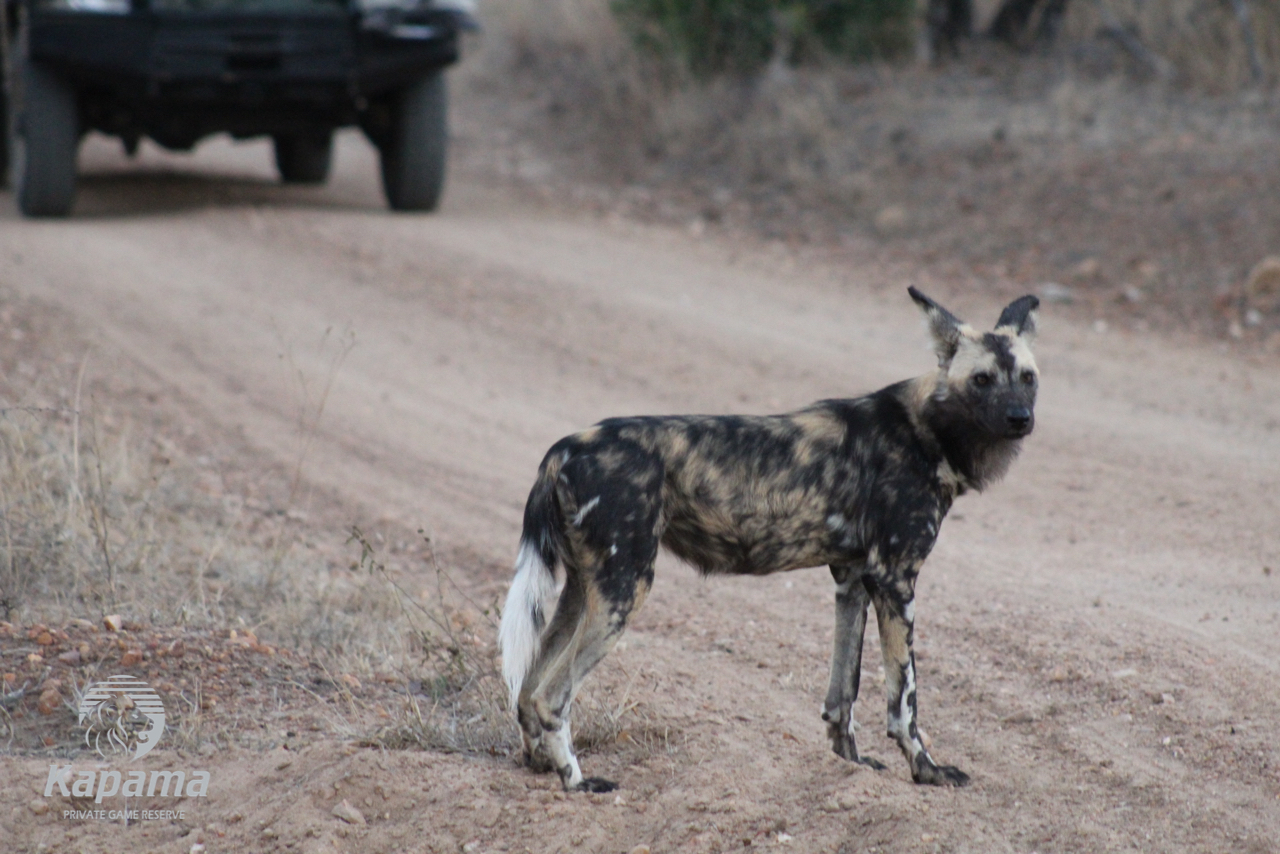
These successful predators, also known as Painted Wolves, are endangered and their population numbers in the wild are staggeringly low as a result of hunting, poisoning and snares. They also need large home ranges and can travel great distances in short periods of time.
Listening to the reports of the direction these two dogs were going, my tracker Foster and I decided to take a daring risk and made a loop to wait ahead of them, hoping to catch them running head on towards us.
After what felt like hours because of the anticipation, but realistically was only a few minutes, I let out a squeal of delight causing my guests to almost jump at the surprise. As luck would have it the pair of wild dogs emerged from the brush.
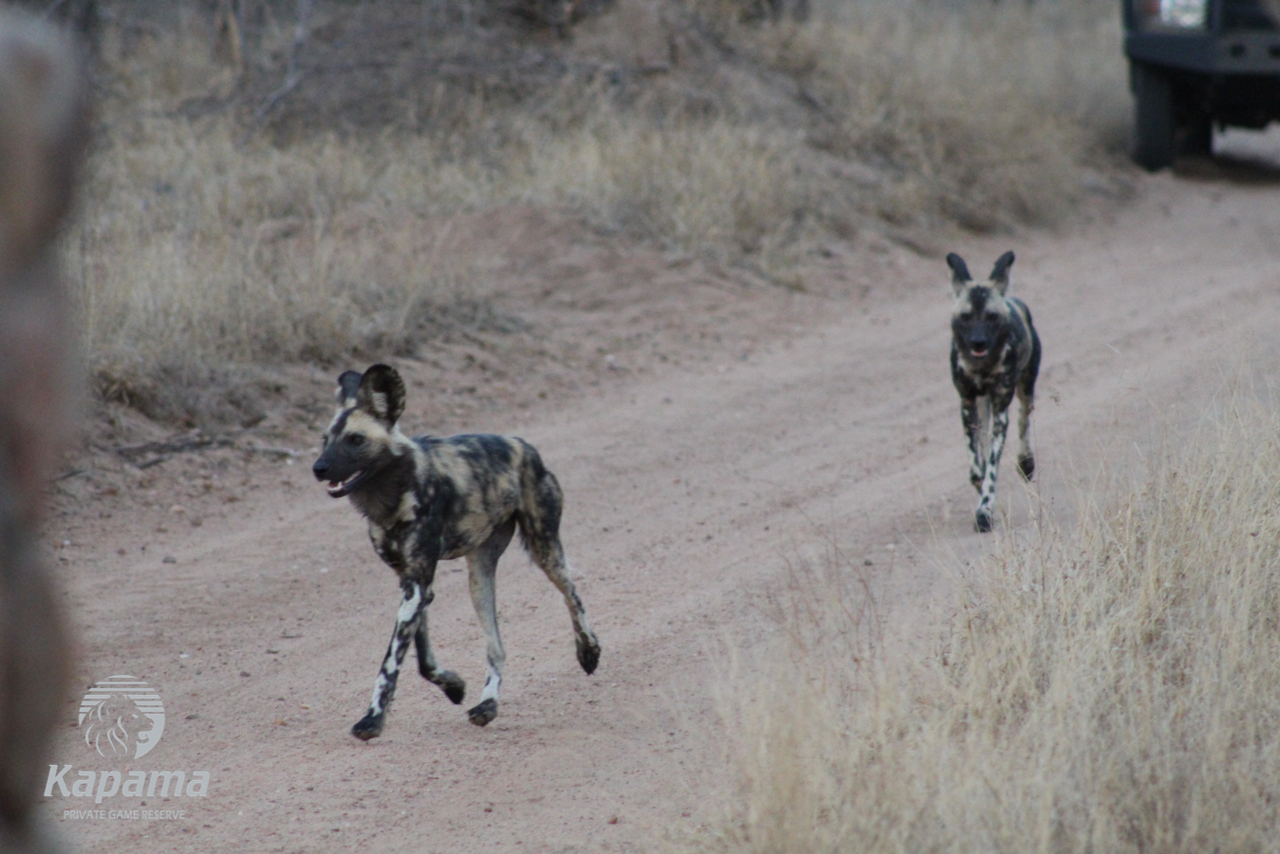
They slowed down and then stopped right next to our vehicle, sniffing the air before continuing their patrol, or perhaps they were on the prowl for their next meal. They were moving fast so I made a quick U-turn and followed them along the road. They truly are an artwork of colours; shades of brown, black, gold and white perfectly painted to create a well-camouflaged predator. Due to the possibility of forming large packs with great stamina, they have the highest success rate of all our predators, running their prey to exhaustion and consuming an impala sized prey in less than 20 minutes.

We admired them for a few more kilometers as they ran between the road and the bush, flushing out small antelope that darted out of harm’s way. Feeling adequately satisfied and completely amazed, we left the dogs and headed on for a warm cup of hot chocolate on a beautiful spot along the Klaserie River.
This was my first time seeing Wild dogs on Kapama and I know it won’t be the last. I have since heard reports that this pair have been sighted more regularly and seem to have taken up permanent residence within the reserve. The future is bright for this pair of Wild Dogs and I can’t wait to one day possibly find a den site on Kapama.
Story and photos by:
Monika Malewski
Latest news
No Results Found
The page you requested could not be found. Try refining your search, or use the navigation above to locate the post.