
Day of the Jackal
Black-backed jackals are considered in most parts of South Africa to be something of a pest and nuisance. However, they are highly overlooked and unappreciated. Besides being cunning, they are one of the most ancient species of their kind, dating as far back as the Ice Age.
Ranger Alister Kemp will enlighten us with a few interesting and fun facts about them:
The black-backed jackal has a reddish-brown coat with a mix of silver and black hairs. According to the Khoi Khoi myths and fables, the black-backed jackal is said to have gained its back’s dark saddle when it offered to carry the Sun on its back.

They are interesting mammals who will mate for life and are very good breeders. Often they will have between four to six pups, which are dark brown in colour, and blind.
Another interesting fact is that they stay in extended families. This means that the last year’s pups will stay with the new litter and assist in their overall upbringing. This might include playing a role in feeding, defending, grooming and entertaining the new pups. Their lifespan is around 8 years out in the wild.
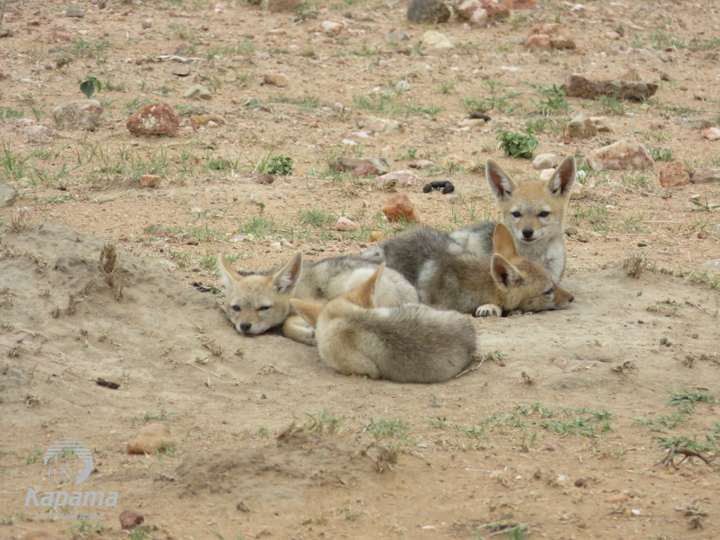
Their primary diet is made up mostly of insects and in some cases fruit. Even though they are more than capable of killing larger animals for themselves like rodents, snakes or even young impala – (read our previous blog on how one took down an impala on his own), they prefer to rely on their scavenging habits to survive.
They are both predator and clean-up crew. They help in keeping the rodent population under control and removing the weak animals from the system. Therefore they play a huge roll in the ecosystem as a whole. By cleaning up the dead carcasses and keeping the bush “healthy” they prevent certain diseases from spreading.

Here at Kapama, they have been responsible for locating lions and leopard kills for both vultures and rangers. When they come across a kill they will wail and make a lot of noise such as yelling, yelping, woofing, whining, growling, and cackling to call the rest of their pack. On many occasions, I have seen black-backed jackals loitering close to a lion kill. This often results in getting a growl or a half-hearted charge for their efforts.
Mating season is from May-August and the pups are generally born between July and October. I love this time of year as we get to see the young of so many different types of species.
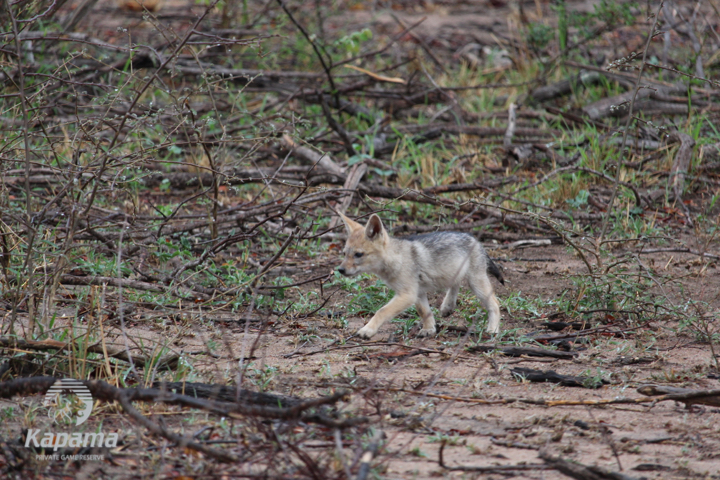
Ranger Jeffrey Mmadi from Buffalo Camp shared his wonderful encounter with the Black-backed Jackal.
A couple of months or so ago, I had a group of 4 guests from Australia. We happened to stumble upon a female black-backed jackal with her young ones. They normally begin to make forays out of the den to explore after 3 – 4 weeks of being born, so I could guess they were about a month old or so. Normally they are nocturnal but sometimes you can be lucky enough to see them in the early mornings or during the day resting under the shade of a tree. This was one such occasion.
We regarded ourselves lucky to be one of the first ones to see the new pups of the year.

My guests certainly did not expect to see a black-backed jackal and its pups. Normally the Big 5 are high up on the list of animals guests would prefer to see and very often the other species are overlooked. My Australian guests were impressed with how relaxed the jackal was, posing for everyone to take photos. Normally they disappear quickly into the bushes.
Even though the previous litter remain with the family to help care for the pups and offer a greater bearing on the pup survival rates, they do still remain vulnerable to leopards, lions, hyena and even eagles.

While driving away my guests were talking to each other about the experiences on the safari and I was very pleased to find out that the black-backed jackal and her pups were the highlight of their day.
Photos by:
Rangers Alister Kemp – Southern Camp & Jeffrey Mmadi – Buffalo Camp
Latest news
No Results Found
The page you requested could not be found. Try refining your search, or use the navigation above to locate the post.