Family Time
Spring has sprung but not everything has turned green yet as we have not had our first rains. It is bone dry with only a few trees flowering, but that doesn’t stop mother nature, especially the Black-backed Jackals. We left Buffalo Camp and made our way out on our normal safari. We were driving past some open plains when I noticed something small out of the corner of my eye. I stopped to get out my binoculars, and sure enough, I spotted three little black-backed jackal puppies with just their heads peeking out of a very small termite mound. In fact, there was no mound left on the top at all, but the tunnels and chambers underground would have still been big enough for a few pups to hide in. The parents would have dug it out to make sure their offspring remained safe and sound.
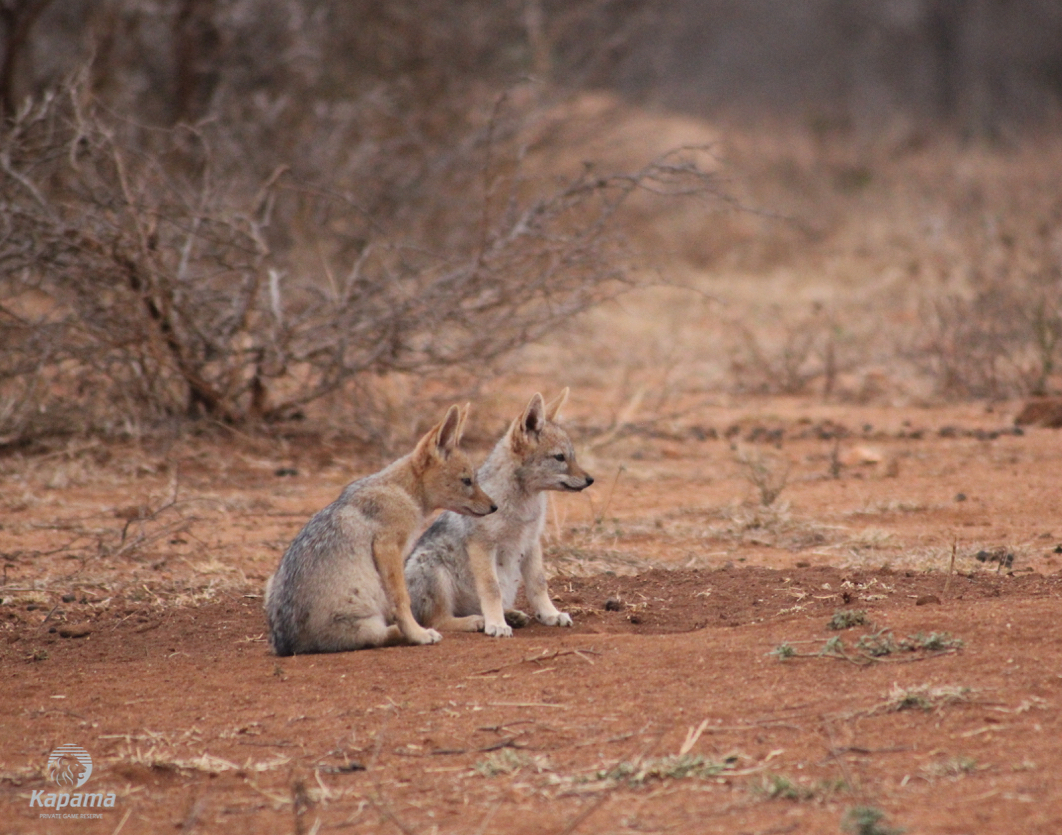
Black-backed jackals have a distinctive dark saddle on their back, which runs from the nape of the neck to their tail which is black, bushy. Their flanks and limbs are reddish. On edging closer I noticed two adults were trotting around in the distance. This is their normal means of movement unless hunting for small vertebrates in which case they walk around slowly with pricked ears.

This was surely the parents. Jackals are one of the few mammals that tend to form monogamous pairs, essentially mating for life unless one partner is killed or dies. They form a strong bond with both helping to provide for the young pups, often with the help of the previous litter. The helpers will regurgitate food, not only for the pups but even the mother as well. The previous litter can consist of one to four pups with some litters even as large as nine being recorded. They will guard the new pups when the parents go out to hunt, play with them, groom them and teach them how to hunt. Black-backed jackal pups are born between the end of winter and the end of Spring. They are weaned at eight to nine weeks of age and start foraging with their parents at around the age of about three months, being sure to stay close to the den until about six months.
I decided to move a little closer and watched how two of the pups bounded towards the one adult. I believe this was possibly the first time they had seen a vehicle and so decided to rather go past the den and then stop on the other side at a distance that they felt comfortable with. They then slowly crept back to the den with what I think was the mother, as she was slightly smaller than the other adult, possibly the father. At this distance, they had relaxed and played around the entrance of the den until mom decided all was fine and she moved off to look for more food for her hungry pack. The puppies yawned and tackled each other back into their underground den.

We set off with big smiles to find a spot to watch the magnificent sun, set behind the mountains while enjoying a delicious sundowner.
Story and photos by Ranger Monika – Buffalo Camp
Latest news
No Results Found
The page you requested could not be found. Try refining your search, or use the navigation above to locate the post.