Leopard Cubs Spotted
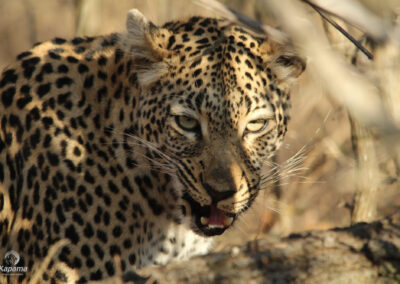
The Big 5 is what is on every person’s bucket list when they travel to South Africa for a true safari experience. However, it always seems with my guests, out of: Lion, Elephant, Buffalo, Leopard and Rhino, the one that stands out a bit more is the Leopard. The Leopard is probably the most desired animal to be spotted when out on a game drive yet is the most difficult animal to find. They can be incredibly elusive at times and hide very well with extremely good camouflage. Not to mention that they love to keep to themselves.
We left Buffalo Camp for our morning safari, which in the summer time starts at around 6 am. It turned out this particular morning we were extremely lucky and came across a female Leopard with her 2 cubs shortly into our drive. As I mentioned, Leopards are solitary animals and the only times you will see more than one Leopard at a time is a mom with her cubs, mating Leopards or males having a dispute over territories.
What made this sighting even more special was that the female Leopard had made a Nyala kill. Nyalas are antelope that have white stripes on their body that remind the local people of the layers of an onion. We sat and watched the Leopards for a while but they were a bit shy, leaving the Nyala kill in the grassy patch not too far from where we spotted them, hiding out behind a tree not really wanting to show face. We decided to wait a bit longer and see what would happen.
After a while one of the cubs approached the Nyala kill and merely sat next to it, now watching us to see what we would do. She became more and more relaxed with us being around her and eventually started to eat. She used her incisor teeth to cut pieces off to swallow. Every couple of minutes she would lift her head to stare at us, keeping a fixed gaze at these peculiar on-lookers, as if trying to say “This is mine!”
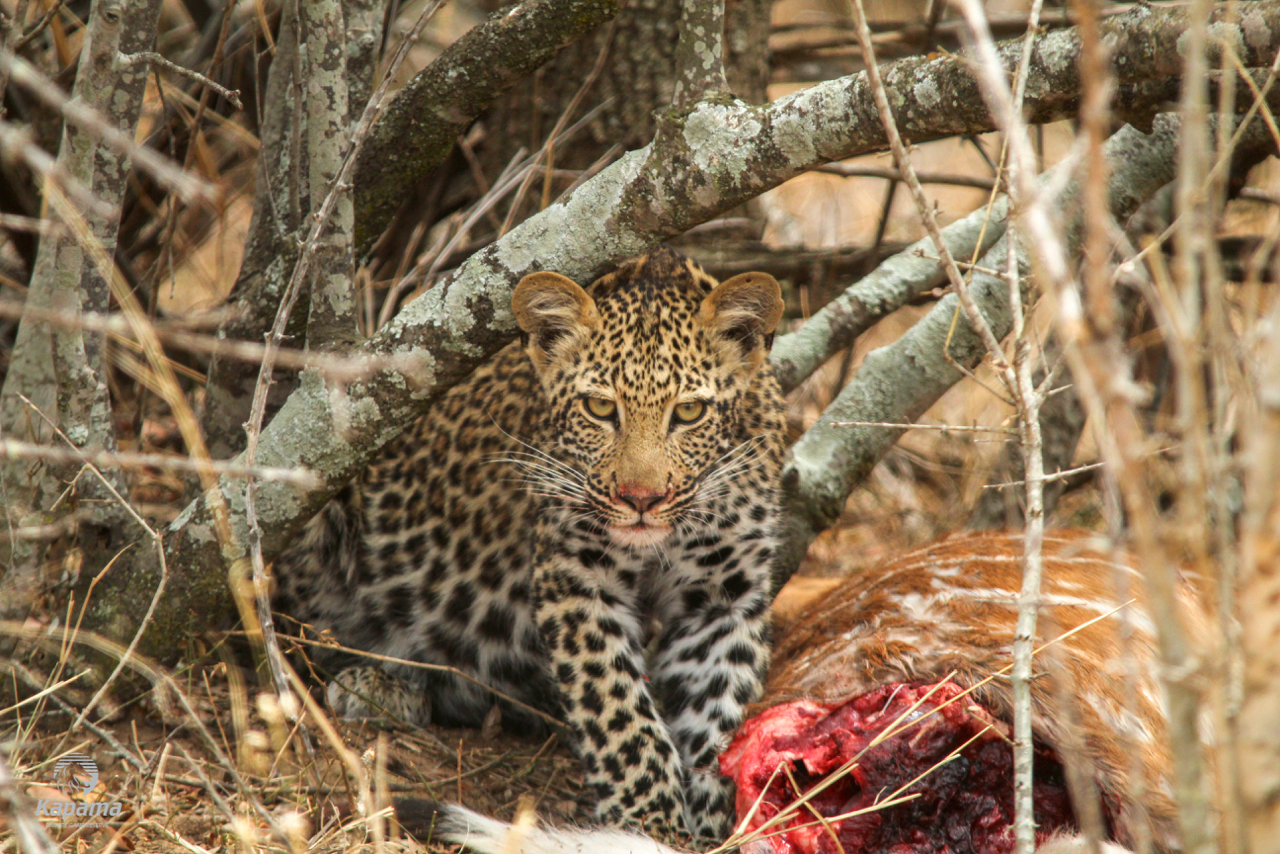

As she enjoyed the meal her mom had provided for her two cubs, the other cub seemed less brave or just lazy and lay down in the shade next to her mom. Leopards will normally pull their kill up into a tree to avoid predators like hyenas or even Lions from stealing it from them. In this case, it was morning and as it was slowly starting to heat up, which meant all the other predators were escaping the advancing heat, giving these Leopard a perfect chance to eat and not worry about moving the kill.
We spent quite some time with them, enjoying the wonder of firstly spotting a Leopard with her cubs and then seeing how the one young Leopard cub kept moving up and down the carcass trying to figure out what would be the best part to eat. Every now and then she tried to turn the body of the Nyala over to get to the other side.

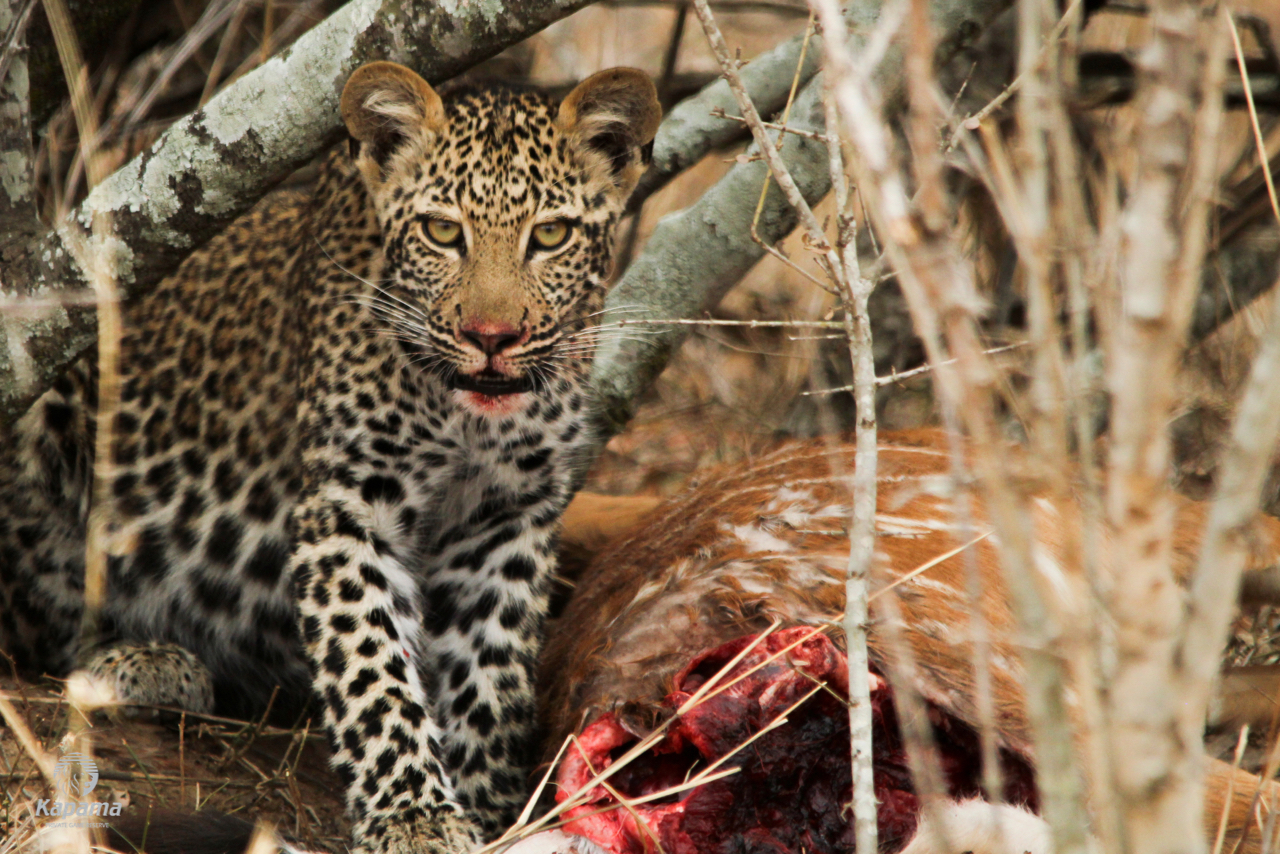
As the rising summer sun continued to heat up the morning, she gave her feasting a break and decided to move along to find a cool shady spot for yourself next to her sister.
We left the family to sleep in peace and made our way to our own shady spot to enjoy a refreshing cup of coffee and homemade biscuits while we chatted about the morning. My guests were elated at the opportunity to take such incredible photos and capture the wonderful South African Safari memories.
Story, videos and photos by: Buffalo Camp Ranger Ben Scheepers
Latest news
No Results Found
The page you requested could not be found. Try refining your search, or use the navigation above to locate the post.