Gladiators of the Plains
It was a relaxing afternoon game drive. We took a slow cruise through the open plains enjoying the general game grazing, with the fantastic view of the Drakensberg Mountain range in the background. As the sun slowly made it’s decent, it signalled time for our regular sundowner stop for my Buffalo Camp guests to enjoy a few South African treats.
On our way to the middle of the plains, in order to get to the side we needed to be we ended up driving through a herd of Zebras. As we made our made, suddenly there was a commotion behind our game drive vehicle. Two male Zebras were having a go at each other. I turned the vehicle around for us to witness the strength of the “Gladiators of the Plains”. Even though this wasn’t a full on fight, they still put on a great show for us.
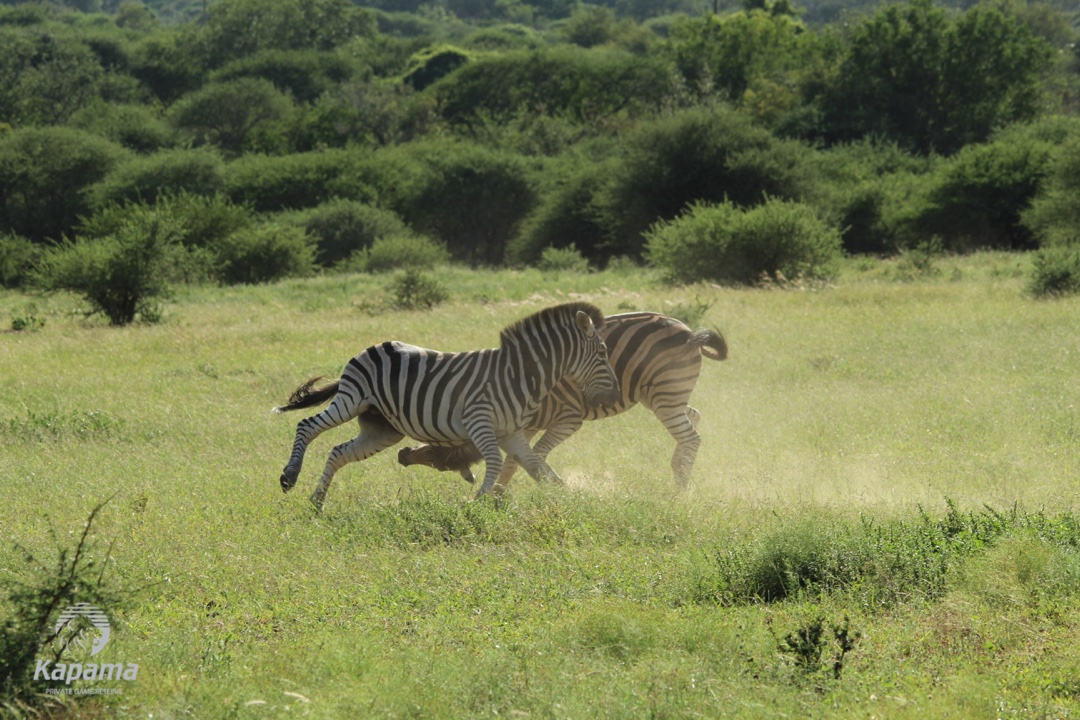
The testosterone was high between these two Zebra males and they were holding nothing back. They went full force at each other, biting each other’s legs, trying to get their opponent to fall down for an easy kick to the face. When the biting didn’t work they decided to show their real skills. Jumping up, standing only on their behind legs, bodies straight up in the air, they pushed and shoved each other back and forth.
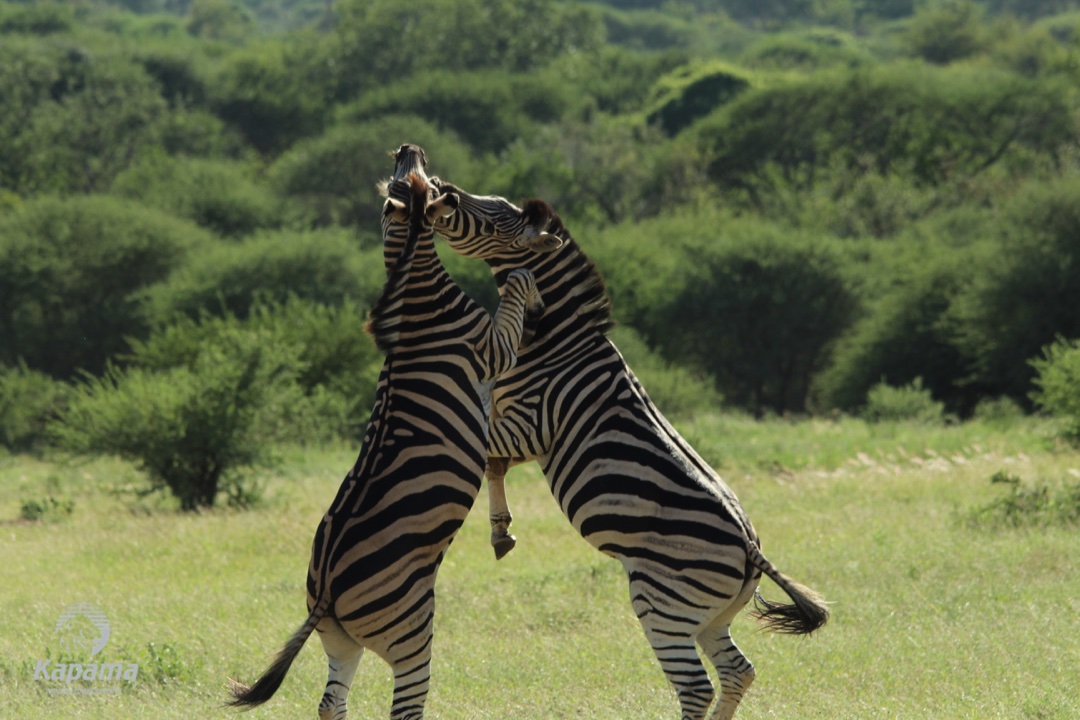
They touched down for a second then began again with another round. Even in the air, they continued to bite each other’s face and neck. This continued for a while, chasing each other up and down the plains testing the strength and stamina of their worthy opponent.
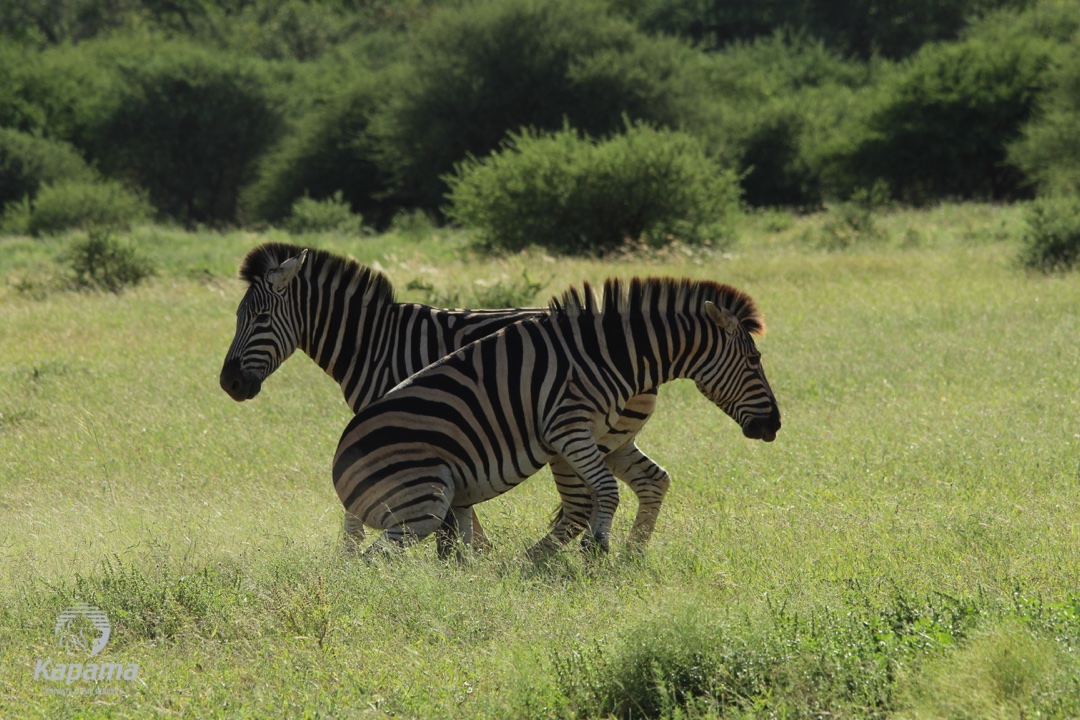
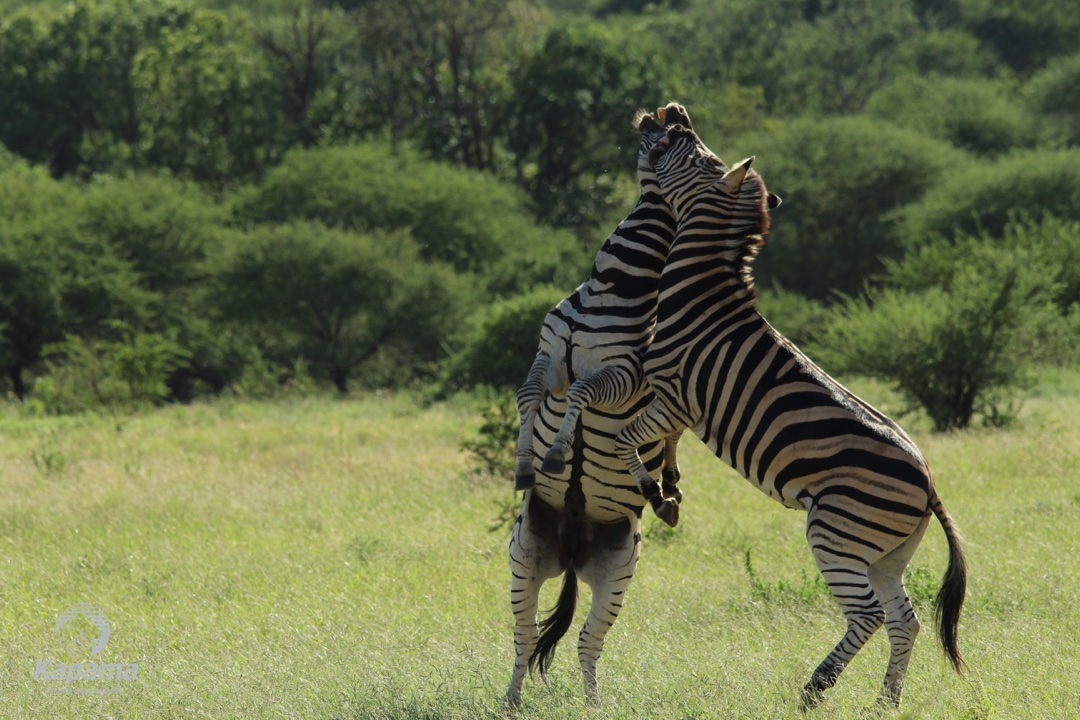
Even though this was not a full on dual, it’s good for males to practice their fighting skills and technique as the day will come when they will need to challenge a stallion of a herd for a chance to start his own harem. Harem consists of a male and a number of females. This is the prime cause of fighting between male Zebras, but not necessarily the only reason. Especially in times of drought with lack of water, two dominant stallions will fight for the right over the waterhole making sure that his family has a better chance of survival.
This particular duel was not too serious and neither of them was seriously injured. Fights can become extremely dangerous and actually kill each other or cause serious injuries leaving them weakened and easy prey for predators. Conflicts like this can last from a couples of minutes to over an hour.
After a while of watching, we decided to move off a bit to the spot I had eyed out for our refreshments. We could still see them from our vantage point and their sparring match seemed far from over. As we enjoyed our snacks and sundowners, the sun slowly descended on the duo as they tried to work things out, leaving us all with a wonderful story and memory of our Kapama game drive.
From small to the large animal, they will always fight for survival. Whether it’s for food, water, territory or a mating opportunity. The bush is definitely not for the weak. From sunrise to sunset, surviving the long night and not being eaten, always remains the challenge, for when predators waken from their slumber they are hungry and ready to pounce.
This is the African bush and only the strong will make it, unfortunately, this means a fight to survive.
Story and photos by: Ben Scheepers – Buffalo camp.
Latest news
No Results Found
The page you requested could not be found. Try refining your search, or use the navigation above to locate the post.