Magical Moments
It was an afternoon game drive and my River Lodge guests and I were on the search for the last of the Big 5. The only one they had not yet seen was elephants. With a baby Elephant weighing as much as 100kg and adults about four to six tons, It is usually assumed that due to their massive size, these animals are easy to find. I mean how does one not notice a six-ton, three-metre-tall animal in the bush?
On this particular drive, my guests quickly realised that finding Elephants was not as easy as it seemed. Elephants can travel tens of kilometres in a day with the utmost of ease, leaving a trail of large circular tracks, dung balls and broken trees as they do so.
After tracking the Elephants for quite some time, my tracker Phanuel and I realized we needed to find these animals fast as the sun was almost setting. Elephants are diurnal creatures, meaning they are active during the day, for this reason, we do not view them after dark. For both their safety and ours. Luckily, we found fresh dung, so now the search was on.
Around a bend, like a dust storm, the entire herd of Elephants emerged out of the bushes.

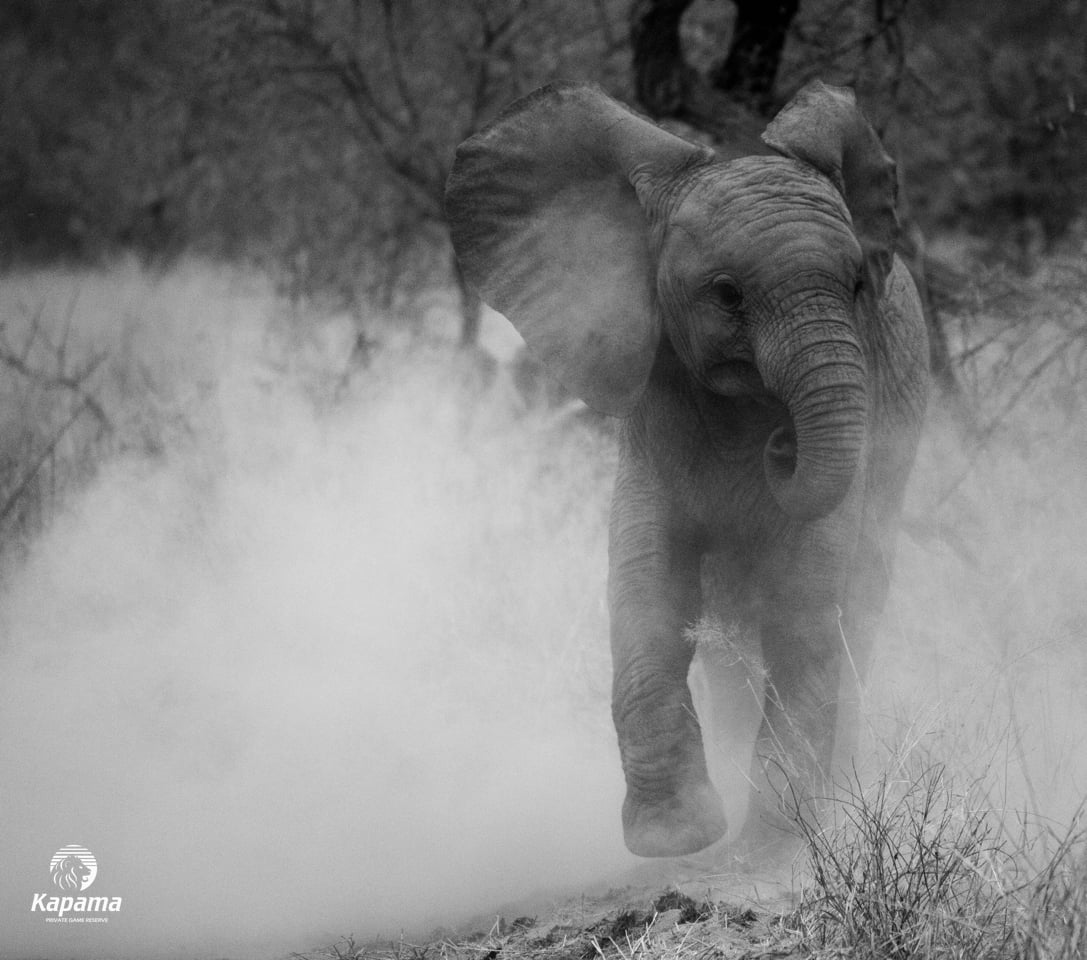
The only sounds we heard were the cracking of trees as they fed. It was as if they were putting on a show, the entire herd gathered in the middle of the dirt road and started throwing themselves with dust.

There was so much dust in the air it concealed some of the smaller Elephants, with only silhouettes visible. This behaviour is known as dust bathing, many animals do this besides Elephants. They would throw themselves with the fine sand from the road, coating themselves in a brown or red sand jacket. Even though their hides seem to be rather tough, Elephants have sensitive skin. The dust helps serve as a sunscreen from the harsh South Africa sun. It also helps to remove unwanted insects such as tics.
Watching these gigantic animals going about a mundane routine of theirs was magical for not only my guests but for myself as well. The entire experience made our long search worth it.
As the dust settled and the Elephants moved off further into the bush we drove away with big smiles, happy hearts and the utmost appreciation for these incredible creatures.
Story and photos by River Lodge Ranger Tasha van den Aardweg
Latest news
No Results Found
The page you requested could not be found. Try refining your search, or use the navigation above to locate the post.