Interesting Facts about Baby Elephants
Out on game drives, we often come across these majestic gentle creatures which are always a joy to see. We on Kapama are fortunate to have all age categories of elephants, including babies. After all, who does not enjoy the very playful young ones?
Under the watchful eye of mother, young elephants are free to do as they please, and they often give us a wonderful show. Young elephants still in the developing stage are very curious about the world and we always enjoy the way they interact with nature and each other. Young elephants under the age of three are still very dependent on there relatives. Young elephants are often found mimicking their elders and this is how they learn and build their own personality’s over time. Young are also very playful and won’t hesitate to charge the vehicle. Now, this is often found to be very amusing to guests and we as guides also enjoy it as we will always keep a safe distance. With knowledge of animal behavior, we can tell if its playful behavior or if it is from feeling pressured or threatened. The reason I’m pointing this out is if young elephants are feeling uncomfortable with the presence of a vehicle, they can often give out a cry of distress which will alert the bigger relatives, who will often rush in and try and defend the little one. This does not occur often if you keep your respective distance. Elephants will generally continue with their day as if you were not even there.
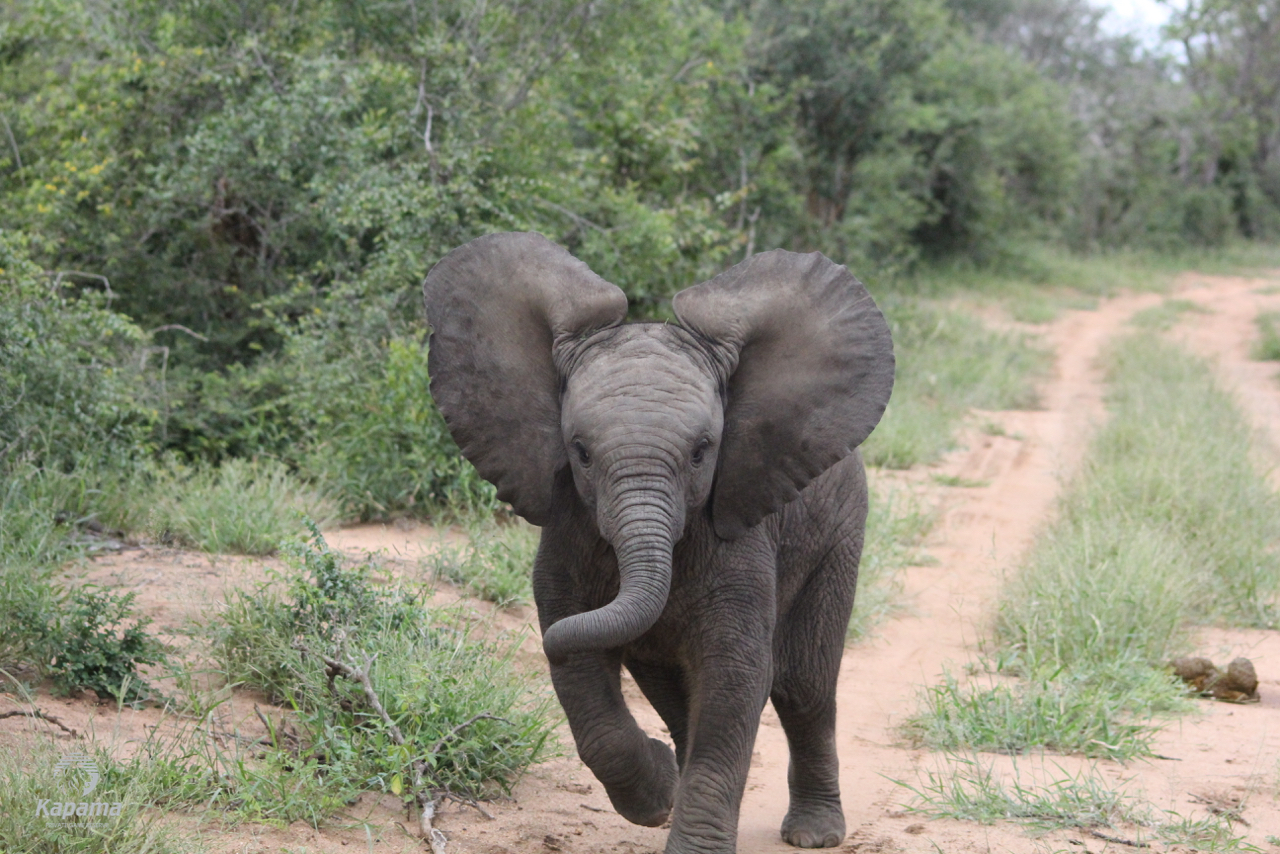
Young elephants are often found doing strange things like sticking their trunks into the mouths of older relatives. Trying to pick up things and eating dung of other elephants. Now a lot of this may seem odd but there is all good reason for this. Young elephants still need to learn the way of the bush. All these things contribute to that. Young elephants that are sticking their trunks into the mouths of others are sampling the food that the older ones are eating. The picking up of objects is there for them to learn how to properly use their trunks. People often think that the eating of others fresh dung is odd but it is to get the necessary bacteria into their stomachs which aids digestion. They do not have these bacteria in their stomach and need to obtain it from an external source.

A few other interesting facts about young elephants:
1.) Baby elephant’s bodies are covered in hair which reduces over time, as they age. These hairs aid in cooling down its body
2.) Elephants are very sensitive and caring. If a baby Elephant complains, the entire family will go over to soothe it
3.) Most baby elephants are born at night
4.) Baby elephants stay very close to their mothers for the first few months and drink their mother’s milk for about two years, sometimes longer
5.) A young elephant calf may suck its trunk to help it relax when it’s not feeding

All in all, they are wonders of the bush and always a pleasure to see. Fun interactive and amazingly beautiful. These interesting, intelligent creatures will always be near to my heart.
Story and photos by Chris Reiners Buffalo Camp
Latest news
No Results Found
The page you requested could not be found. Try refining your search, or use the navigation above to locate the post.