Cape buffalo
The Cape Buffalo falls part of the notorious Big Five, which everyone wants to find when out in the African bush. The other animals that make up the Big Five are Elephant, Rhino, Buffalo, Lion and Leopard.
A few interesting facts about Buffalo:
- Cape buffalo can weigh anything between 300 to 900kg
- They can run at speeds of 55km\h,
- They are extremely aggressive and unpredictable animals and will charge suddenly without giving any sighs, making them one of the most dangerous animals in Africa.
- Buffalo is dimorphic that means there are little differences between the male and female.
- The male is bigger and more bulker then the female the male have a helmed like structure in the middle of the head that links the two horns the helmed structure is called a boss and acts like a helmet if male buffalo will head clash can cause serious damage.
- Female buffalo is more of a red-brown colouration and have more narrow horns than the males.
- They are a social animal and are found in medium to large herds.

- Buffalos are also found in bachelor herds of males only. This happens when males have reached the end of their sexual maturity and are no longer competing for the attention of females. When there are just males they are referred to as dagga boys that mean mud boys.
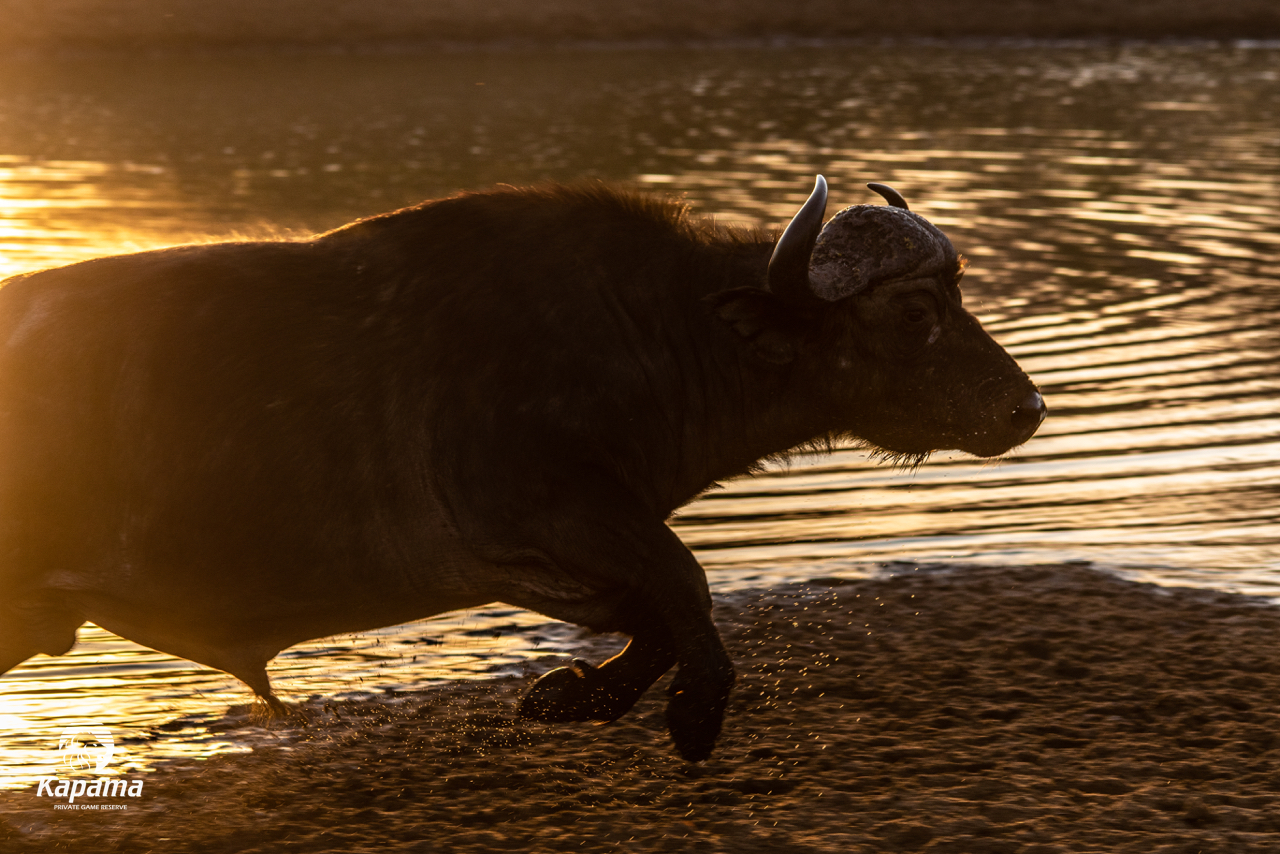
- Within the herd, both male and female have a hierarchy.
- Females that go into oestrus will attract many males that will compete for breeding and only the strongest male will have breeding rights.
- Female has an 11 months gestation period and a two-year interval between breeding again.
- The buffalo herd is led by what we call a pathfinder. They are not necessarily the dominant animal but acts as the leader of the group and determines where the herd will move.
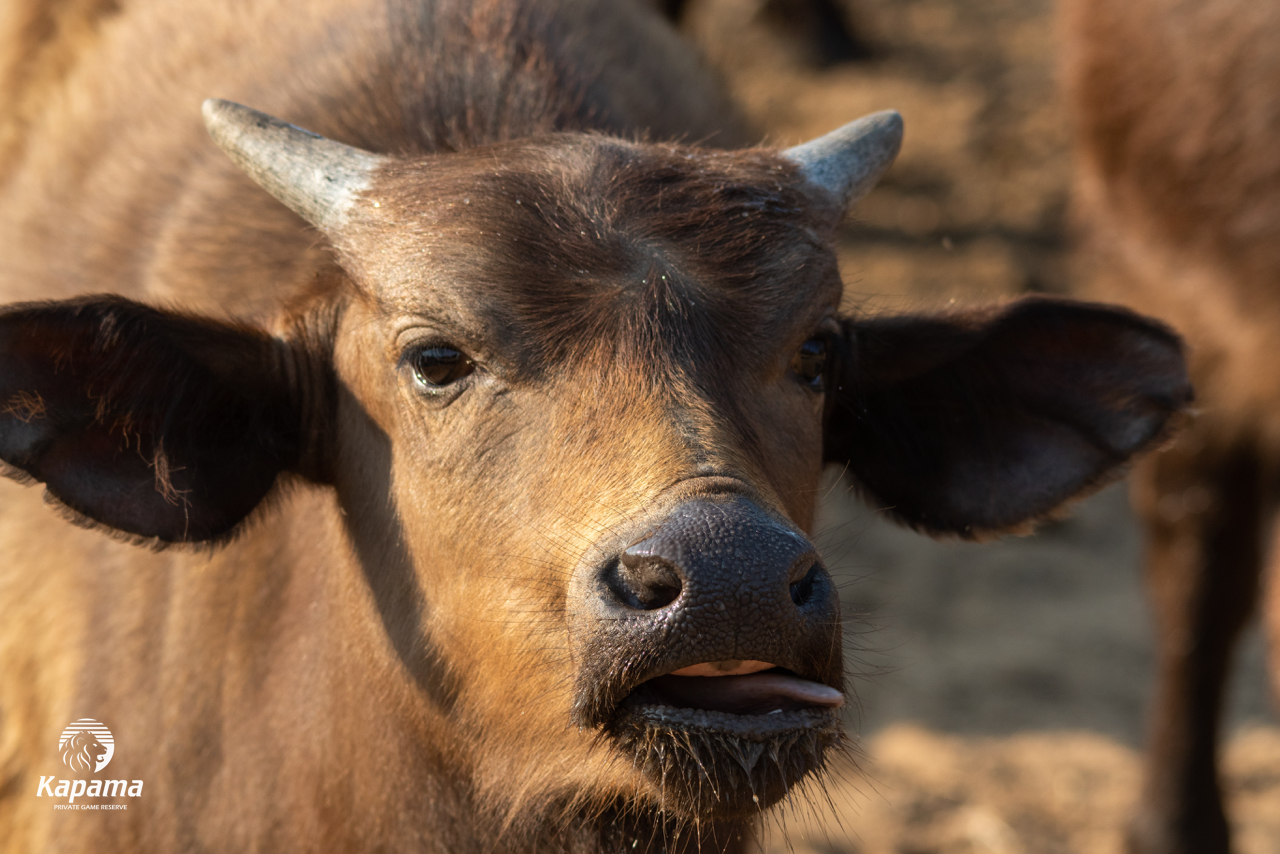
- Buffalo is not a territorial animal because they are bulk grazers and need to find suitable grazing and water on an ongoing basis so they are always on the move.
- When they drink water they can consume 35l of water at a time.
- They don’t have the best eyesight but an extremely good sense of smell and hearing that can detect any threat toward them.
- When there is a threat such lions they all will come together keeping all the small calves and females in the middle and all the stronger males will be at the end defending the group.
- They are known to kill lions when lions try to hunt them and even go out of their way to charge and mob lions to make sure they are chased out of the area where there are small calves.
The African buffalo are unique animals and dangerous giving the title of being part of the big five.
Facts and photos by Buffalo Camp Ben Scheepers – Buffalo camp.
Latest news
No Results Found
The page you requested could not be found. Try refining your search, or use the navigation above to locate the post.