Battle Scars
To be a male hippo is not an easy thing. Granted, your first year or two is wonderful with mom, being by your side almost 24/7, protects you from crocodiles, Lions and other potential threats. However, as soon as you sexually mature, then it gets tough. There are huge dominant bulls, easily weighing in over 2000kg with long modified canines and incisors that are now showing interested in your mother and are threatened by merely your presence alone. This means that as a young male you either need to remain very submissive or fight your way up to having a harem of your own. This usually only happens after about 8 years though.
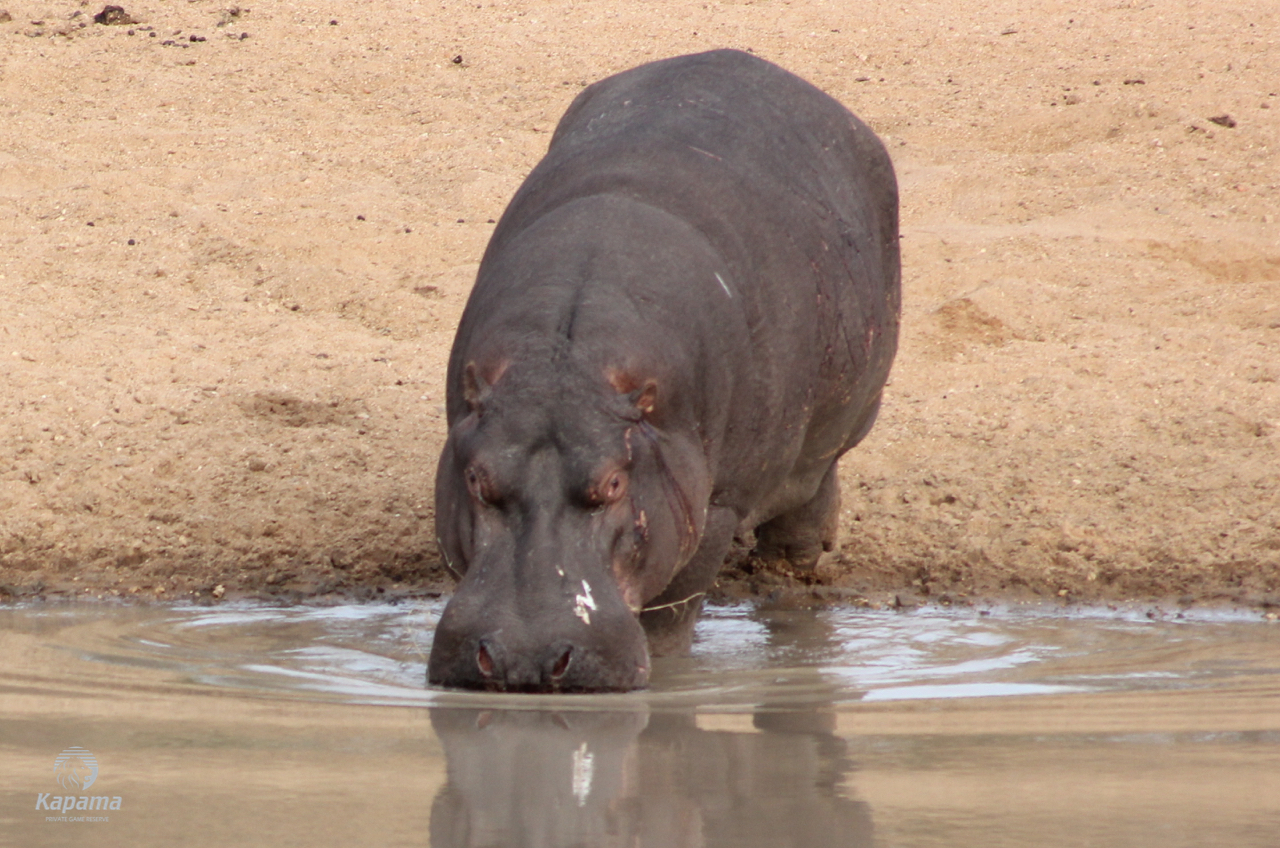
It was one of the first warmer winter days as we were nearing springtime, and we were lucky enough to spot one of these young Hippo bulls laying on the banks of a large dam near Buffalo Camp. The water was probably still cold from having fewer sunlight hours than in summer and so he wanted to warm up in the afternoon sun. They won’t bake in the sun for too long though as they have a rather thin outer layer of skin which can burn and dehydrate quickly. In fact, they have evolved to secrete a pink/red lymphatic fluid onto the skin which provides UV protection. Back in the day people thought this was blood that was being secreted. Hippos are actually considered to be amphibious animals, spending as much as 16 hours per day in the water. When in water, Hippos can’t swim or float! When they are seen moving so fast in water, they are walking on surfaces below the water like sandbanks. Most adult Hippos come up every three to five minutes to breathe even though they can hold their breath for about seven minutes. Even when sleeping, they will automatically surface to breathe. They also close their nostrils and ears to prevent water from entering.
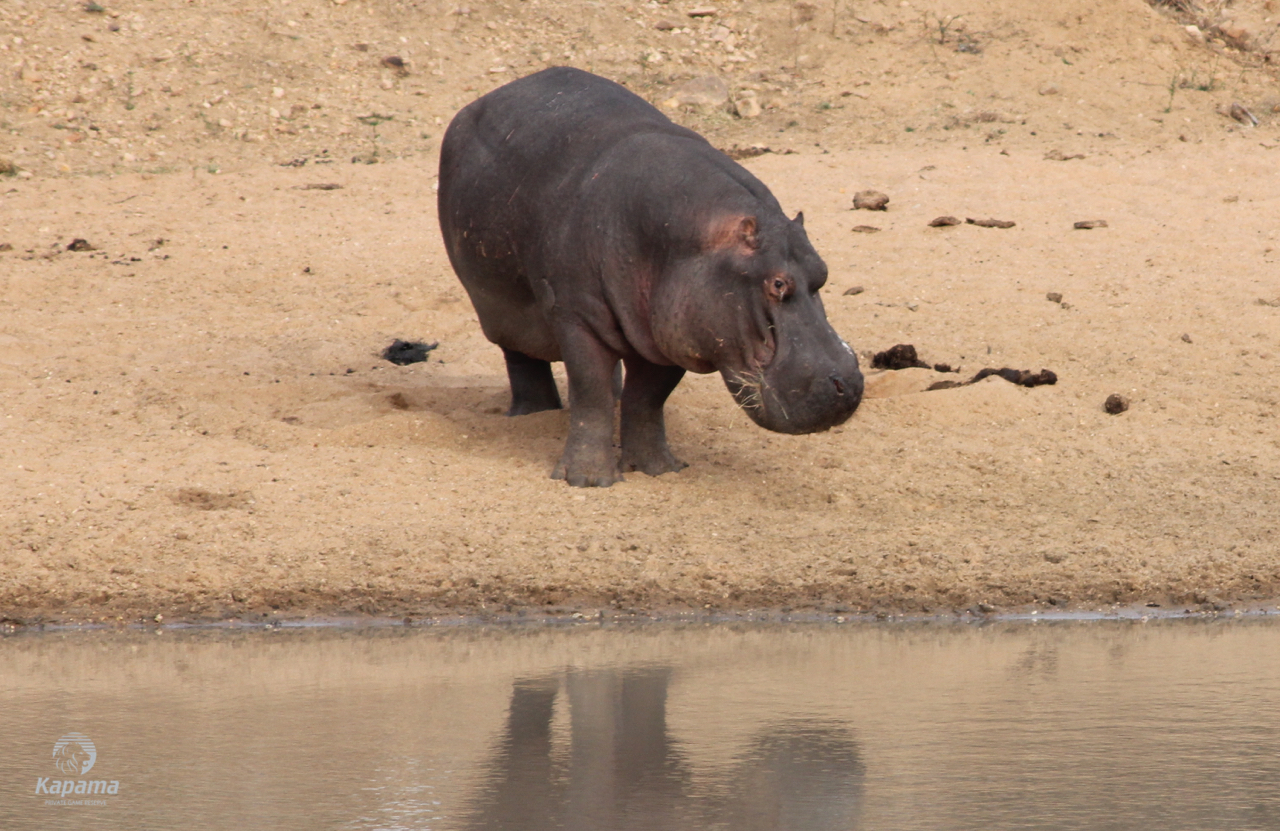
This young bull appeared to have been in several fights already as he was covered in lacerations and scars on his body, an easy way to identify him as a male, as females don’t have as many reasons to actively fight one another. He was all alone, probably kicked out of the herd as he was trying to mate with females and a larger, more dominant and experienced bull chased him away. He awoke on our arrival and slowly lifted his big body onto the short stubby legs. He meandered around for a few minutes and then headed straight back into the dam with only his head above the water.

For most guests visiting Africa’s wilderness areas this is usually all that is seen of a hippo, so we felt very grateful for our amazing sighting.
Story and Photos by: Ranger Monika Malewski – Buffalo Camp
Latest news
No Results Found
The page you requested could not be found. Try refining your search, or use the navigation above to locate the post.