Un Unexpected Sighting
It was about two months ago, on a beautiful spring morning when we set out on our safari. The morning started just as I liked it – with a stunning sunrise lighting up the sky in a series of breathtaking colours.
We set out to look for Hyena’s and anything else that we could find, as we had already seen the Big 5 (Which if we are being honest is one of the main reasons why most people come to Africa and want to go on Safari). The guests were extremely happy to look for things we had not yet seen, no matter if it was big or small. Knowing that there was an occupied Hyena den site – with one big female and two youngsters that have been active for about a month – that is where we decided to start, not knowing if they will be there or not – as Hyena are predominantly active at night.
As we started to get closer to the den site, the eagerness on the vehicle grew, not knowing what we would find, if the Hyena would be there or not. Unfortunately, when we got there the Hyena’s were not out and about, most likely sleeping within the den site. However, little did we know that we would end up finding something that was very much unexpected…
With almost all the trees not having much green to them and everything looking a bit pale and dull after the dry winter months, and before our rainy season had begun, we noticed something colourful in an extremely dull, seemingly dead tree. It was a snake – catching some morning sun. At an average length of 1.2 – 1.5m; with enormous, brilliantly emerald green eyes; a short stubby head and a colour variation that is far greater than any other South African snake – A Boomslang is something quite incredible to see.

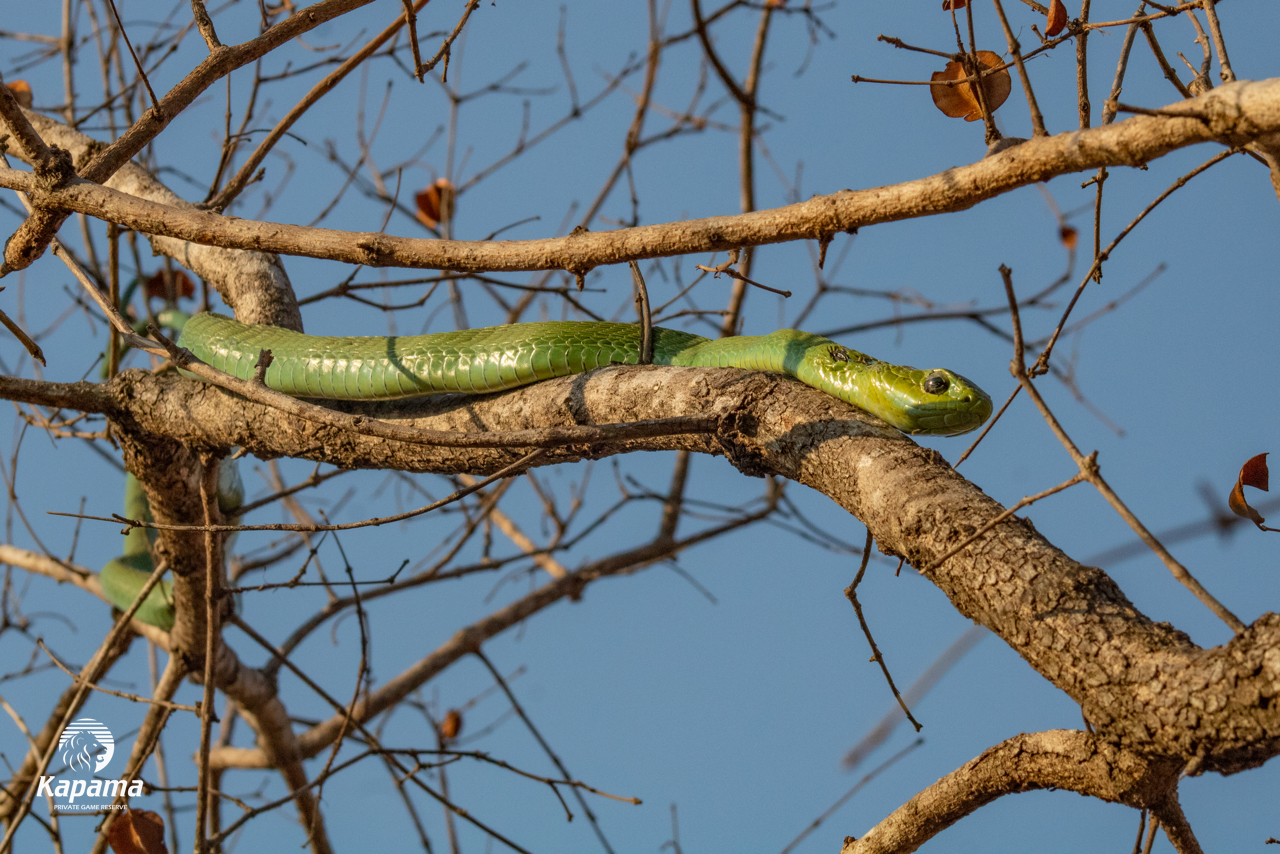
At first, there was confusion from the guests as to why my assistant ranger, Selby and I got so excited but when they saw the snake that we were pointing at, the excitement on the vehicle grew immensely. We got off the game vehicle to have a closer look, ensuring not to get too close or underneath the Boomslang, as they are extremely venomous. Having a potent haemotoxic venom that causes severe internal bleeding and bleeding from the mucous membranes and may result in a fatal haemorrhage if untreated. Although their venom is extremely potent, they are extremely shy snakes and seldom bite. Although it has back fangs, it can open its mouth as wide as 170 degrees making it easy for it to bite its victim with these fangs.
The Boomslang has no English name but translated directly from Afrikaans it means ‘tree snake’ which is where they live. These snakes rely on cryptic colouration to camouflage themselves in vegetation, hiding from its predators like birds of prey and other snakes. They actively hunt chameleons and other tree-living lizards, birds, nestlings, eggs and frogs, seldom taking small mammals as well. They use their muscles and scales to move between trees, shrubs and the ground.
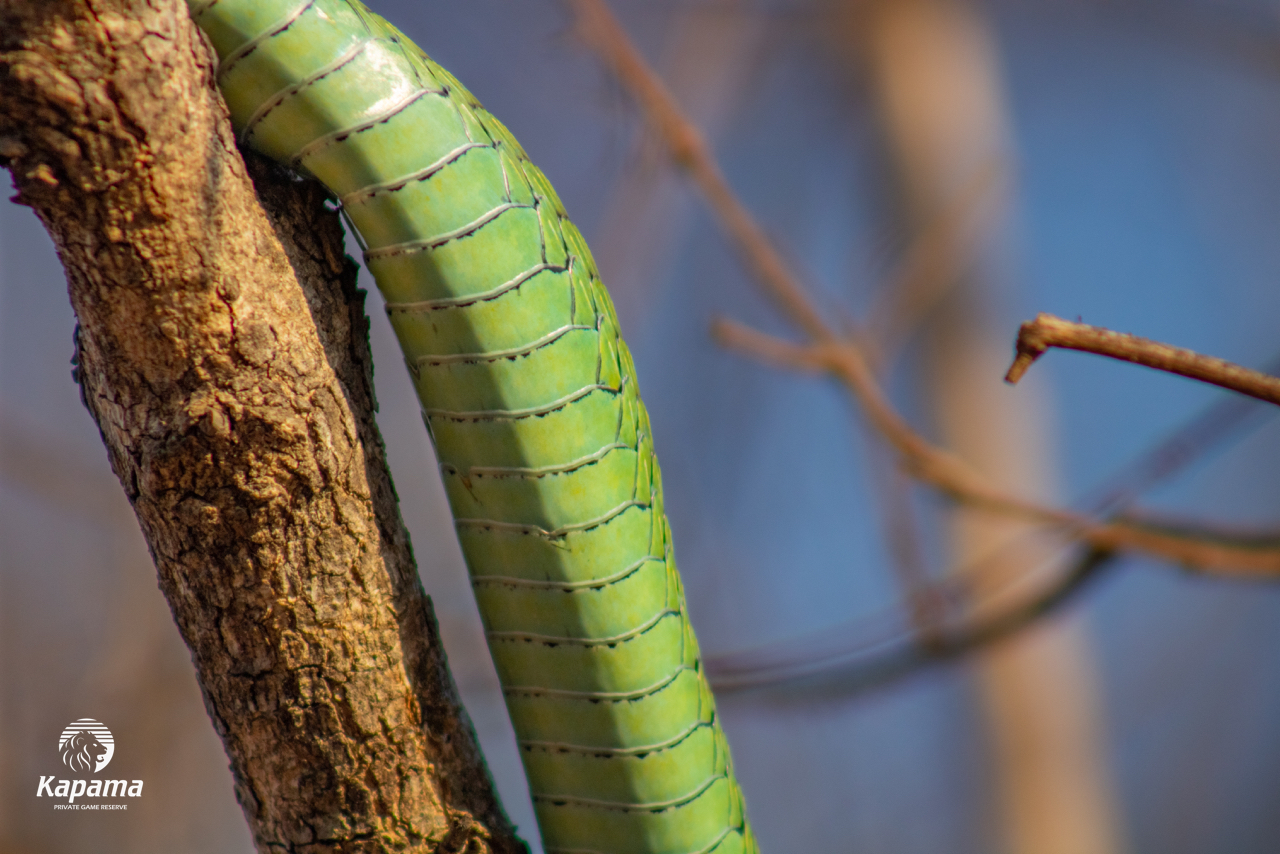
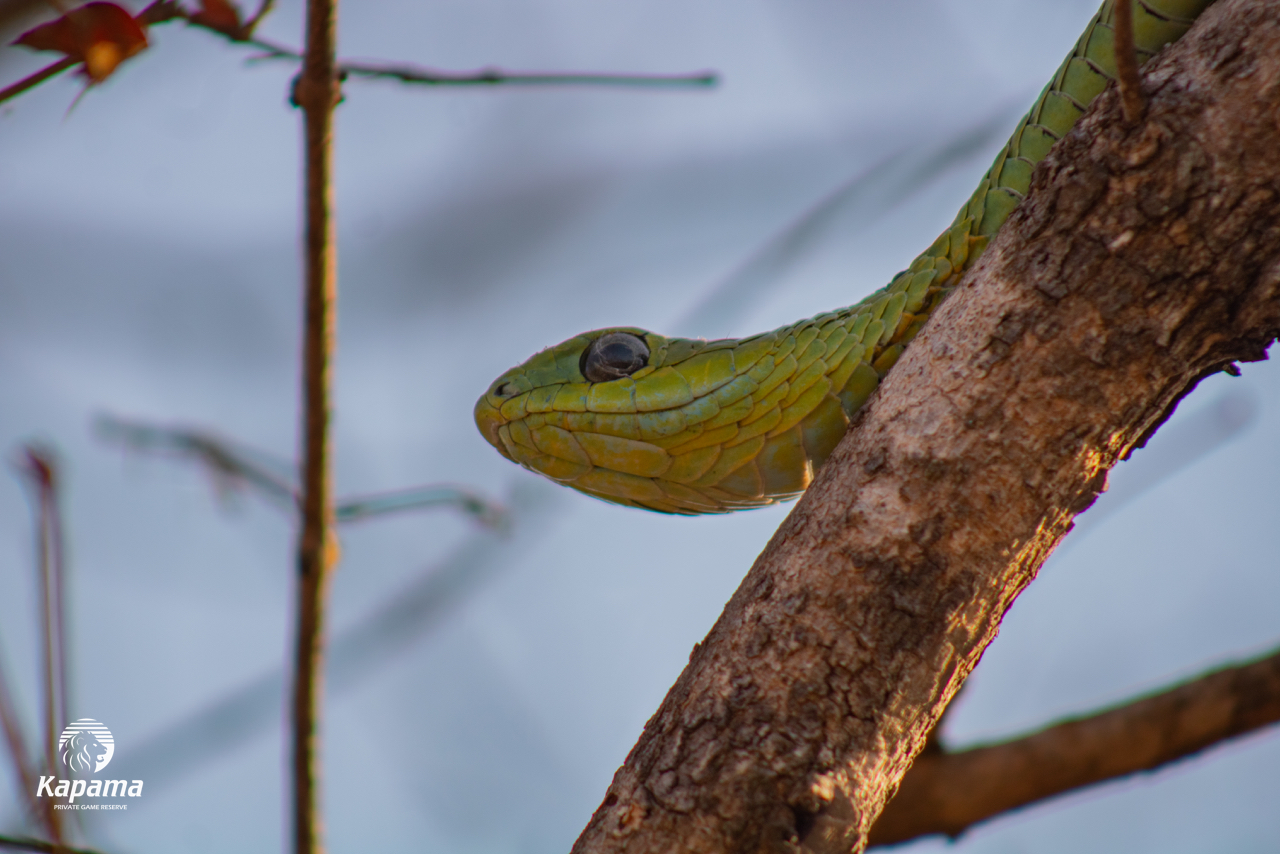
I can’t recall who on the vehicle was more excited, my guests, Selby or myself, but we were fortunate enough to have seen the Boomslang catching some morning sun. It was most definitely a very rare and unexpected sight to see.
Story and photos by Southern Camp Ranger – Lindi Taljaard
Latest news
No Results Found
The page you requested could not be found. Try refining your search, or use the navigation above to locate the post.