
Dwarf Mongoose
Have you ever seen a “rat-like” flash cross the road just to disappear?
Ever heard the bird alarm call and the source was nowhere to be found? You might have been tricked by Africa’s smallest carnivore… the Dwarf Mongoose
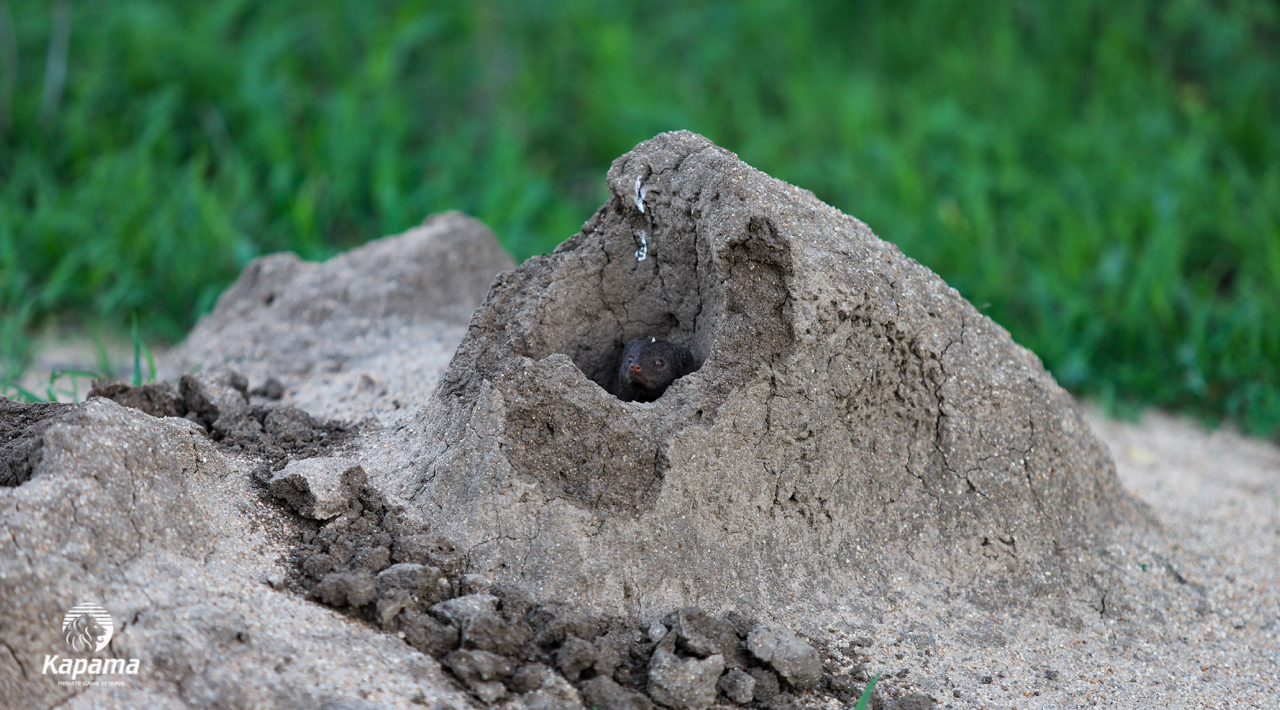
They forage in abandoned termite mounds, old logs or self-dug holes. They escape into these locations to avoid being seen. They have territories of approximately 75 acres where they have around 20 or more mounds that are used as den sites.
Why “Dwarf” Mongoose?
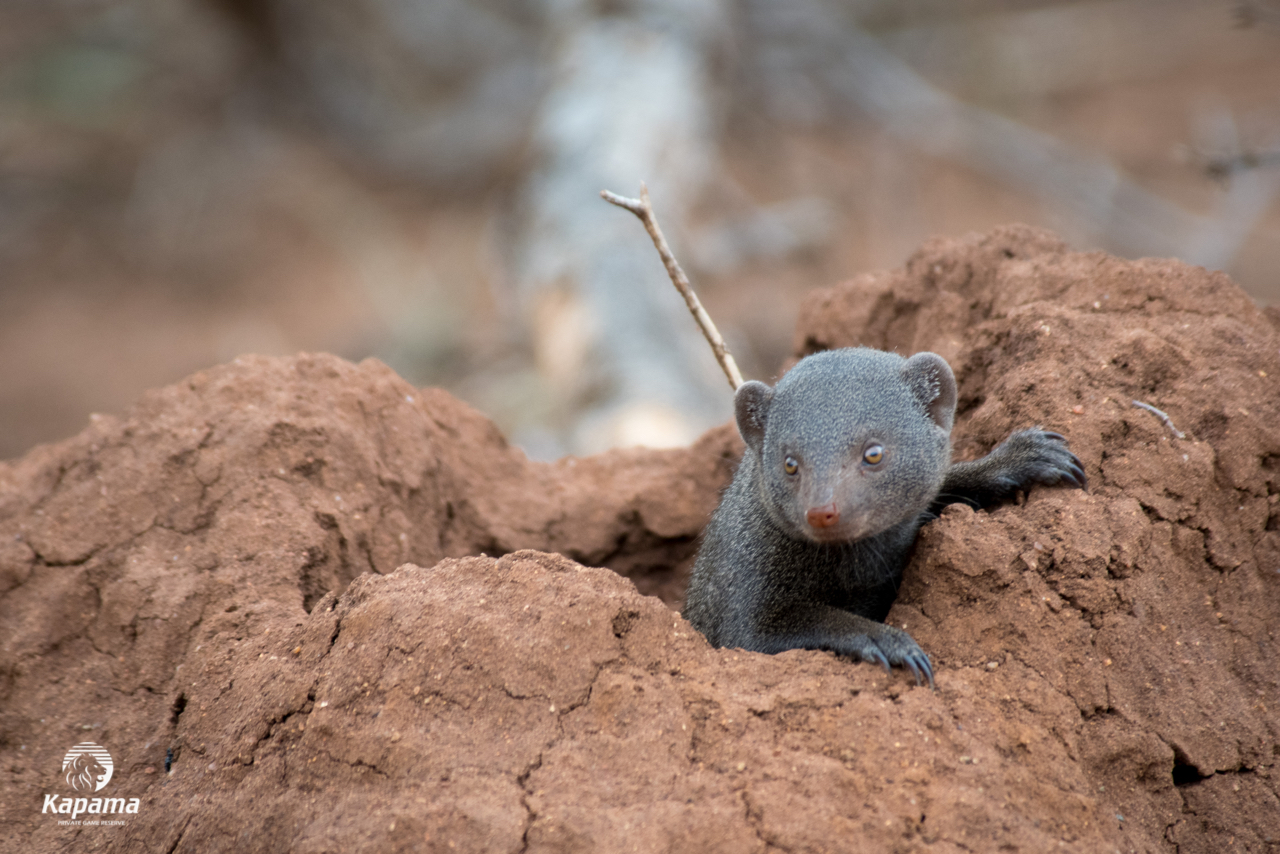
The name simply implies that they are the smallest of our Mongoose species of South Africa. Despite their size, they have adapted clever ways of protecting themselves from predation.
What is their social behaviour?
They will form mutualistic relationships with birds such as the hornbills where they will forage together. The hornbills will keep a lookout and in return, it gets fed by insects kicked up by the Mongoose on the ground. They live in a female-dominated society. A dominant female and her male consort, usually the oldest animals in the group, are the leaders of the group. The rest of the group is composed of family members, generally older offspring of the dominant pair. Each year the alpha female produces three litters of young, with two to four infants in each litter. The young of the dominant female is second in the group’s social system, tended for and cosseted by subordinate members. However, this status is immediately lost upon the arrival of a new litter. The babysitters, who guard and defend the young, often change during the day so that individuals may forage for food.
How to identify them?
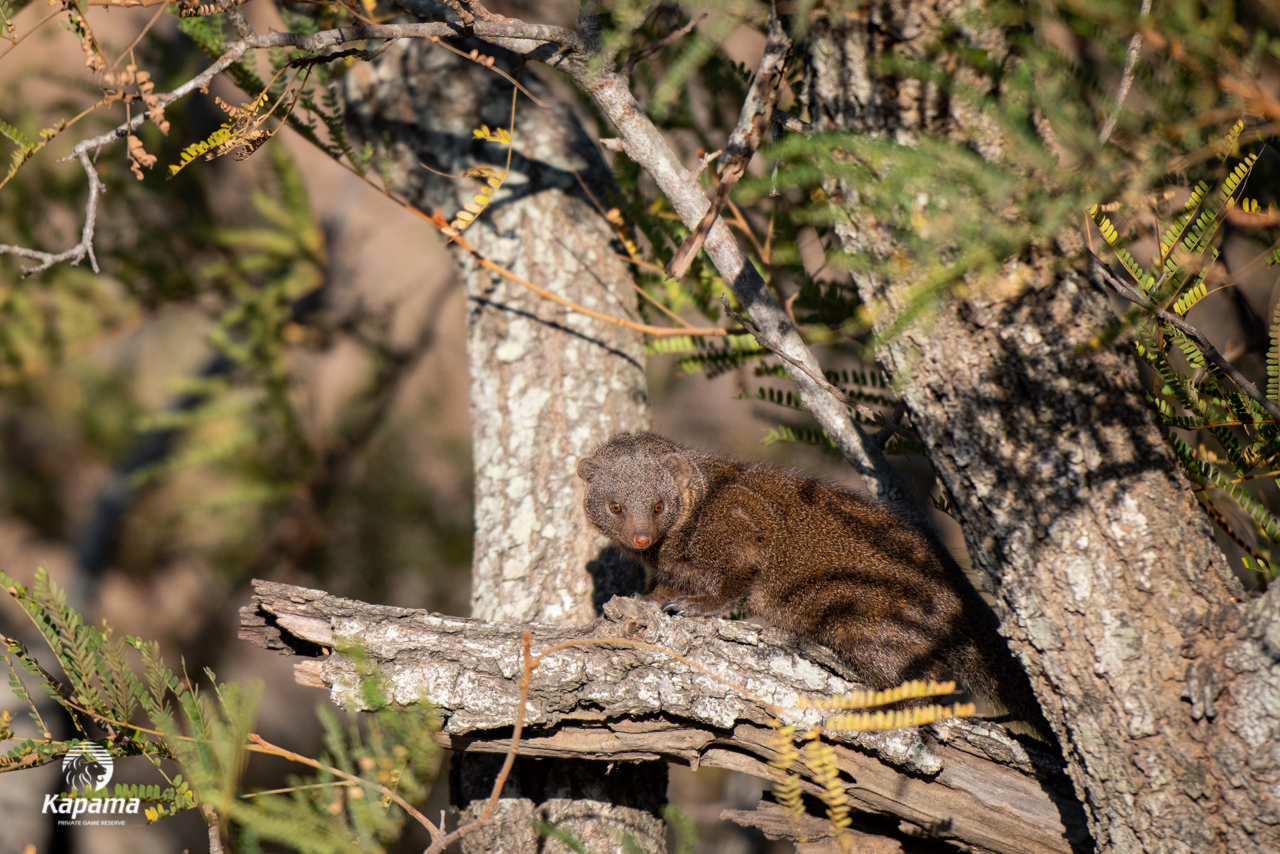
They are stocky, with a fairly short, pointed muzzle and a long, fluffy tail. Their fur colour varies but they are usually speckled brown, reddish, or greyish.
Where can I find them?
They can be found in a variety of habitats ranging from forests and woodlands to semi-arid areas.
Latest news

A Day in the Life of a Safari Guide at Kapama
Ever wondered what it’s like to live and breathe the wild every day? At Kapama, our safari guides and assistant guides dedicate themselves to guiding guests through the African bush, tracking wildlife, and creating unforgettable memories. Their passion and knowledge...
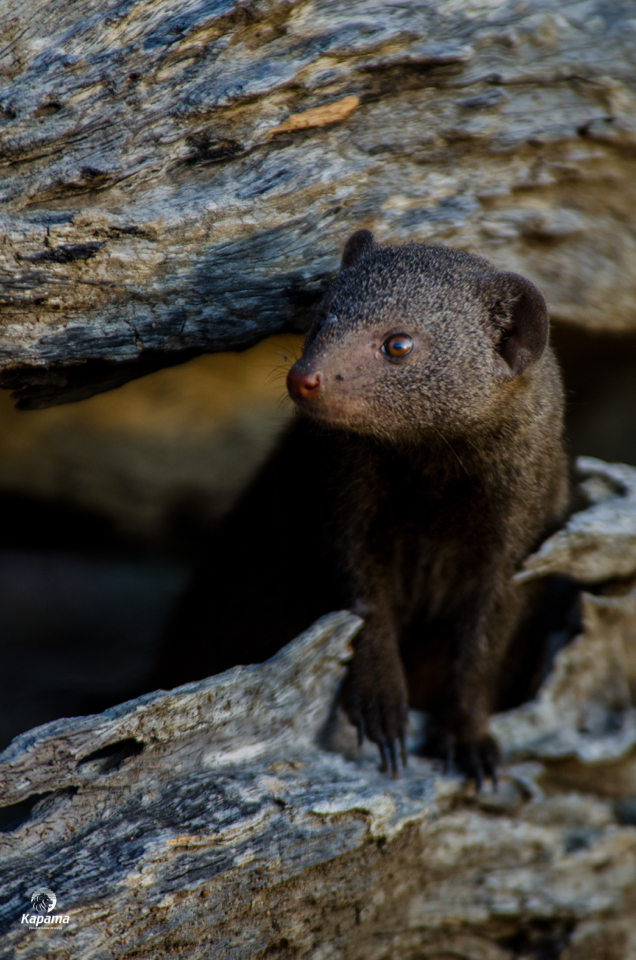
Next time out in the Bush keep your eyes peeled and you might just get to see a Dwarf Moongoose.
Story by Ranger Tristan – Photos by Ranger Mike Brown – Southern Camp
Latest news
A Day in the Life of a Safari Guide at Kapama
Ever wondered what it’s like to live and breathe the wild every day? At Kapama, our safari guides and assistant guides dedicate themselves to guiding guests through the African bush, tracking wildlife, and creating unforgettable memories. Their passion and knowledge...


