
Often small things will be overlooked while out on safari. Most guests are interested in the Big Five as they are incredible and impressive creatures to see out in the wild. But often during a sunset drive, an assistant guide will motion for the guide to stop, he will get off the vehicle, walk across to a tree and point out the smallest of creatures. That is when guests are introduced to the chameleon.

Here are a few interesting facts:
1.) There are over 202 species of chameleons worldwide
2.) They are distinguished by their zygodactyl feet (meaning toes pointing forward and backward), their swaying gate, and their crests or horns on their brow and snout.
3.) Chameleons eyes are independently mobile. Each eye can move 90 degrees vertically and 180 degrees horizontally and can move in opposite directions allowing them to have complete 360-degree vision around their body.
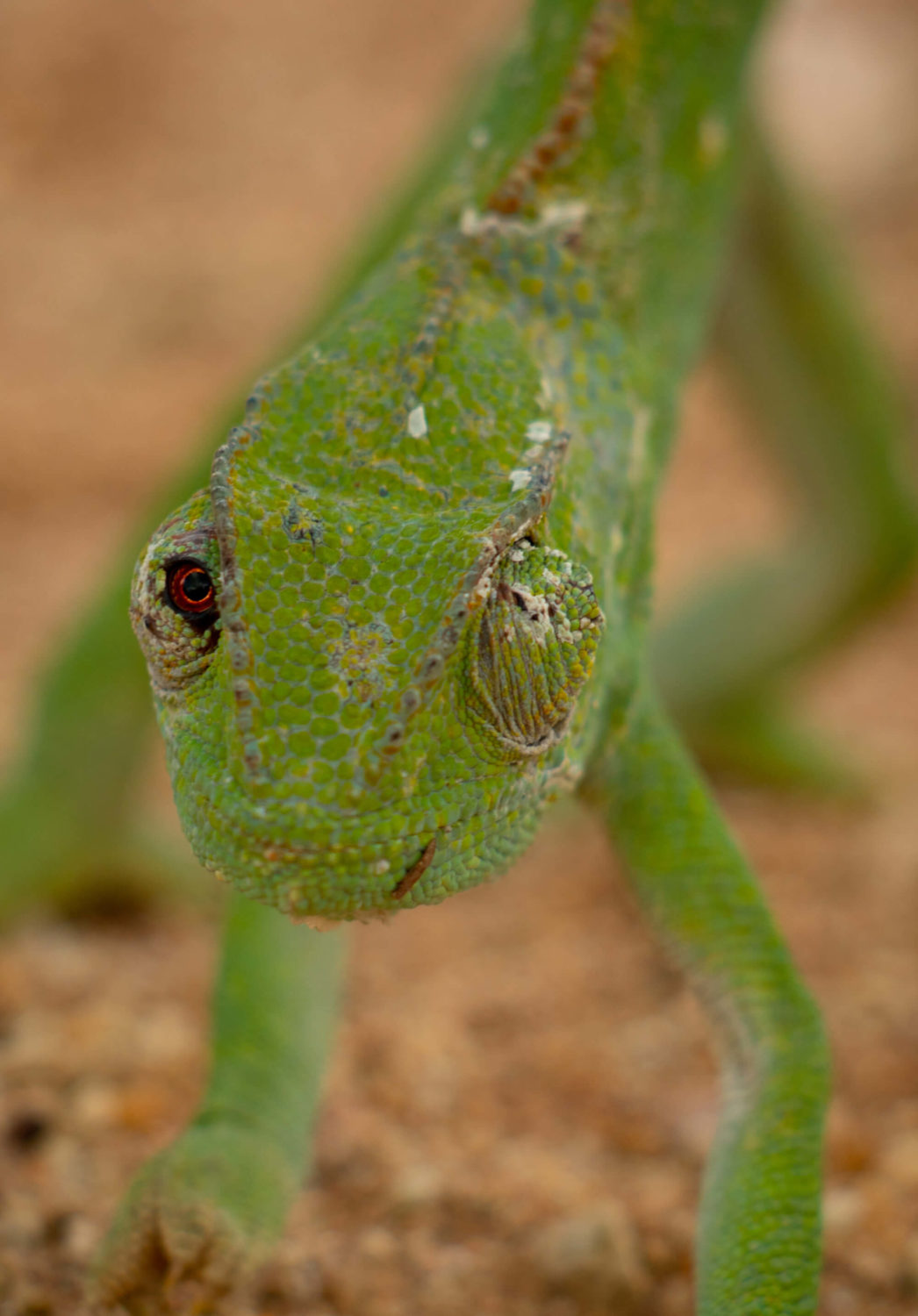
4.) Chameleons are adapted for climbing and visual hunting. Most of these species of chameleons live in trees or bushes.
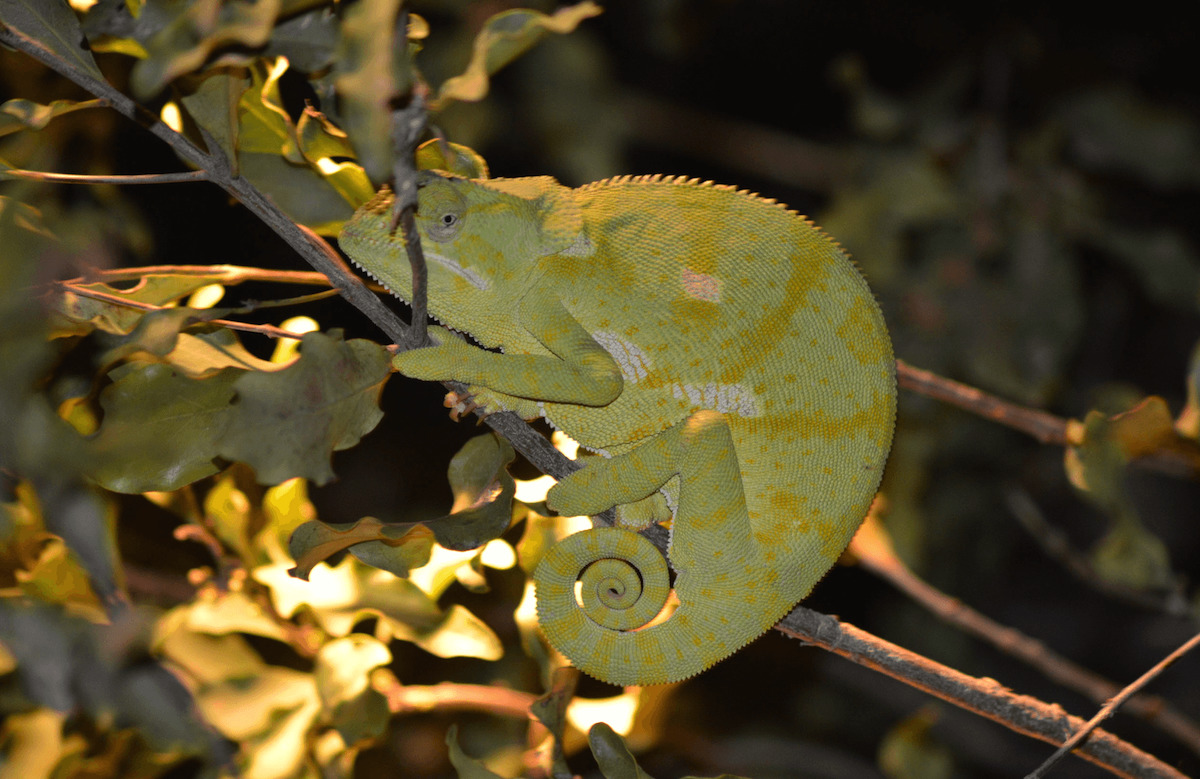
5.) Their long tails assist in balancing their body. It can roll several times around a branch to help them to hang on tight.
6.) Why their skin changes colour
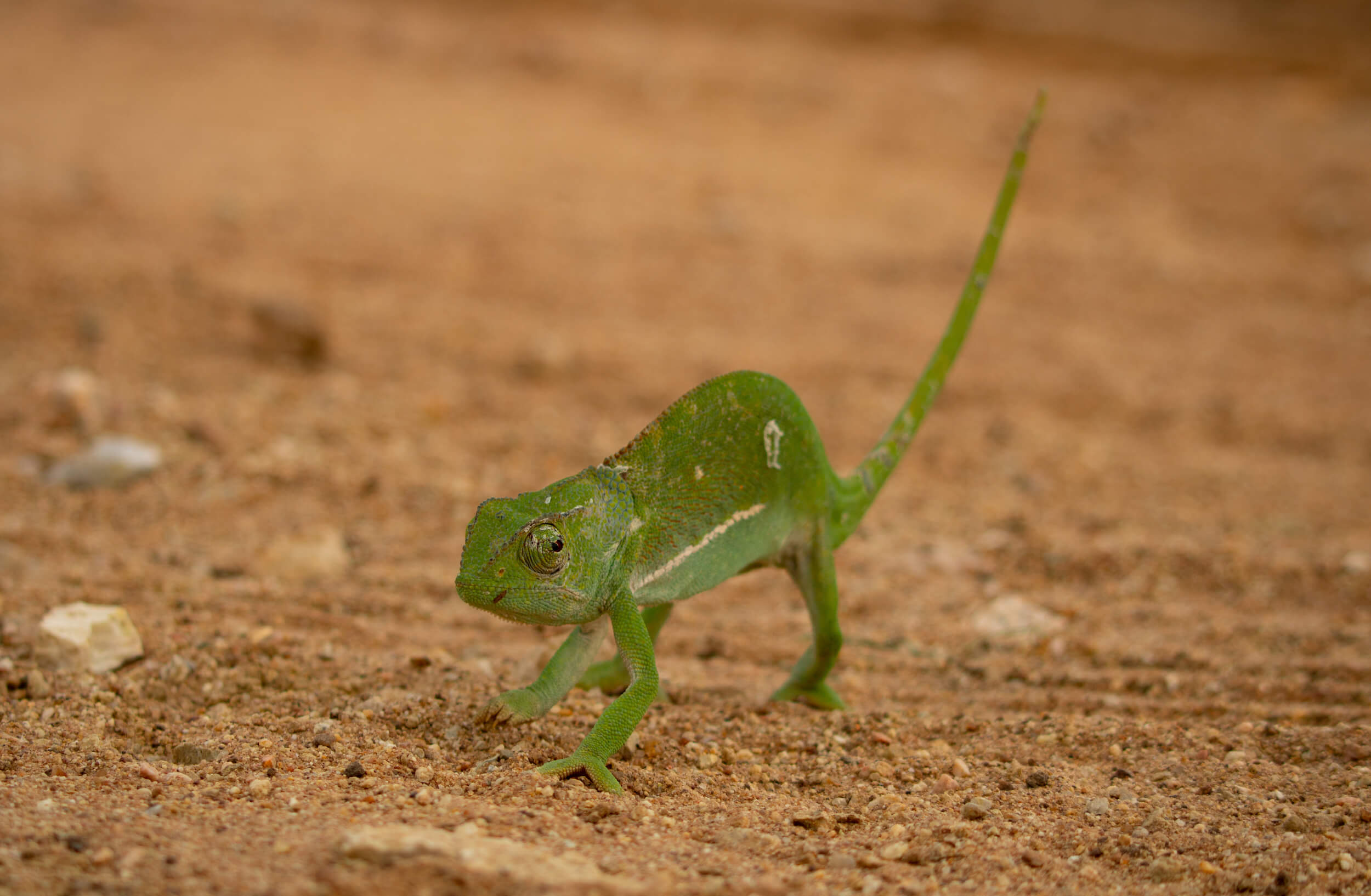
- Most people think a chameleon changes its skin for camouflage. There are a few other reasons like mood, changes in light or temperature, or the humidity of their environment.
- Chameleons Change coloUr to regulate their temperatures as they cannot generate their body heat. By changing the colour of their skin, they maintain a favourable body temperature. A cold chameleon may become dark to absorb more heat, whereas a hotter chameleon may turn pale to reflect the heat from the sun.
- Chameleons will also use bold colour changes to communicate. Males become bright to signal their dominance and turn dark in aggressive encounters. Females can let males know if they are willing to mate by changing the colour of their skin.
7.) Why do they have such long tongues?
- The tongue of chameleon can be up to twice the length of its body. This exceptionally long tongue catches unsuspecting prey from a distance.
- A chameleon’s tongue has a very specialized system of complex muscles that enable it to shoot out and retract faster than the average human can blink. When the tongue reaches the insect, retractor muscles contract and pull the tongue back in the mouth of the chameleon.
- The tip of the tongue is unique on its own. On impact with the prey, sticky saliva together with a suction effect of muscles contracting, the insect is clasped and retracted in the mouth within a split second.
8.) Chameleons, unfortunately, serve as prey for many predators such as snakes, birds even monkeys. The smaller a chameleon is, the more likely it is to be eaten by a larger animal. Although they can blend in with their environment, they are near the bottom of the food chain.
Story by: Southern Camp Ranger Jaques Crosby


