Feeding Frenzy
Recently an old male Buffalo died in the middle of a muddy waterhole. The cause of death was difficult to determine as there could have been numerous reasons. But one thing we could be certain of was that the carcass of the Buffalo would not go to waste. In nature, every little bit gets used.
We discovered the dead Buffalo during our afternoon drive with our Buffalo Camp guests. It seemed no other animal had noticed it yet as the Buffalo carcass was in a very difficult spot in the middle of a muddy waterhole and really difficult to get to, unless you were happy to get wet and muddy.
The next morning we decided to drive past the Buffalo carcass again just to see if there was any activity. As we approached we spotted a clan of Hyenas. They have an extremely good sense of smell and probably smelt the dead carcass. The spotted Hyena can detect carrion by smell, noise of other predators feeding on the carcass or even by observing Vultures descending on a carcass. Its hearing is so incredible that they can pick up noises coming from predators killing or feeding on prey over a distance of up to 10km.
When we got closer we noticed about ten Hyenas had surrounded the carcass.
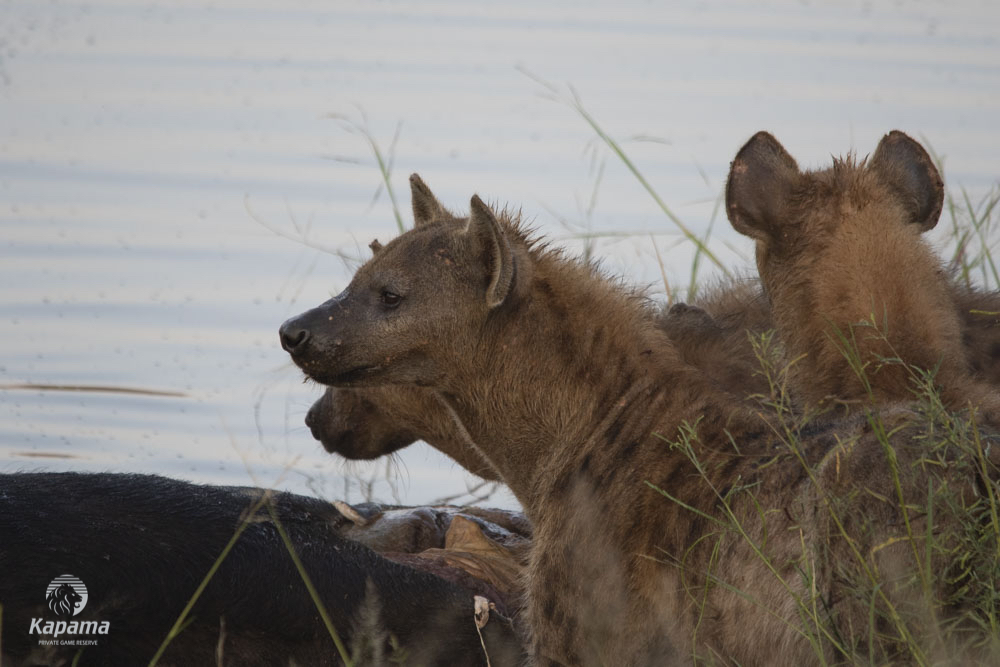
It was no longer in the middle of the muddy waterhole, but had been moved to the side. They dragged it there as this would have made it easier to feed on than where it was first discovered. We sat there and watched the hyenas eating on the carcass as they filled their already full bellies, as they must have been feeding for most of the night. Some of the hyenas already started to get to the bones.
One of the hyenas decided to have a piece of Buffalo rib. We could hear rib bones being crunched into pieces with his strong jaws from where we were sitting on the vehicle. Hyenas are well known for chomping on bones. They are able to crush through bone with their powerful huge jaw muscles, which is then digested in their incredibly strong stomach acids.
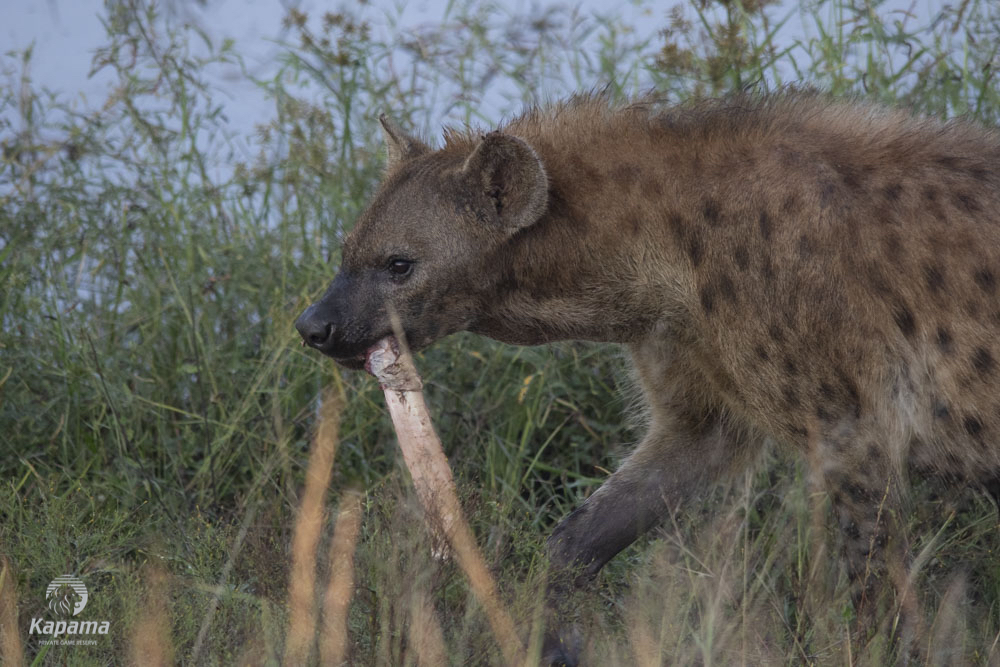
Eventually the Hyenas had their fill and decided to move off as it got hotter. They tend to sleep during the day and become more active at night. With the spotted Hyenas gone the Vulture’s took their turn and swooped in to finish off the remains. There must have been over 50 Vultures that began descending on the leftovers.
Chaos reigned as the Vultures fought to get the best spot to feed, pushing each other out of the way to get further inside the Buffalo carcass. The Hyenas had ripped the tough skin of the Buffalo, making it easier for the Vultures to get inside. Vultures made quick work of the carcass, consuming the meat at an alarmingly fast rate not wanting to share with their neighbour.
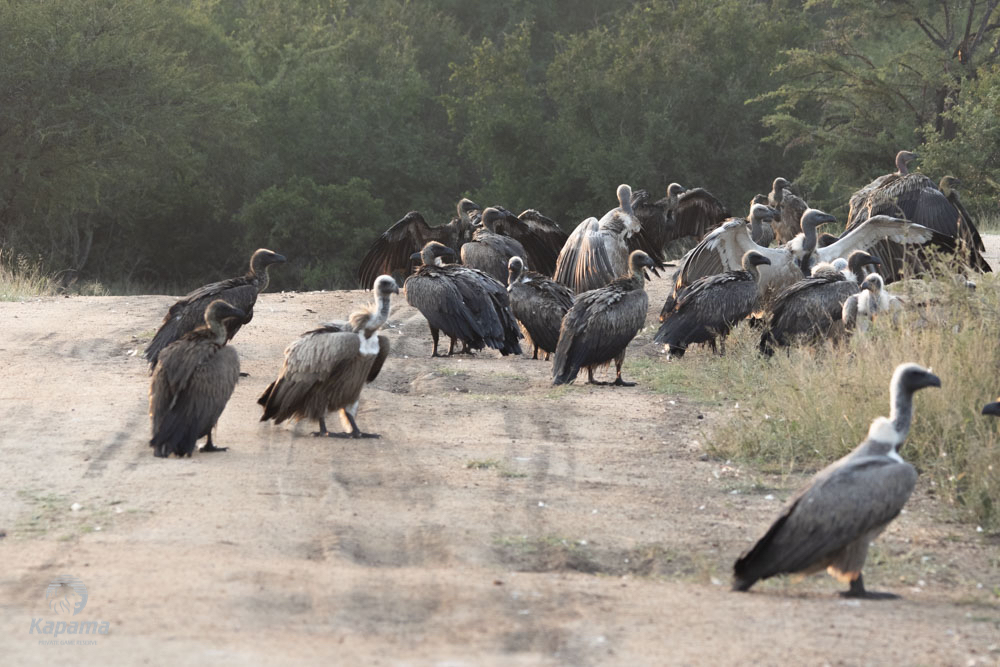
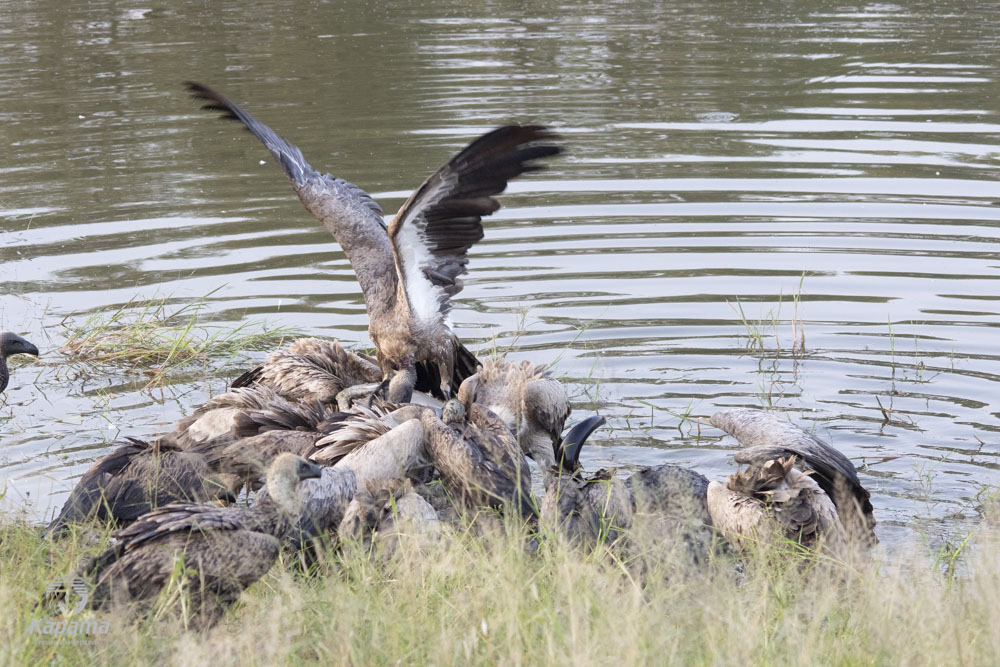
Suddenly without warning the feeding frenzy ceased and all the vultures took flight as a small black backed Jackal come charging in. Considering the number of vultures that were feeding, this little Jackal was exceedingly confident. He lost no time chasing the vultures away, so that he could also get his fair share of the carcass. Jackals are omnivores and will eat anything that they can get, but a big dead Buffalo is too good of an opportunity to miss. After a while the vultures started to return, one after the other.
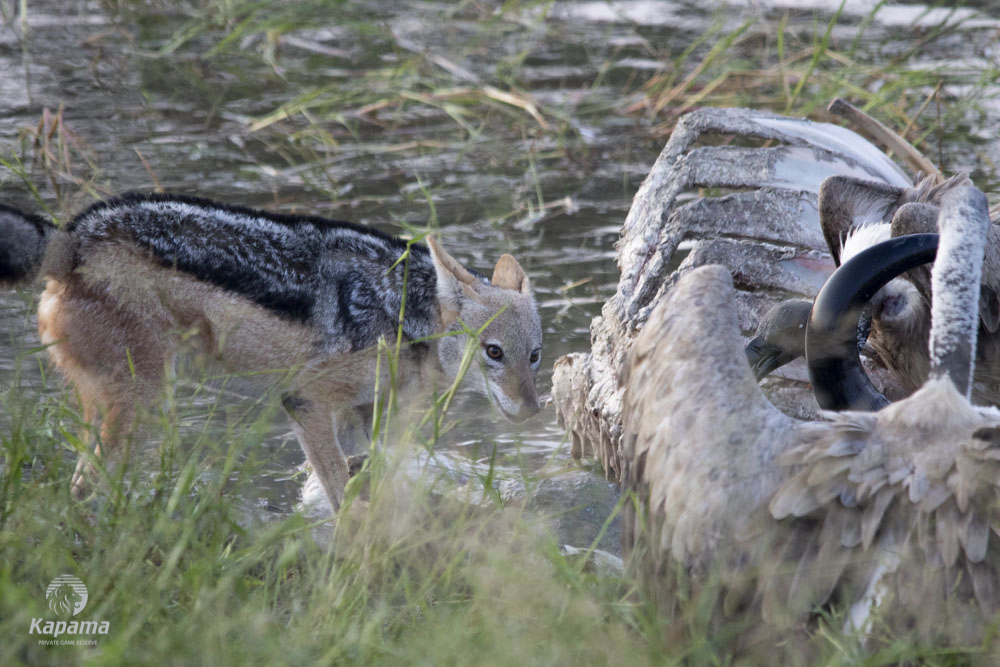
Did you know: when it comes to a Vulture group feeding around a carcass, they are called a wake, and when they are in flight formation, they are known as a kettle.
As their numbers grew once more, it became too overwhelming for the Jackal and he decided to move off. I explained to my guests that by the end of the day, the only thing that would remain of the Buffalo carcass would be some skin and bones.
Together in nature, Hyenas, Jackals and Vultures all play a huge part in the cleaning up process by eating all the unwanted rotten meat from carcasses so that diseases wont spread. Through such a collaborative feeding frenzy, nothing in nature goes to waste.
Story and photos by Buffalo Camp Ranger – Ben Scheepers
Latest news
No Results Found
The page you requested could not be found. Try refining your search, or use the navigation above to locate the post.