
Leopards have a lot of competition out in the wild like Lions and Hyenas, even though they are great hunters. As small predators that are solitary walking through bushes and tall grasses, they need to be vigilant as they look for prey and look out for danger. Leopards don’t rely on numbers but their senses.
In my safari experience, leopards are one of the toughest animals to find. They are shy and elusive and prefer dense areas and riverbeds, hiding away when they hear the vehicle coming. They survive as hunters due to their incredible skills.

They have great stereoscopic vision (stereoscopic vision describes the ability of the brain to register a three-dimensional shape and form from visuals). The pupil of a leopard’s eye constricts or dilates according to the amount of light entering the eyes. Leopards can see seven times better than us in the dark, making them exceptional nocturnal hunters. Their eyes are located in front of their head, which enhances their binocular vision. They also have big pupils that increase the amount of light that enters their eyes which simply means that they need less than half of the light that we need to see.
To give you a little bit more information on the structure of an eye; different cells are responsible for different functions. Photoreceptors are specialized neurons found in the retina that convert light into electrical signals that stimulate physiological processes. The brain processes signals from the photoreceptors sent through the optic nerve. The retina, which is the size of a thumbnail, is filled with around 150 million light-sensitive cells.
Cats’ eyes function like humans. The pupil, which is the black centre part of the eye, constricts or gets smaller in bright light to reduce the amount of light that enters and dilates or gets larger in darkness to increase the amount of available light that enters the eye. When light enters the eye, it goes to the very back to activate the retina, which is the light-sensitive layer lining the back of the eye. Cats have a special reflective layer covering the retina called the tapetum, which acts as a mirror.

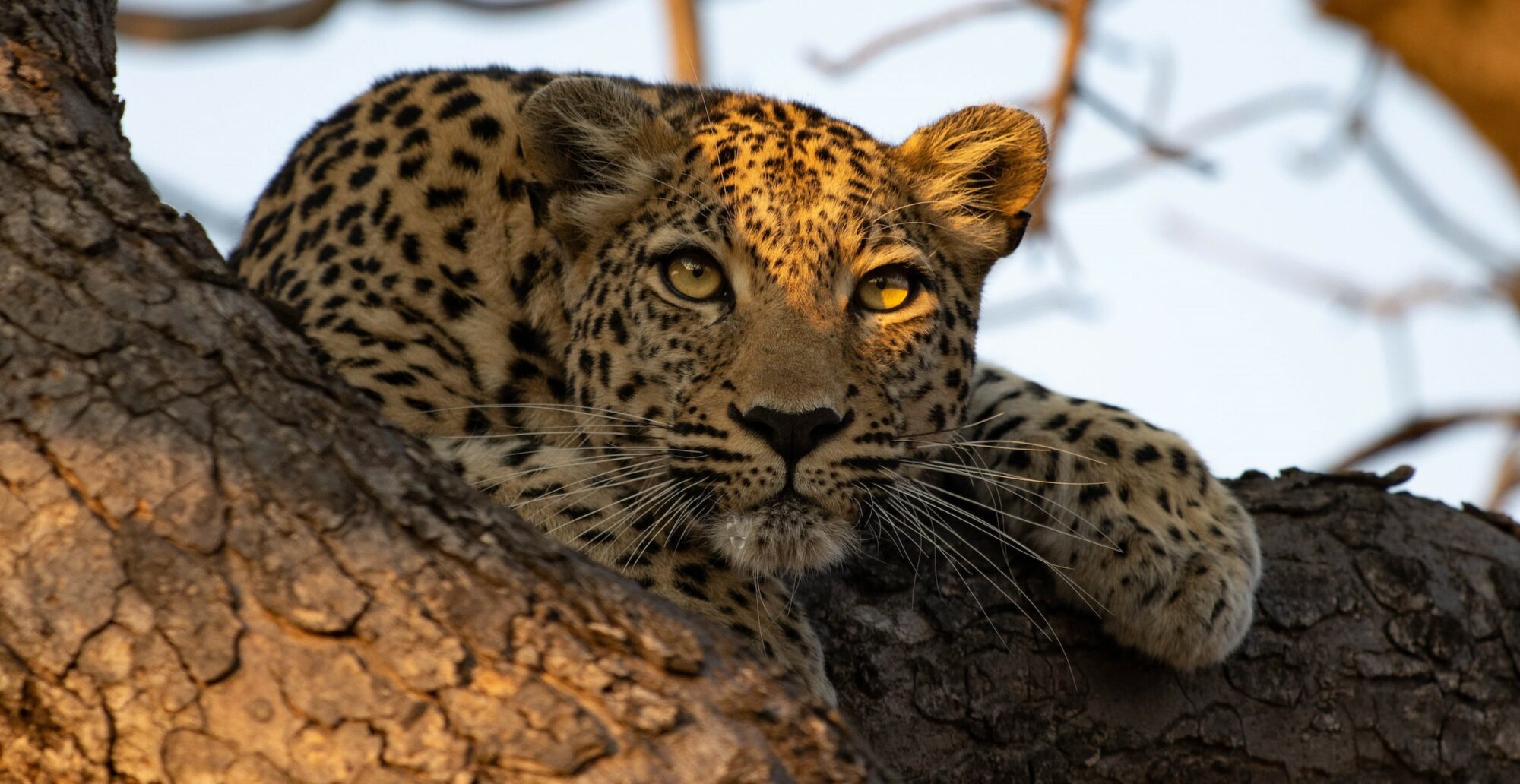
It reflects the light to another spot on the retina. If the light goes straight into the eye, like when a spotlight is shined on a cat, the tapetum reflects part of the light right back so that we see the greenish-yellow reflection. (Human eyes do not have a tapetum, so any light reflected appears red, like the natural colour of the retina.)
As a result of the light being reflected within the eye, a small amount of light is magnified so at night any bits of light are enlarged so the cat can see better. However, cats, like humans, cannot see in total darkness, but they can use up to 50% more of the available light than humans can in extremely dark places.
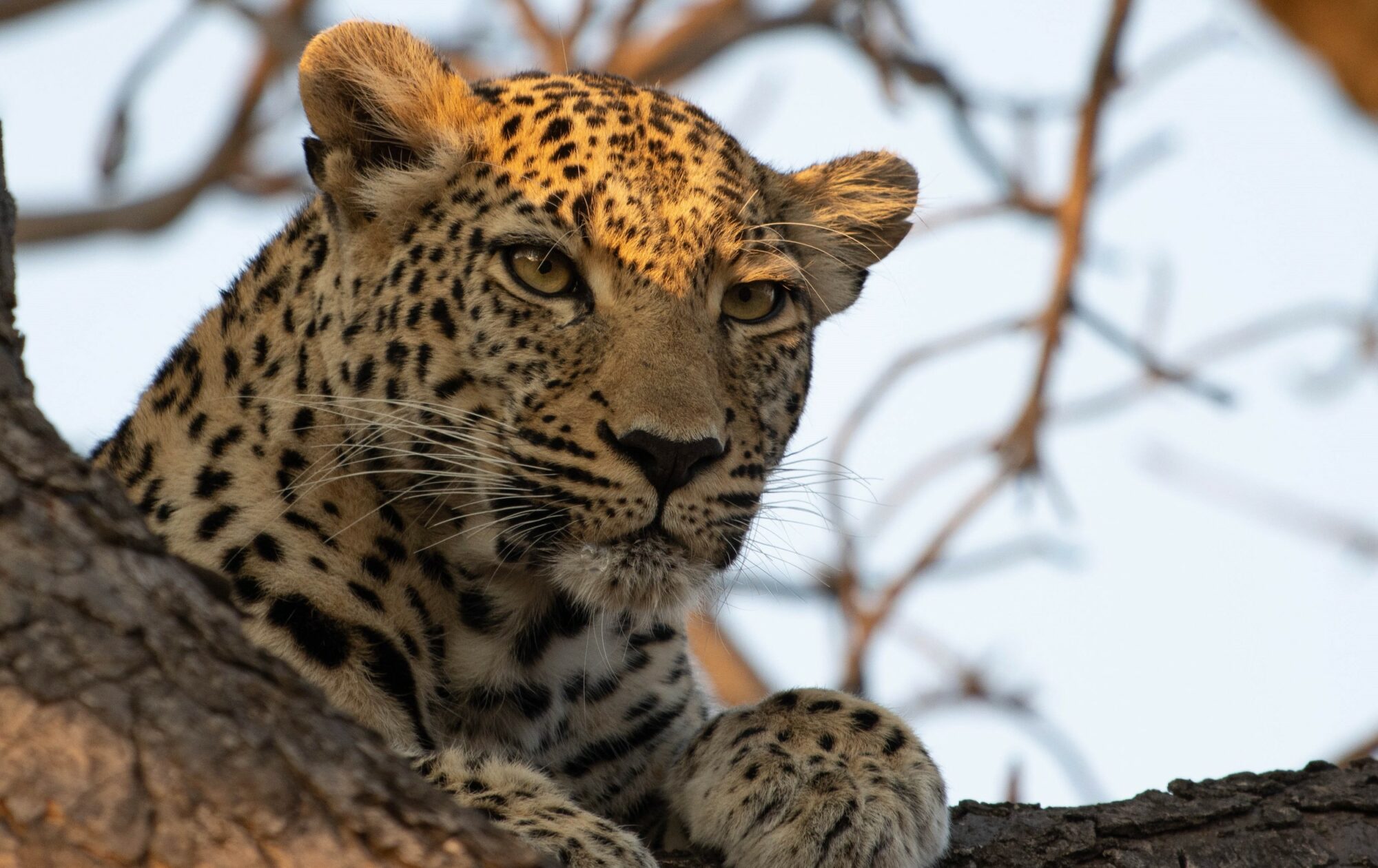
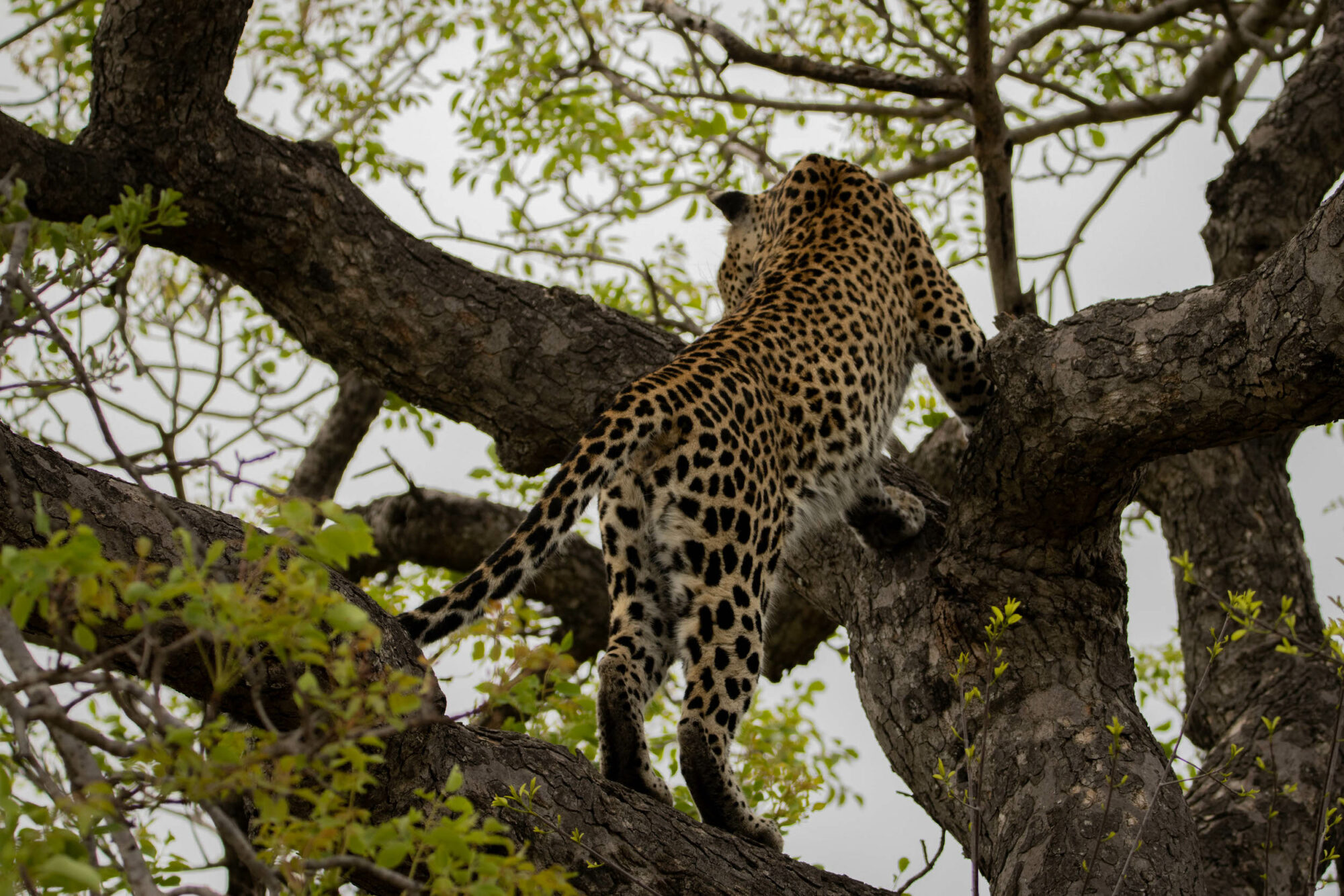
Leopards are often seen lying down or leopards crawling when trying to stalk their prey and going up the into trees to gain access to a better position to scan the area and have a better vantage point. They will, however, try and avoid sustaining any injuries and rather run away from danger than confront a potential threat.
Story by: Southern Camp guide Sifiso Mbhungele


