Brothers In Arms
If you have been on safari before, you will know that cats like to sleep between eighteen and twenty hours a day. This is not due to them being lazy, but rather them reserving energy. They can be very opportunistic hunters and always need to have energy readily available if a good opportunity presents itself. Not knowing where or when their next meal will come, they cannot afford to miss a good opportunity.
This is exactly how I found a coalition of three male Lions the other morning while out on a game drive with guests, sleeping… They were resting in the shade, a little bit out of their usual territory, close to Zebra dam.
We were about to start pursuing other weird and wonderful wildlife with our Southern Camp guests when we heard the sound of a branch breaking in the distance. It was coming from behind dense bush so we weren’t able to see what caused it. However, it did interest the coalition as all three brothers lifted their heads simultaneously. The noise of a breaking branch could mean approaching danger such as an Elephant or possible prey like a Giraffe. We waiting in anticipation to see what would happen next…
The next noise we heard was a bit closer, it was a small bellow from an African Buffalo. This sparked a lot of interest in the Lions as they immediately got up and slowly started approaching in the direction of the bellow.
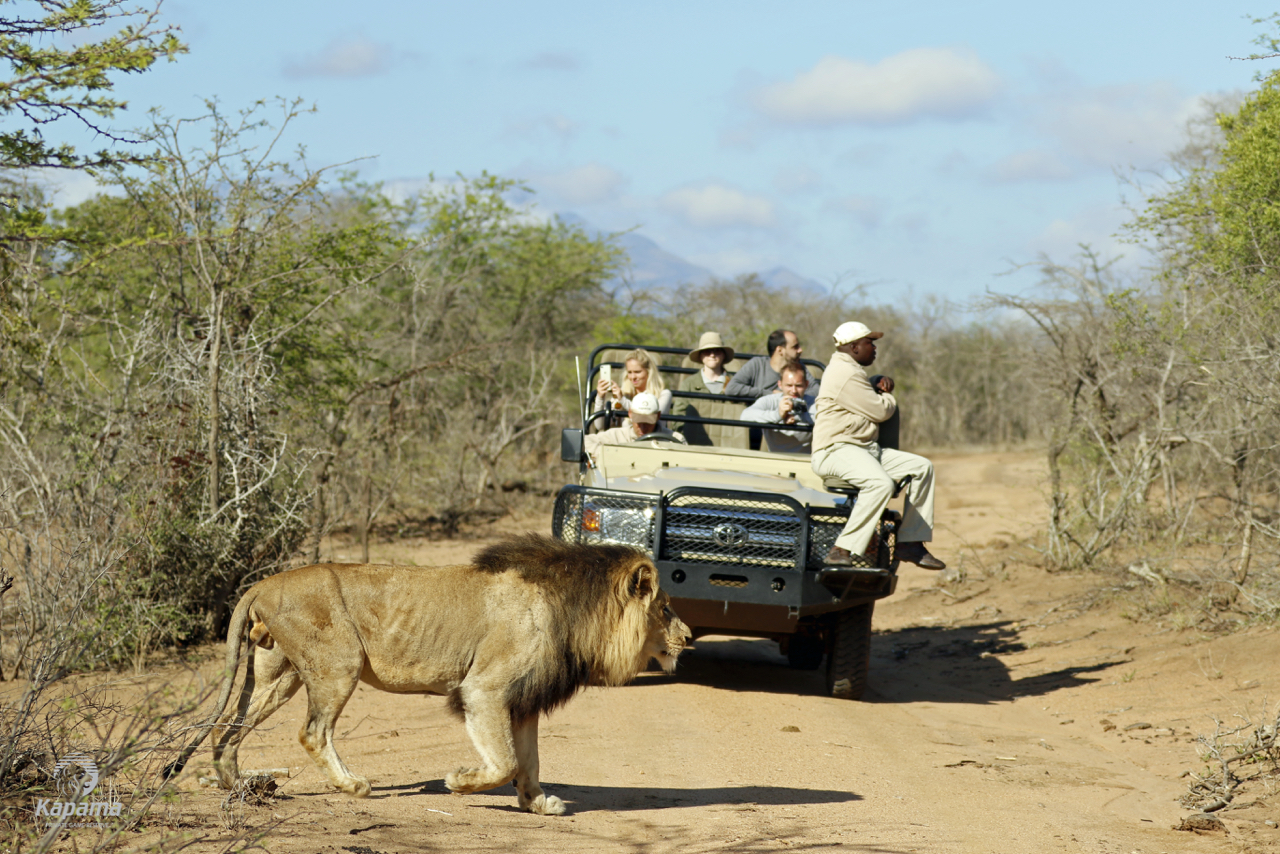
We followed them as they moved towards the inflow. One of the males Lions lay down behind the cover of a bush and had locked on to his target, a herd of African Buffalo making their way down to Zebra Dam for their morning drink. The Lions’ tails were twitching in excitement as the Buffalos continued towards the water. A Buffalo cow was heading in the direction of the Lions when she caught sight of the male behind the bush. She turned on the spot and started running, with the herd soon following suit. She only managed a few meters as the first male pounced on her back! The other two males were close behind and came in to help secure their meal. With amazing teamwork each Lion knew their duty, with one Lion on the throat, one holding the rest of the body secure and the other watching the rest of the Buffalo herd.

African Buffalo are well known to come back to try and save a herd member if they think there is a chance. However, with three large males on one Buffalo cow, they made the clever decision to save themselves and continue running away. The leading male expertly suffocated the Buffalo in just six minutes! This might not sound fast but Lions often struggle with large prey, taking as long as ten or twenty minutes to complete the kill.
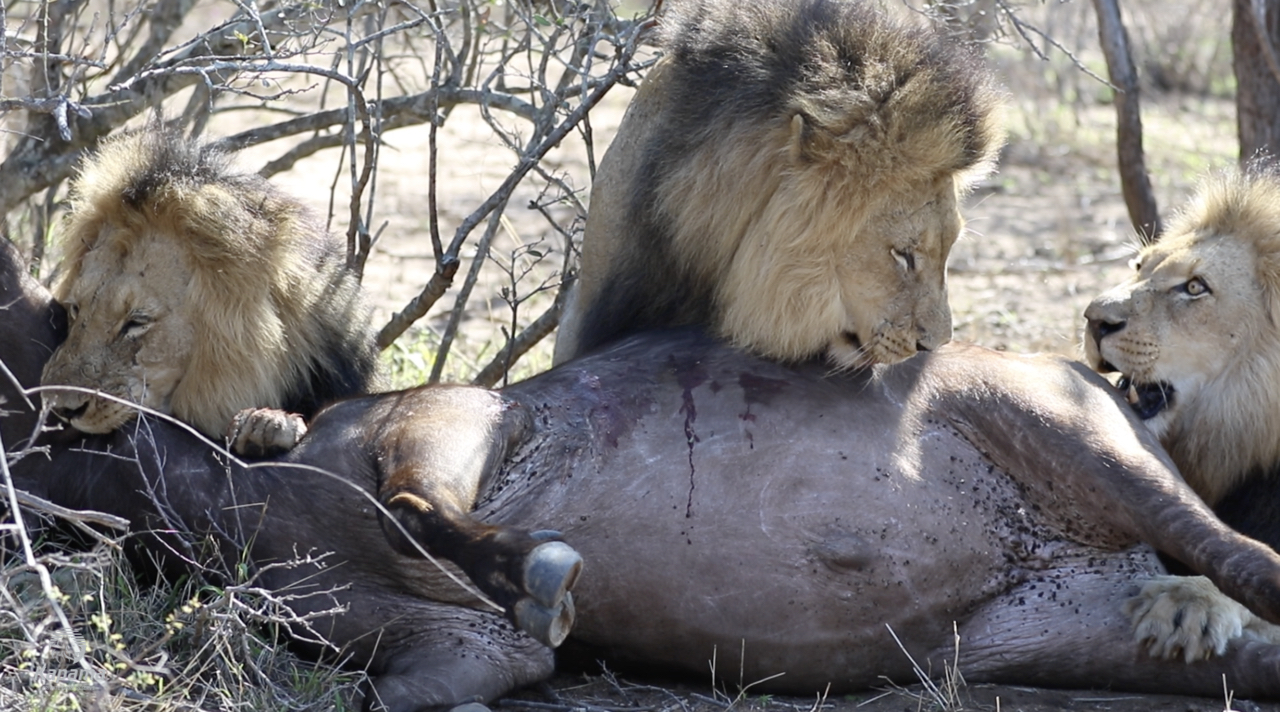
Once happy that the Buffalo was down for the count, they proceeded to feed on the rump. Most predators start feeding there as it is the thinnest skin and therefore the easiest to open up. After all, who doesn’t love a good rump steak!
We took a while to digest what we had just witnessed. There were some mix feelings on the vehicle but everyone knew just how lucky we had been!
Story by Southern Camp Ranger Mike Brown, Photos by Matthew Derry
Latest news
No Results Found
The page you requested could not be found. Try refining your search, or use the navigation above to locate the post.