Scorpions…
Scary things nightmares are made of…Or just very misunderstood?
Ever since we were young (for some of us that’s a far more recent memory than for others), there have been certain creatures which have topped the charts in competing for “The stuff nightmares are made of!” title.
One of these critters which always seems to strike fear into us, has eight independent legs, a hard exoskeleton, formidable-looking pincers, and venom-filled stinger poised and at the ready. If you haven’t guessed it already, I’m talking about the Scorpion.
Even looking at Greek mythology regarding astronomy, we find stories about scorpions. Orion (our main summer constellation) who was a great and fearless hunter declared he would kill every animal on the planet! This angered the elders greatly, and they summoned the formidable Scorpio (our main winter constellation) to go into battle with Orion, to prevent him from killing all the animals. And that’s why to this day you will never see them in the same sky. Orion is constantly on the run from the dangerous Scorpio who has been sent to stop him.
With summertime in full swing here at Kapama, now is the time you would most likely see a scorpion. But don’t panic, they are not nearly as bad as they are made out to be. In my opinion, they are just misunderstood creatures. Hopefully, after reading a bit more about them you will feel the same.
There is a general rule we use in helping us to identify how dangerous a scorpion is. (This rule is valid for all scorpion species, except for one in the Middle-East and one in North Africa). If a scorpion has thick/strong pincers and a thin dainty tail, it’s generally not considered dangerous. The big pincers have the power to catch prey, so the scorpion has no need for hugely potent venom. If a scorpion has thin, dainty pincers, and a thick powerful tail, beware!! Its tail is its weapon of choice to subdue prey and protect itself and as we know the tail has the sting and the venom duct.
All scorpions are considered venomous, but some just aren’t as potent as others. Those with thin tails, cause a burning reaction, with itching and swelling, but no medical intervention is required. Whereas those with thick tails are considered very dangerous and medical attention will be required.
Scorpion venom is made up of a cocktail of neurotoxins. The chemicals found in scorpion venom has the potential to be used in the treatment of brain cancer, and the illumination of cancer cells.
We have 13 Genus of scorpion in South Africa, but only 6 of these are commonly seen
• Thick tails (Parabuthus sp)
• Lesser thick tails (Uroplectes sp)
• Pygmy thick tails (Pseudolychas sp)
• Burrowing scorpion (Opistophthalmus sp)
• Creeping scorpion (Opisthacanthus sp)
• Rock scorpion (Hadogenes sp)
Of these, only the Thick tails (Parabuthus) are considered dangerous, especially amongst children, the elderly, or people with a poor immune system. If stung by one of these, medical intervention will be required. Get the patent to a hospital, keep them calm, and the affected area still.

Parabuthus transvaalicus (Transvaal Thicktail)
Parabuthus transvaalicus (Transvaal Thicktail)
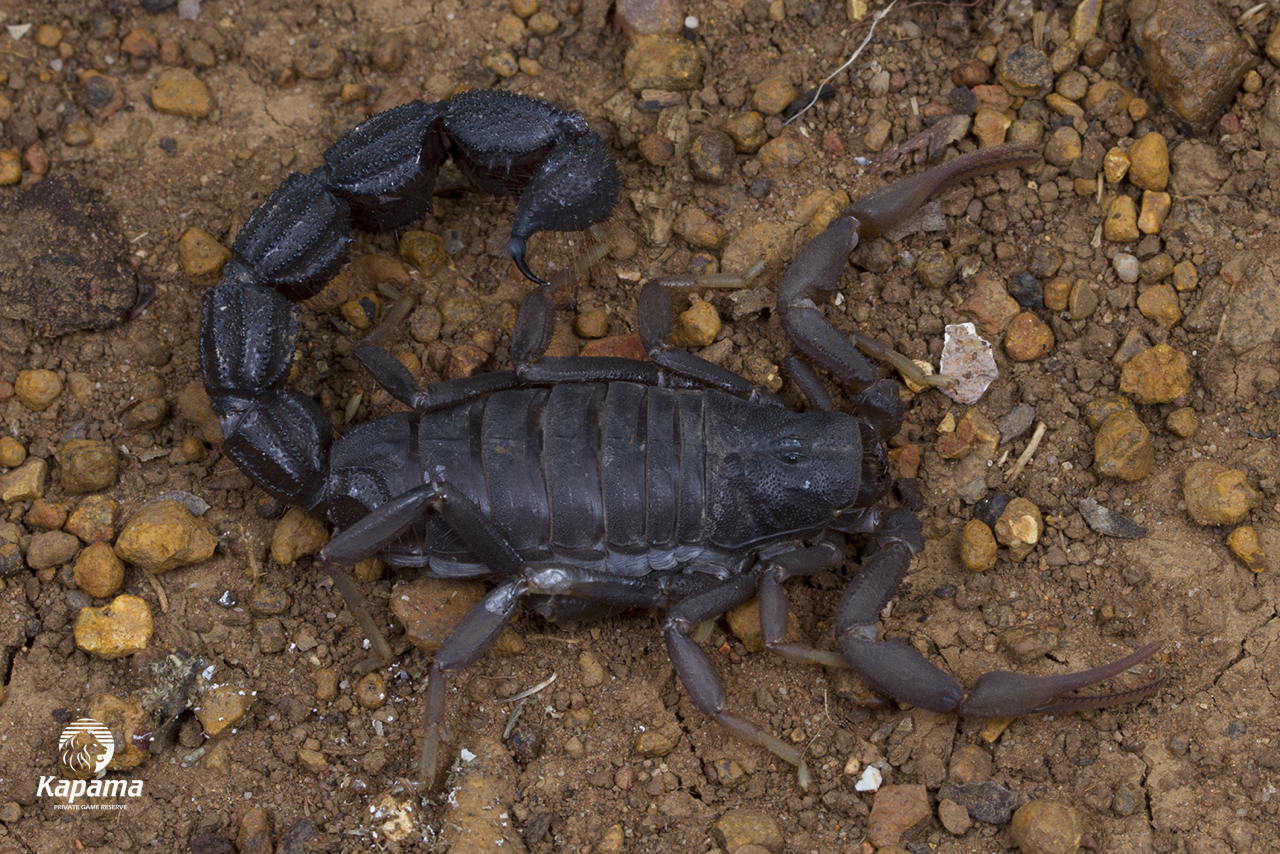
Parabuthus transvaalicus (Transvaal Thicktail)
Parabuthus transvaalicus (Transvaal Thicktail)
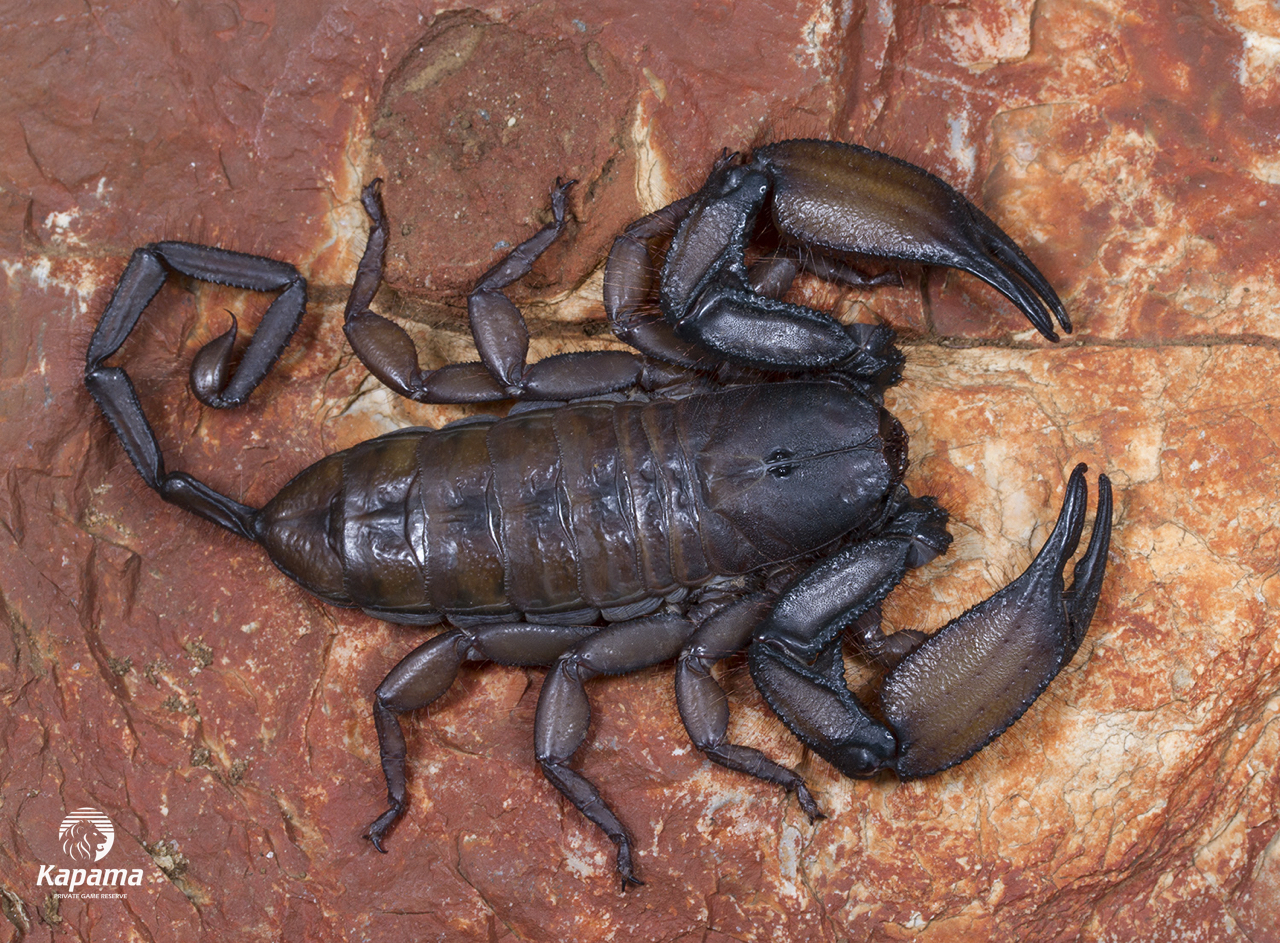
Hadogenes troglodytes (Giant rock scorpion)
Hadogenes troglodytes (Giant rock scorpion)

Hadogenes troglodytes (Giant rock scorpion) 2
Hadogenes troglodytes (Giant rock scorpion)
DO NOT give any alcohol or medication such as codeine, which can suppress the symptoms (aspirin or paracetamol is sufficient for pain relief), don’t try to suck the venom out, as it’s just not possible, nor should you apply a tourniquet or bandage.
Scorpions are only active at night and prey on insects and other invertebrates – sometimes even other scorpions. Scorpions do not have very good vision at all but make use of loads of sensory hairs to help them detect prey. If you’re out and about a campsite at night, it’s always a good idea to wear closed shoes – as scorpions can sting over the top of sandals if accidentally stepped on.
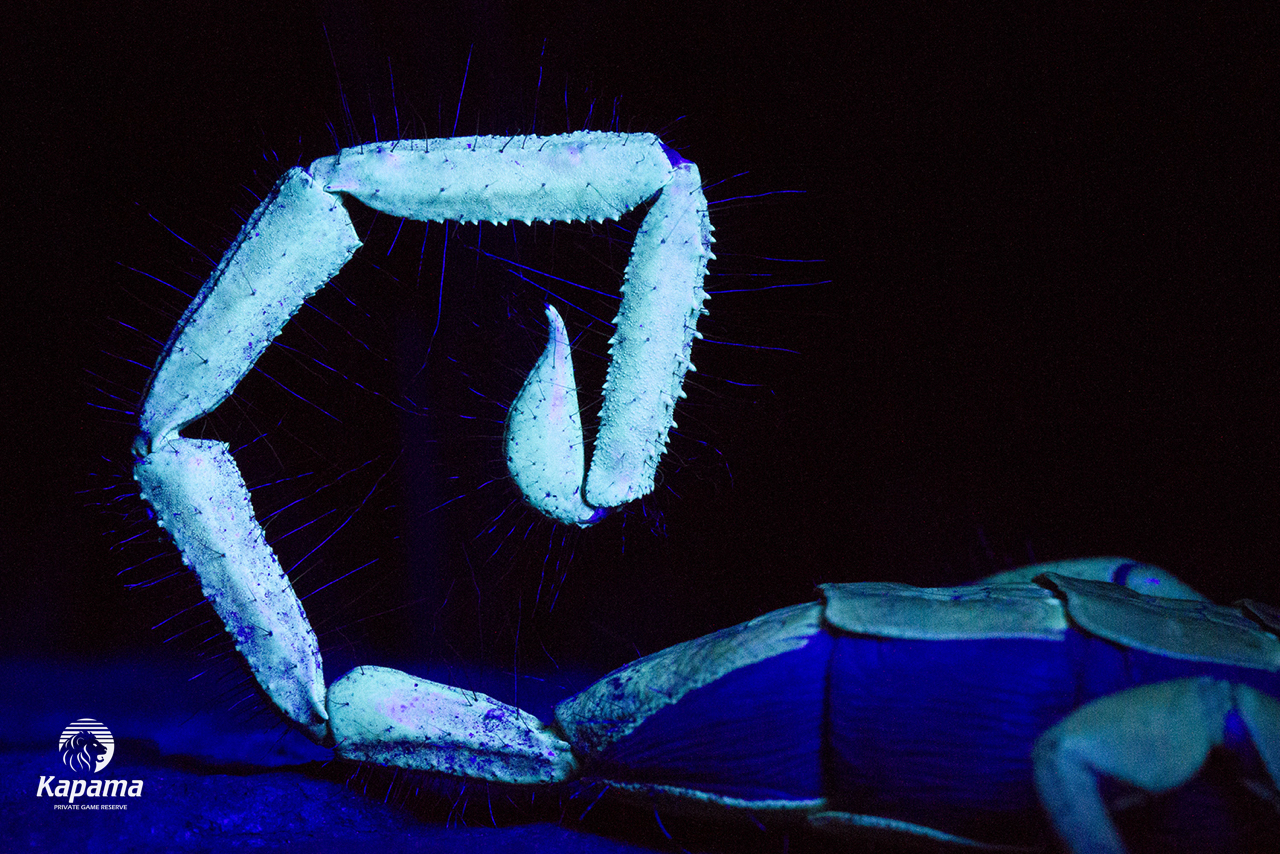
A fun way to search for scorpions is at night making use of a UV light, which will cause the scorpions to glow. What causes this glow is the hyaline layer in the scorpion’s exoskeleton that reflects certain wavelengths of ultraviolet light. The reason for this is not yet fully understood, and there is quite a bit of speculation as to what purpose it serves. Some believe that it helps a scorpion “see” better in its environment and others think that it’s to attract their insect prey.
Scorpions are very sensitive to change in environment and will remain in an area to which they have adapted, so if you see a few scorpions on your visit; it’s a great sign to show the health of our ecosystem.
Although venomous and scary looking in appearance, like all living creatures, if treated with respect, they don’t pose any threat as they will usually try to scurry away rather than be encountered. Some species will rub their chelicerae (mouthparts) together to make a hissing sound or drag telson (sting) over the body segments to create a rubbing noise to frighten off would-be predators.
So next time you see a scorpion, don’t fear it, rather enjoy them and observe their behaviour and you will soon see them in a different light and most likely be captivated by how unique and mesmerising they are.
Story by Southern Camp Ranger Barry Greenshileds and photos by Ashley Kemp and Barry Greenshields
Latest news
No Results Found
The page you requested could not be found. Try refining your search, or use the navigation above to locate the post.