
The Chameleon
Chameleons are one of my favourite animals to see while out on a game drive. As we finished our refreshments at the sundowner stop mid-way through our evening game drive from Buffalo Camp, we watched as the sun slowly moved behind the Drankensburg mountains. While heading back to Camp for a tasty dinner around the fire, Sonny Boy my tracker, armed himself with a spotlight to see what we might find lurking in the African bushveld waiting to be discovered.
The mysterious Chameleon is always the one I keep my eye out for.
Just before we reached our Camp, Sonny Boy, who I call eagle-eye, spotted something up in a small tree.
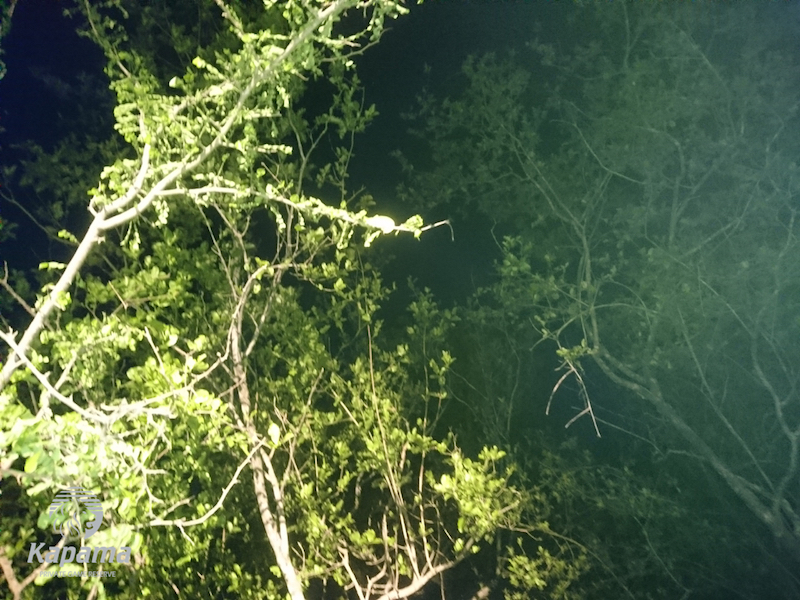
I had a slight suspicion of what it might be, so got out of the vehicle to retrieve the mysterious little creature. Gently picking it up, with a gaping mouth and puffed up body, I presented our great find, the Chameleon, to my guests.
This particular Chameleon is called the Flap-necked Chameleon, whose common name is derived from the large, movable flaps that protrude from either side of the upper surface of its neck. They are one of the most common ones you will find from the 15 species that call South Africa home.

My guests were absolutely amazed at how Sonny Boy managed to spot this Chameleon up in a tree. I explained to them, they are reasonably easy to spot, if you know what to look for. As the spotlight shines on them, they become almost luminous white in colour compared to their surrounding vegetation.
Luckily this one was very relaxed.
The Chameleon just grabbed a hold of my hand, did not even move, and allowed us to take photos,
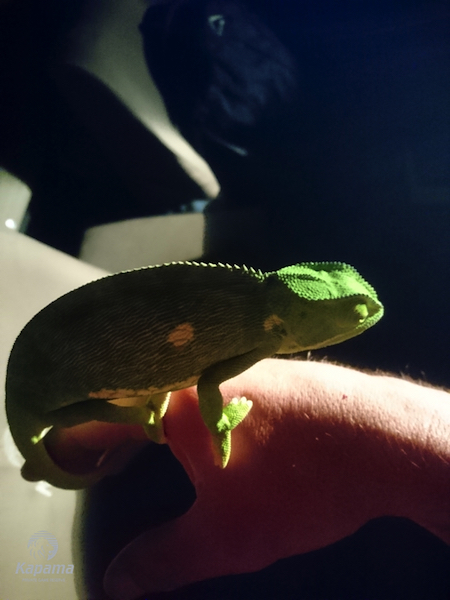
It wrapped its tail around my finger and clung on with a strong grip. The tail is prehensile, which allows them to hold on to small branches to keep their grip and stabilize themselves in the perfect position to catch insects. I was still surprised at how relaxed it was. Normally the Chameleon would try and get away, thinking it’s going to become dinner, running up your arm, looking for an escape at the highest point.

While we were enjoying the view I explained a bit about why it is such a unique lizard, especially with the ability to change colour.
As many believe the sole purpose of a Chamaeleon changing colour is to conceal itself. Although a change in colour is very good for camouflage, in fact, the ability to change colour has a deeper purpose. The colour changing is to reflect their moods and send signals to other Chameleons. For example, darker colours tend to mean a Chameleon is angry, and lighter colours are used to attract mates.

Then there are some Chameleons who change colour to help adjust to changes in temperature. A light colour would help with cooling the body and darker colours would warm the body up.
They certainly are complex creatures.
I can explain this unique method of the Chameleon in another way. They have special cells (called iridophores) under their skin. These special cells contain a pigment that reflects light. By contracting and expanding the skin, they cause these special cells to move and change the structure. These cells act like prisms, reflecting different wavelengths of light to create the variety of tones we see.
As everyone finished taken photos, I placed the Chameleon back where we found him, deep in the small tree. As they are prey to most owls, I wanted to ensure he was not spotted.
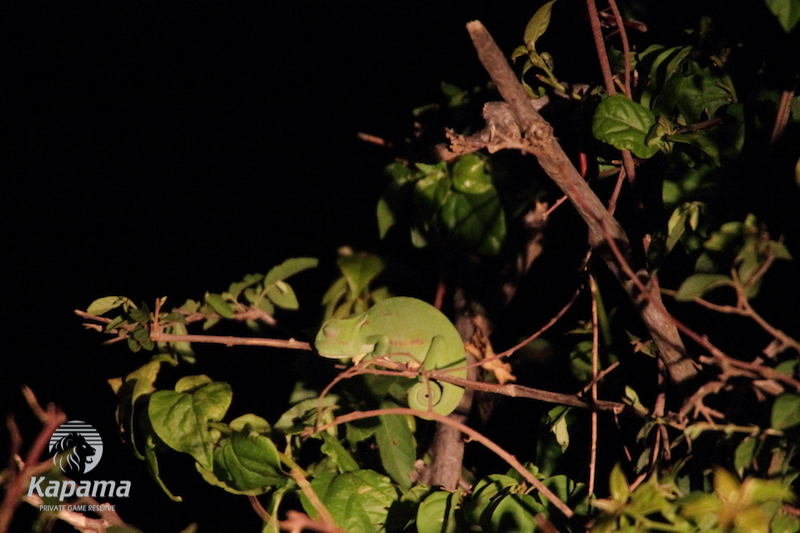
The whole experience probably lasted 5 to 10 minutes. Seeing a Chameleon is always a treat and special experience for me. I know it is exciting to track and search for the Big 5, but it is easy to forget that all around us, behind each bush or up in a tree, something small and unique is hiding, waiting to be discovered if you just know what to look for.
I normally have a bet with Sonny Boy, who can spot the most Chameleons. It seems like I am always on the losing end though to Mr. eagle eyes. So who would dare to come and challenge me and Sonny Boy in a friendly bet of Chameleon spotting while we take on the wild bush of Kapama Private Game Reserve?
Story and photos by: Ben Scheepers, Buffalo Camp
Latest news
No Results Found
The page you requested could not be found. Try refining your search, or use the navigation above to locate the post.


