
Wildebeest calf – Watch it being born
After enjoying the gift of hundreds of impala lambs everywhere in the low veld over the past couple of months, a few zebra foals were also making their appearance, especially on the beautiful plains in the southeastern part of Kapama Private Game Reserve. Here the blue wildebeest, giraffe, zebra, impala, warthog and a few others congregated, not only for the new green grass that appears each year after the summer rains but also to enjoy the benefits of having many eyes to spot a predator.
When the grass is long enough we are even blessed with the presence of our pachyderms, the African elephant and white rhino on the very same plains.
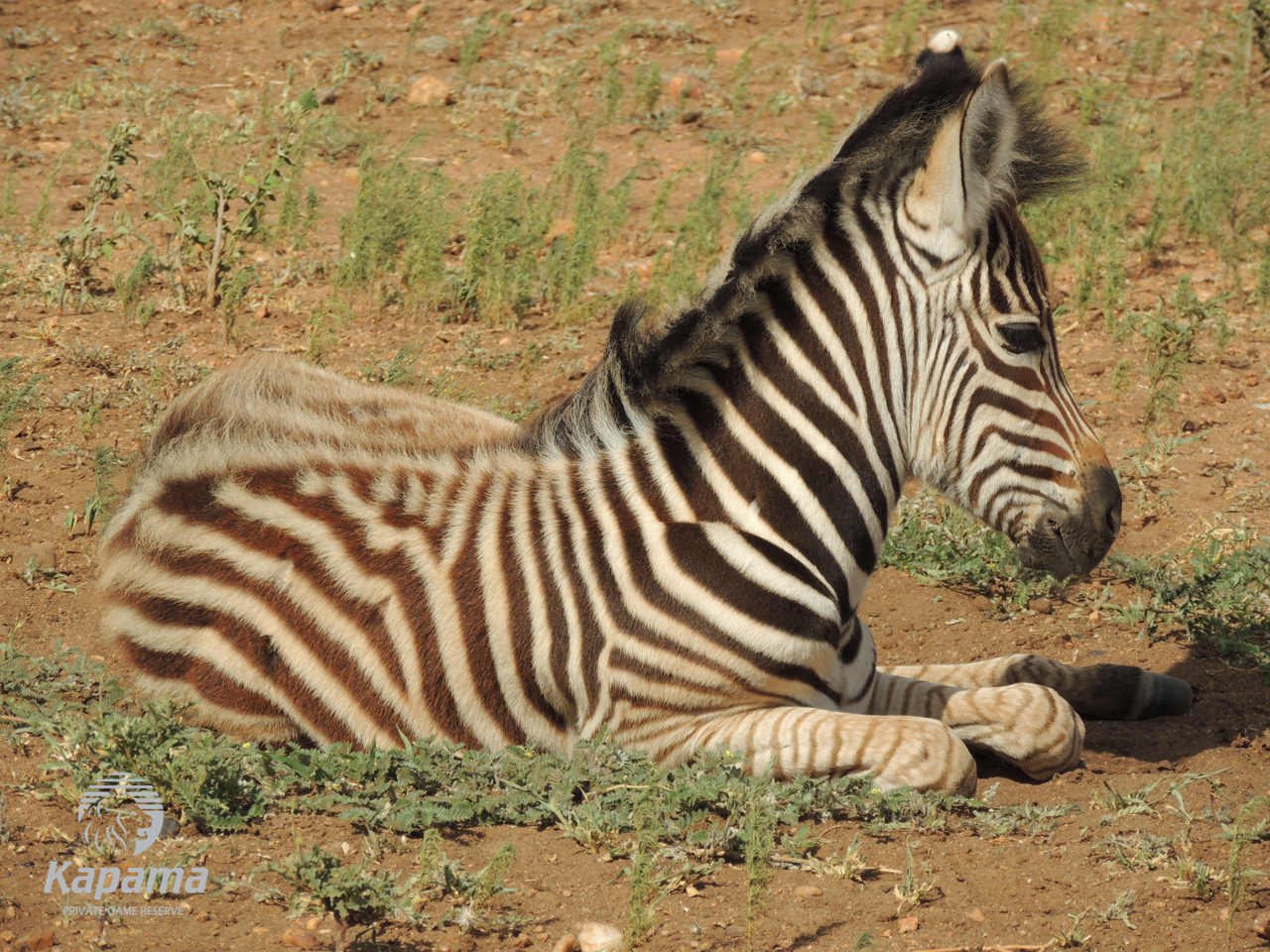
On this particular afternoon drive, I had only one guest whose hobby was wildlife photography. We had seen most of the Big 5 already and so I wanted to take him to a spot where you couldn’t take a bad photo even if you tried. This, in my opinion, is the open plains adjacent to the beautiful and scenic Klasserie river that forms part of our eastern boundary.
On arrival, we found a large gathering of zebra and behind them a herd of wildebeest. The imperfect perfection of their stripes entertained our camera lenses for a while until I spotted one of the smallest Wildebeest calves I have ever seen.
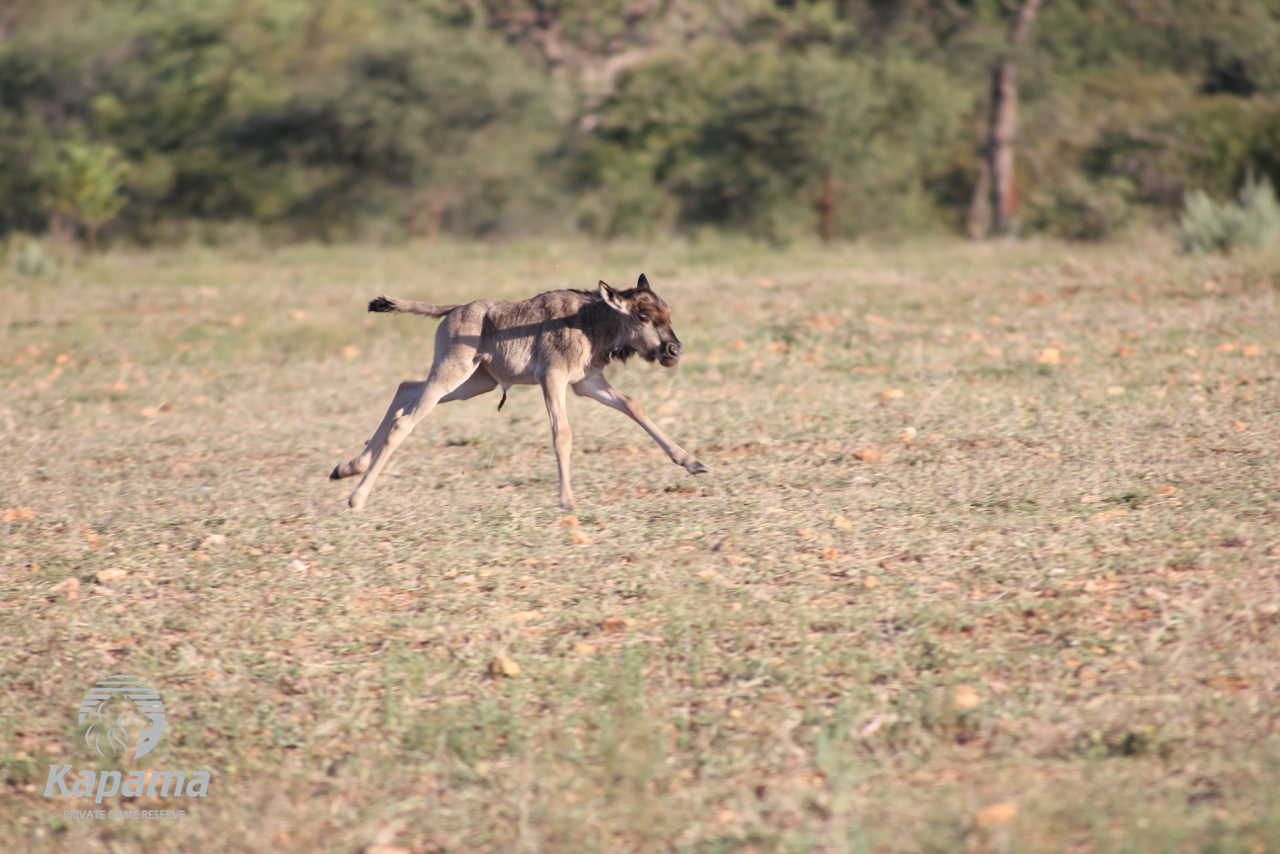
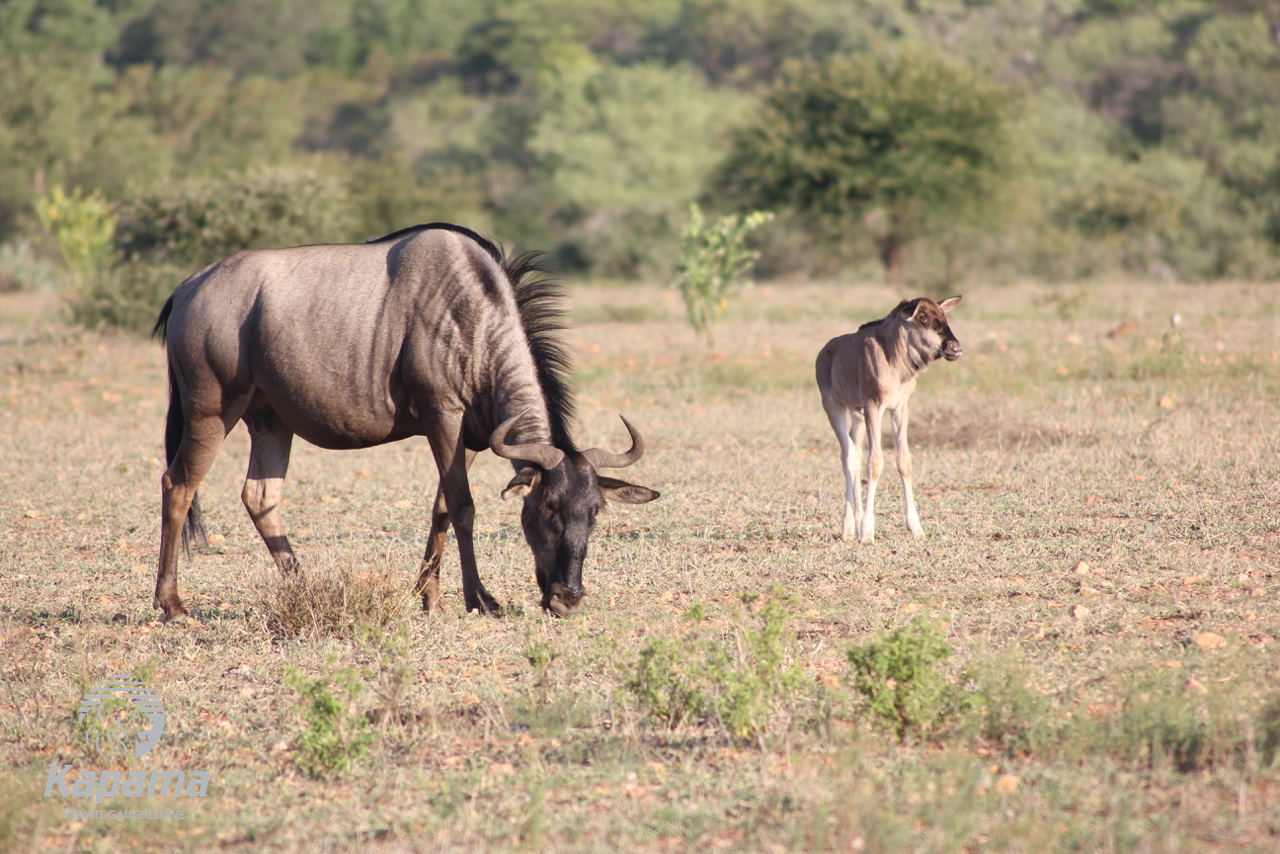
We moved in a little closer for my guest to work his skill with his camera. To our surprise, not only did we find one, but two tiny wildebeest calves standing so close to their mothers that they were almost invisible. The group seemed to be happily feeding and so the two youngsters began frolicking around on their brand new and still very wobbly long legs.
In the video footage below, taken by a colleague who witnessed the actual birth of this very same young wildebeest only moments before us, you will see exactly how the birth takes place out in the open plains.
A single calf is usually born after a gestational period of about eight and a half months. The calf remains with its mother for eight months and then moves off to join a juvenile herd. You will be surprised that wildebeest calves can, in fact, stand from about 6 minutes after being born. The footage below shows how the newborn calf immediately tried to stand up after just being born.
The two calves were busy for a good ten minutes but were quick to return to their mother’s side after any disturbance or unknown sound.
The age difference between the 2 calves must have been about 2 – 3 hours if that. The scene depicted in the below footage was taken only about 15 – 20 minutes after the 2nd calf was born.
Zebra calves also learn to walk and run shortly after being born. The reason for this is because of their preferred open habitat. Although they are given time to run, since they will hopefully spot the predator from a distance given the lack of trees, the calves need to first be able to run. When the wildebeest mothers are grazing, the calves lie in the grass and instantly blend in with the soil due to their light brown fur which will darken with age.
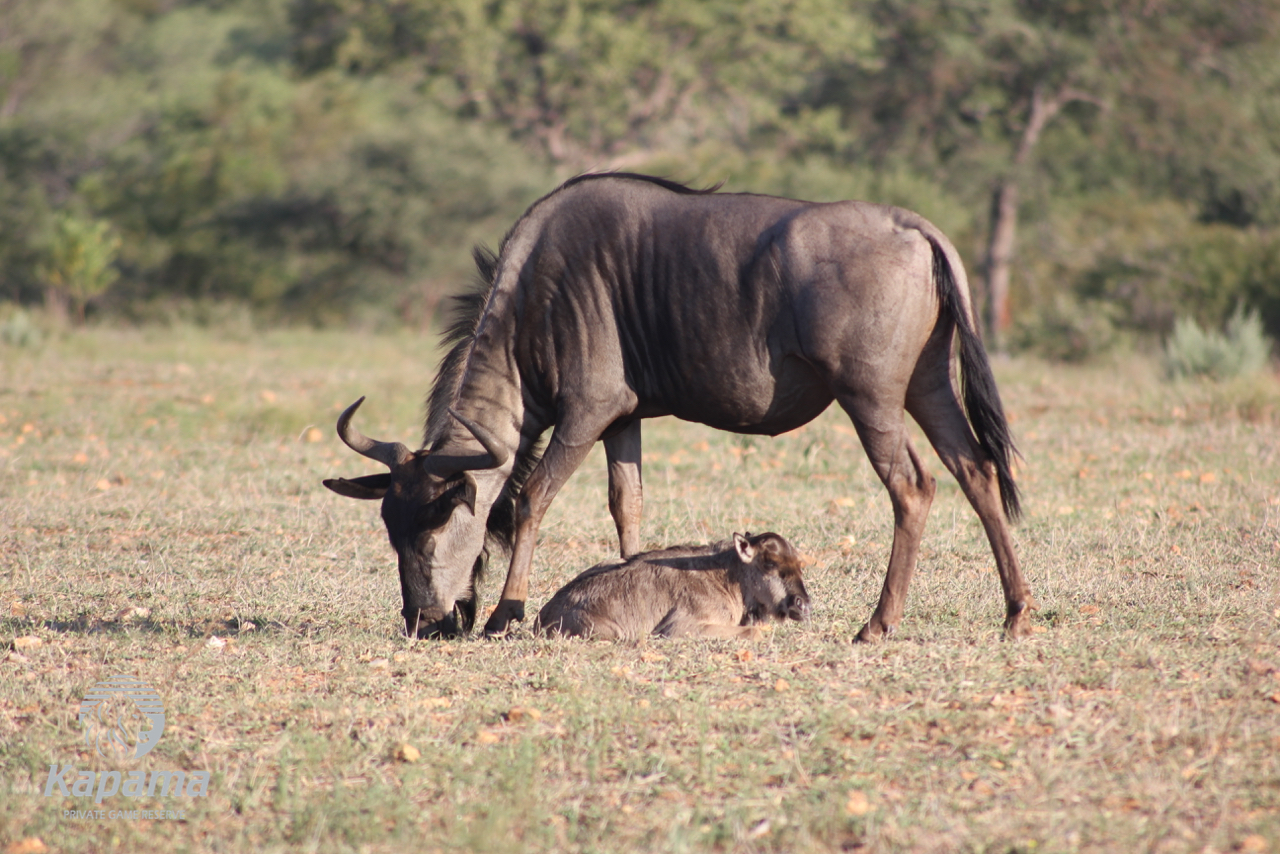
It was a priceless moment on safari for my guest. To not only see the one part of the circle of life (having witnessed lions feeding the night before) but to also see the new life of these young wildebeest calves being born and the trials of learning to run as soon as possible, an instinctive protective behaviour.
Many other females we spotted were very pregnant and I am hoping to see more playful calves soon to treat our guests with the wonders of the African bushveld.
Story and photos by: Monika Malewski – Buffalo camp
Video by: Pierre van der Merwe
Latest news
No Results Found
The page you requested could not be found. Try refining your search, or use the navigation above to locate the post.


